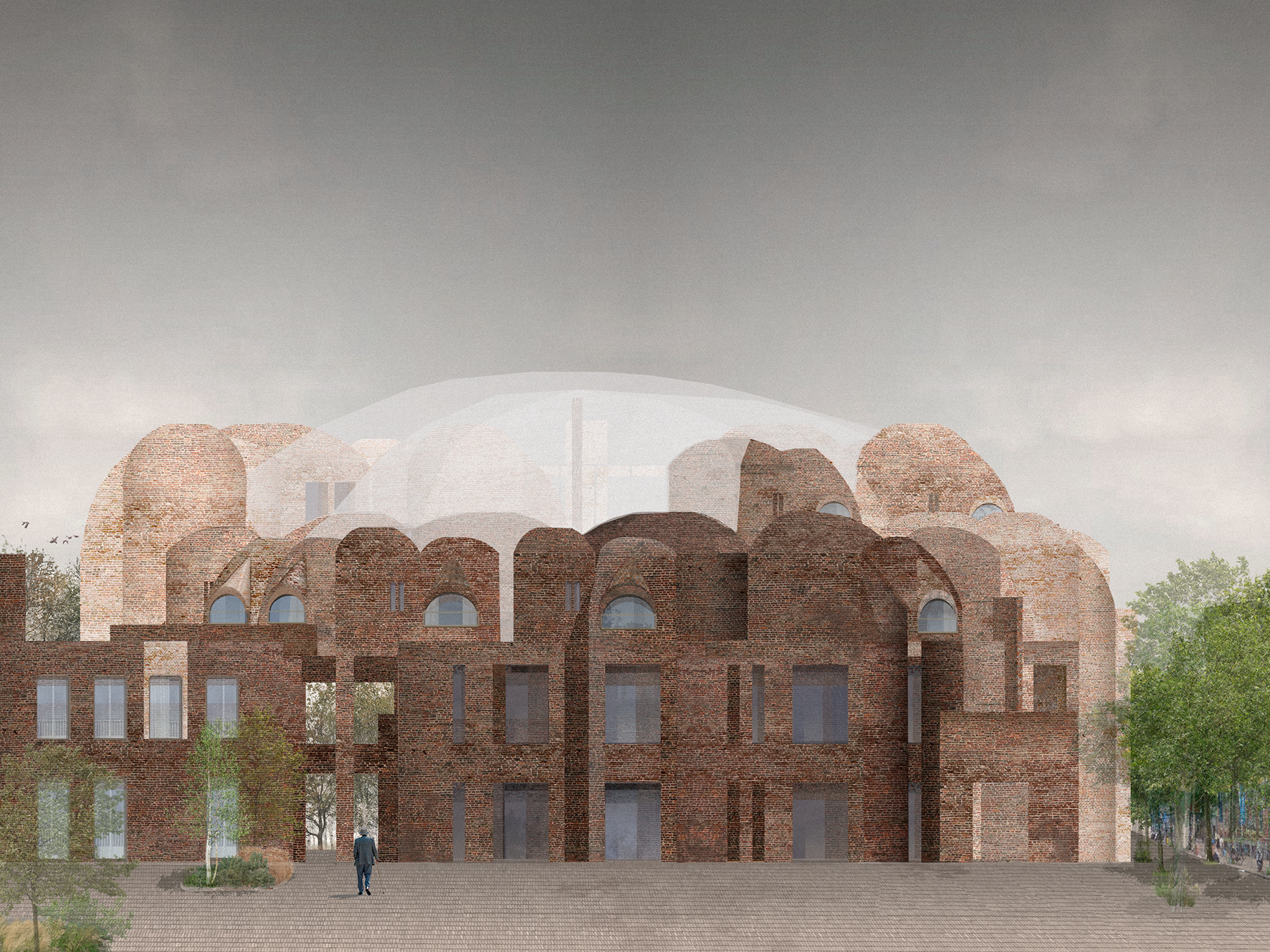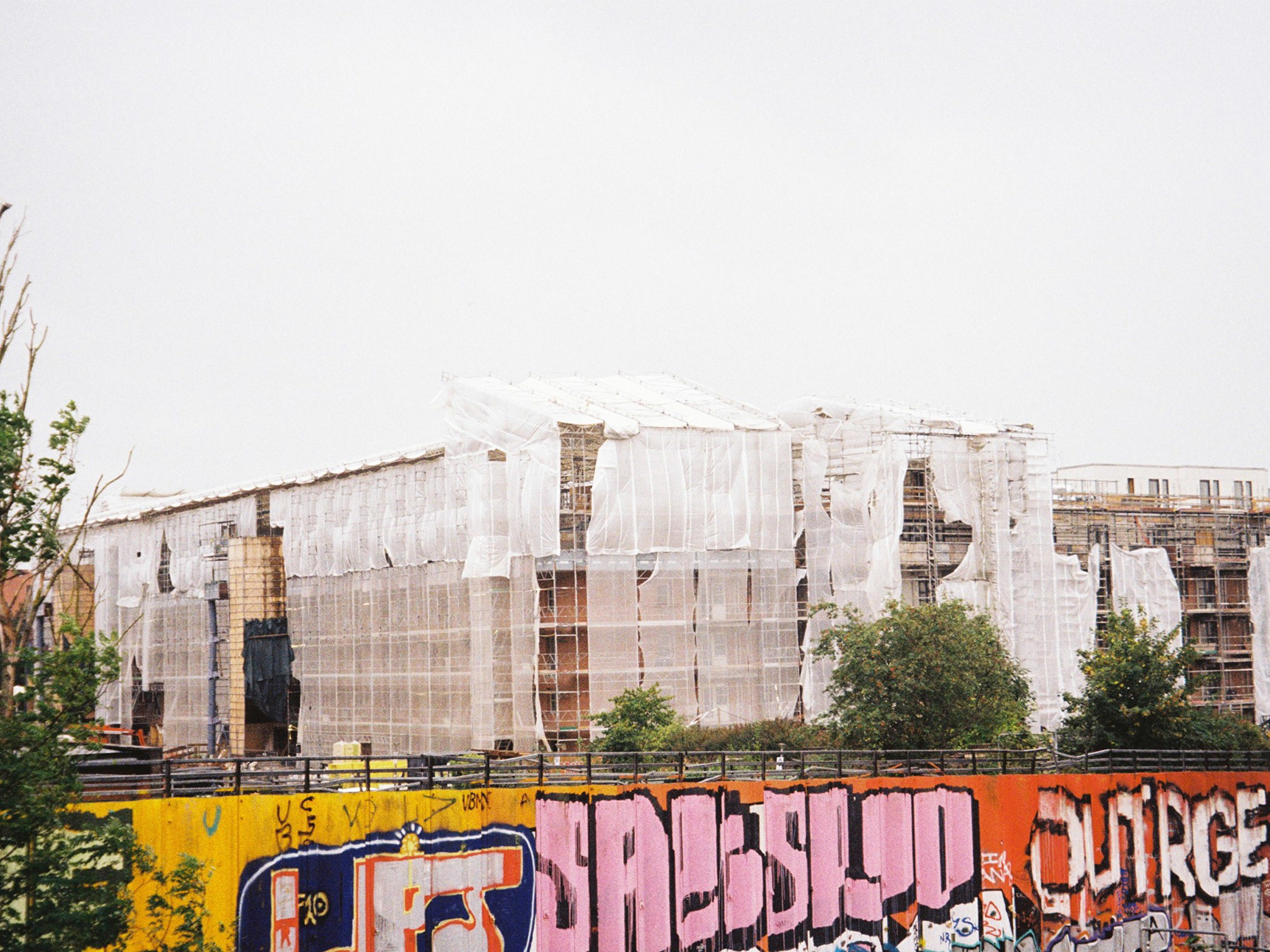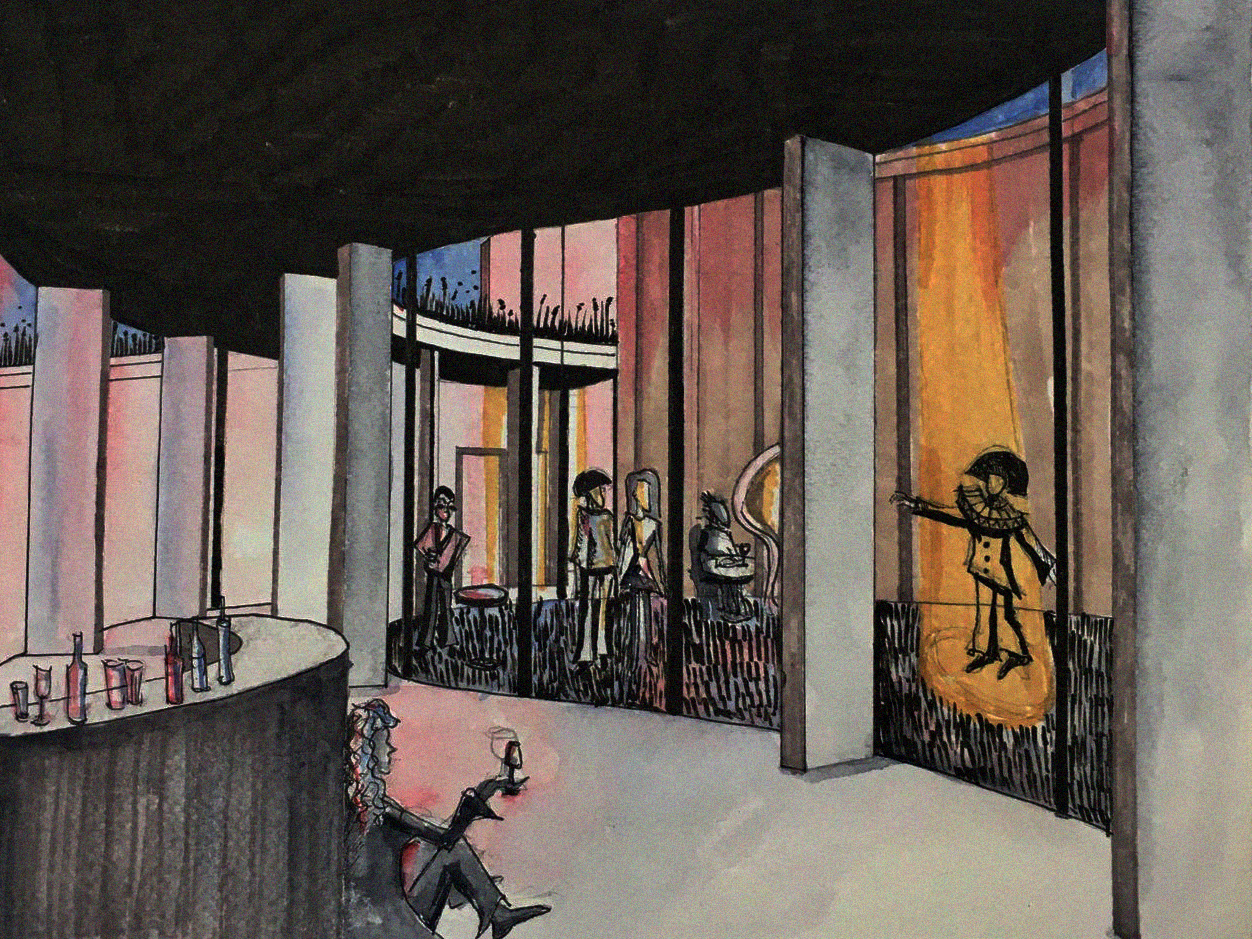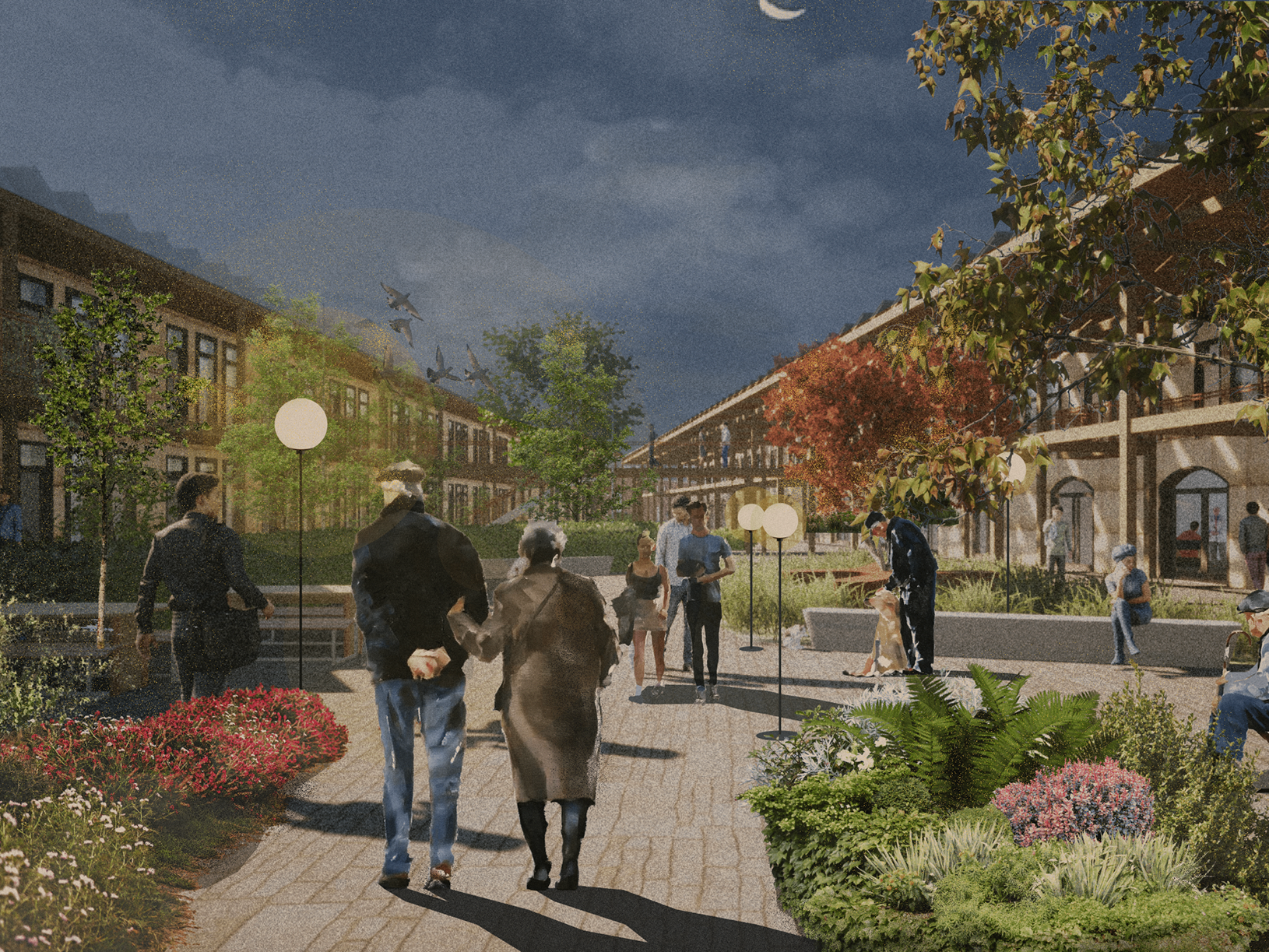
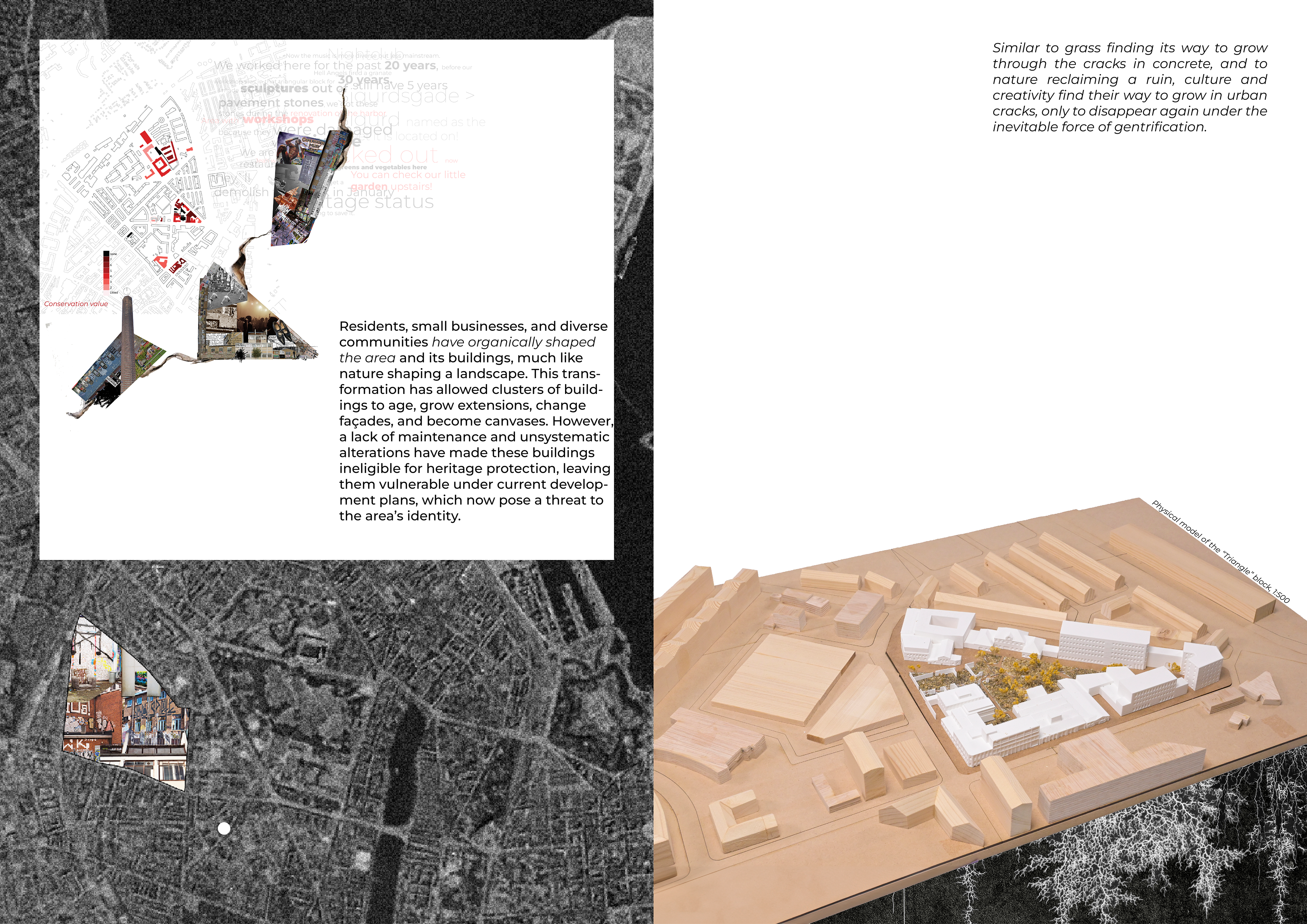
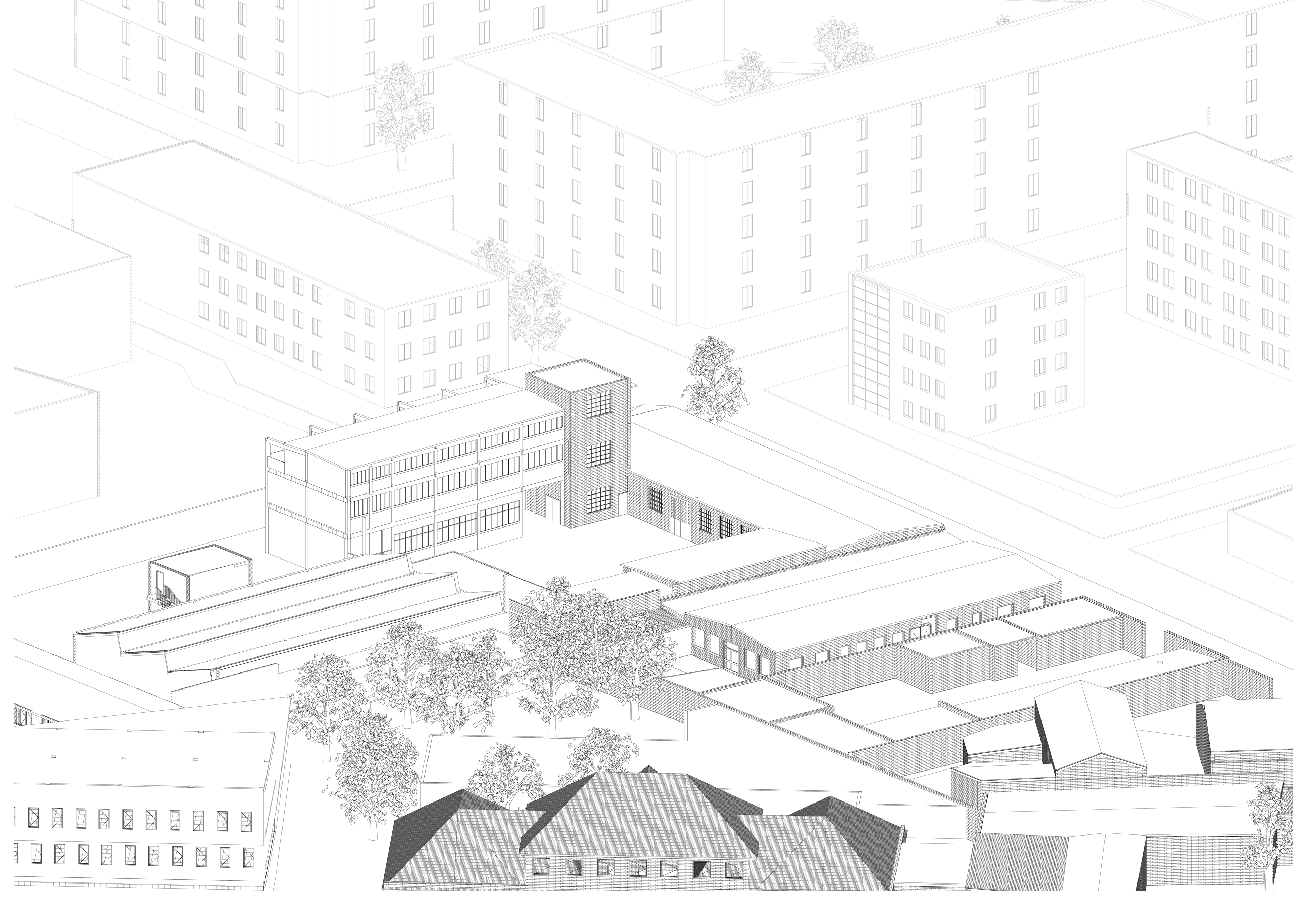
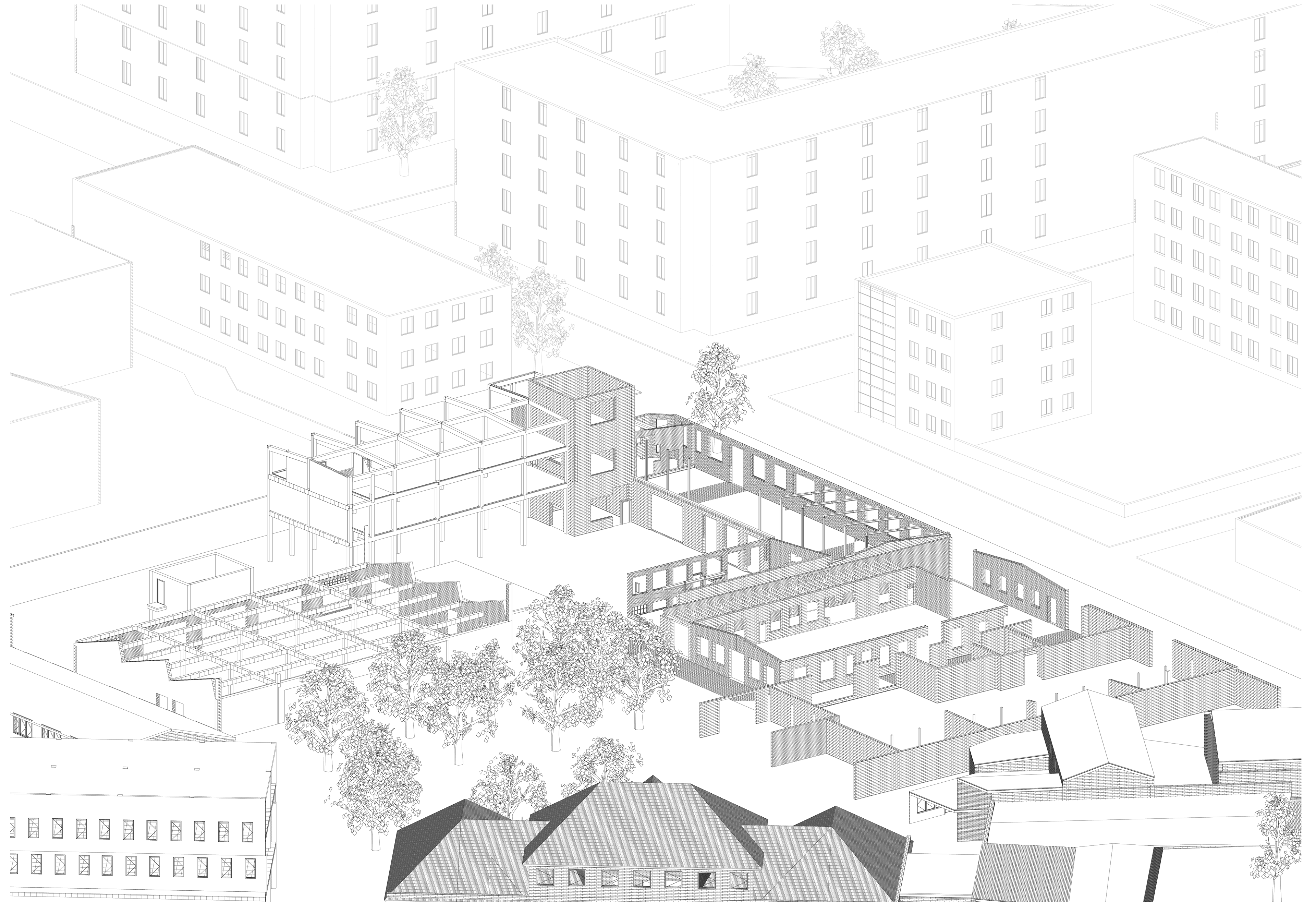
This graduation project proposes an alternative to demolition as the default response to obsolete or neglected industrial buildings, focusing on the triangular block in Copenhagen’s Haraldsgade area.
It is rooted in the belief that instead of focusing on destruction, erasure, or redefinition, we might embrace reflection and cultivation, allowing for growth and creativity grounded in acceptance and reinterpretation. It explores how new functions can be integrated through adaptation and activation, embedding interventions in the existing context.
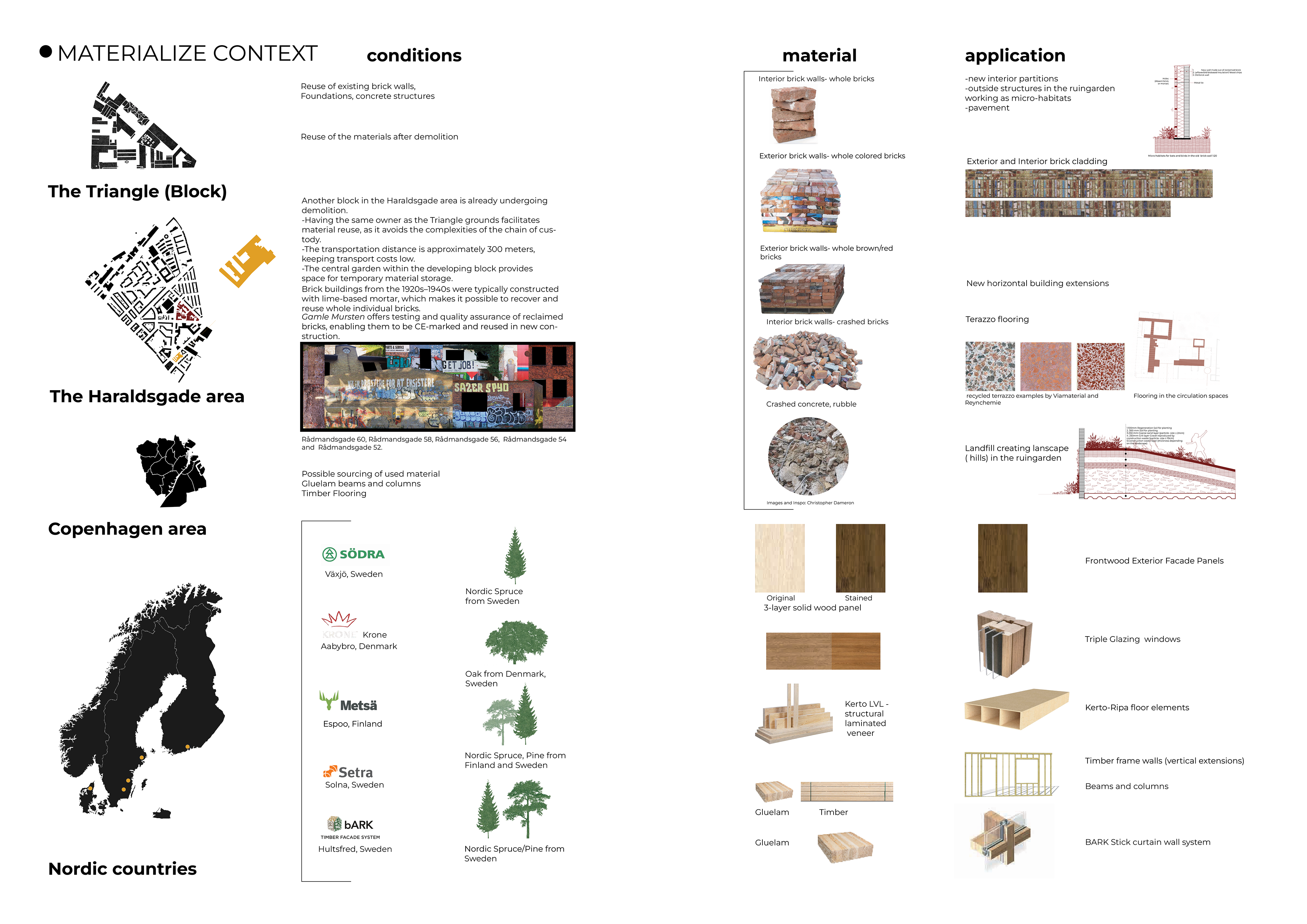
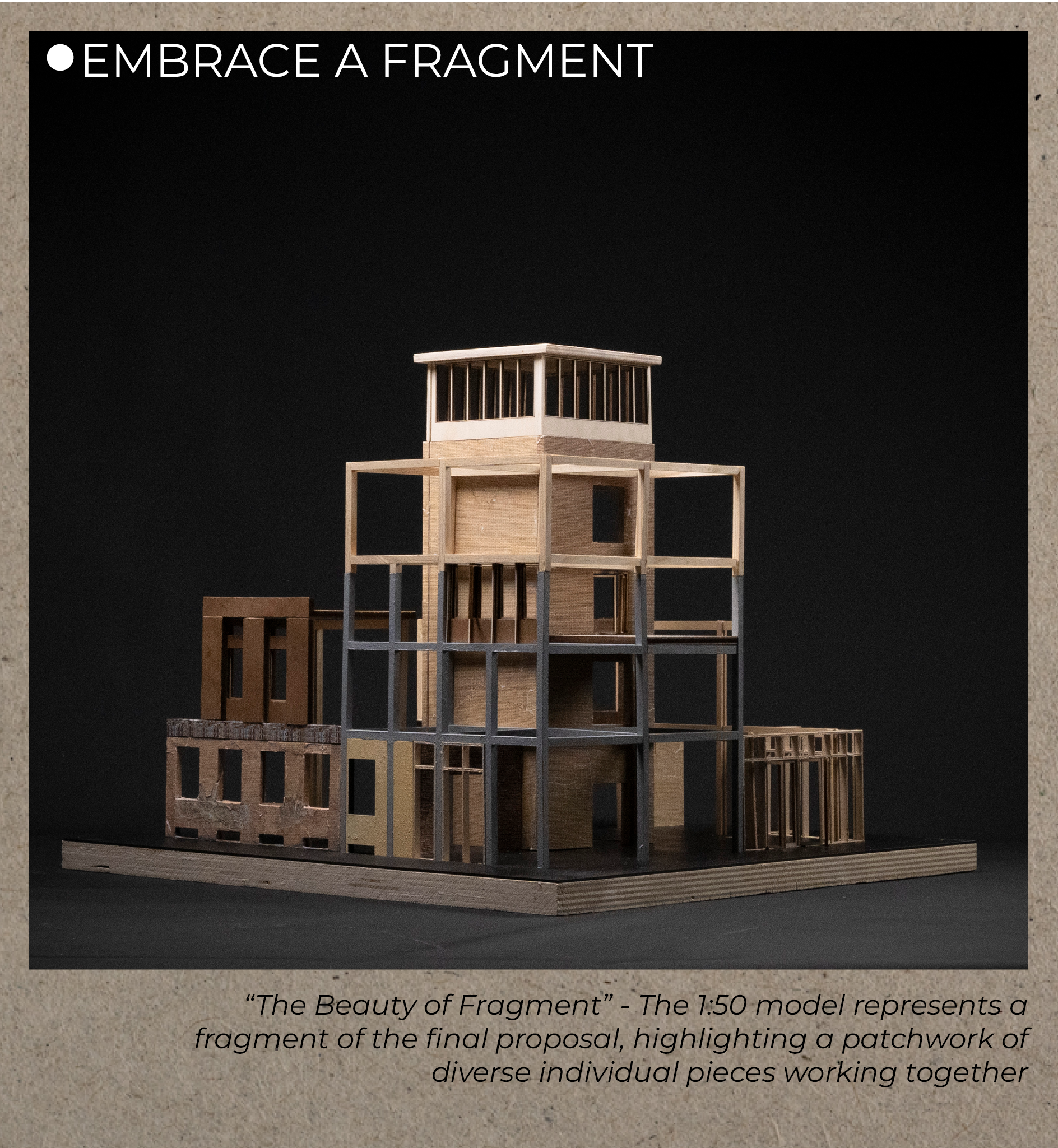
Five principles were established to illustrate how neglected industrial heritage can become a framework for human and non-human life and development: Accept the Ruin, Maintain Continuity, Embrace a Fragment, Create a Binder, and Materialize Context.
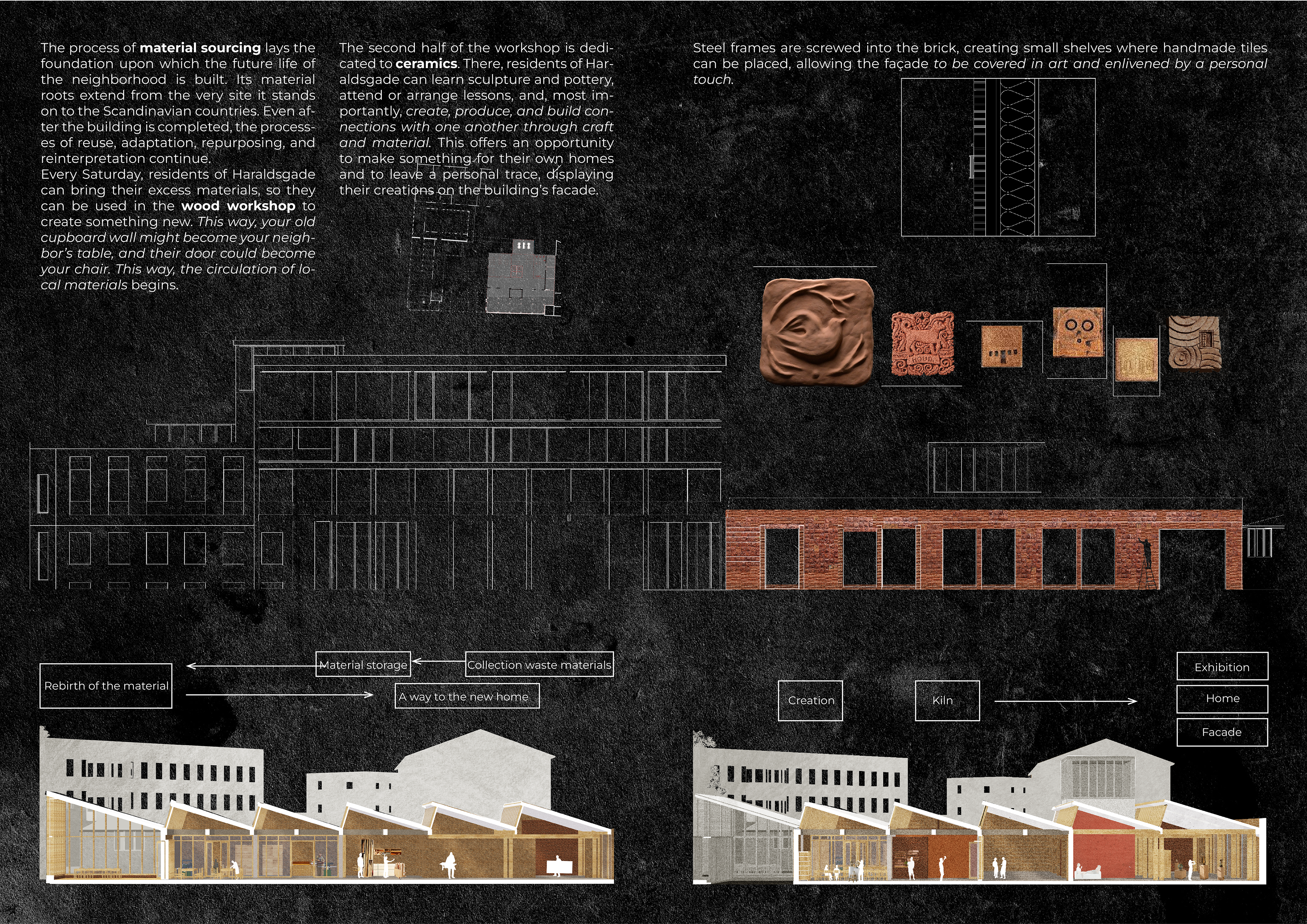
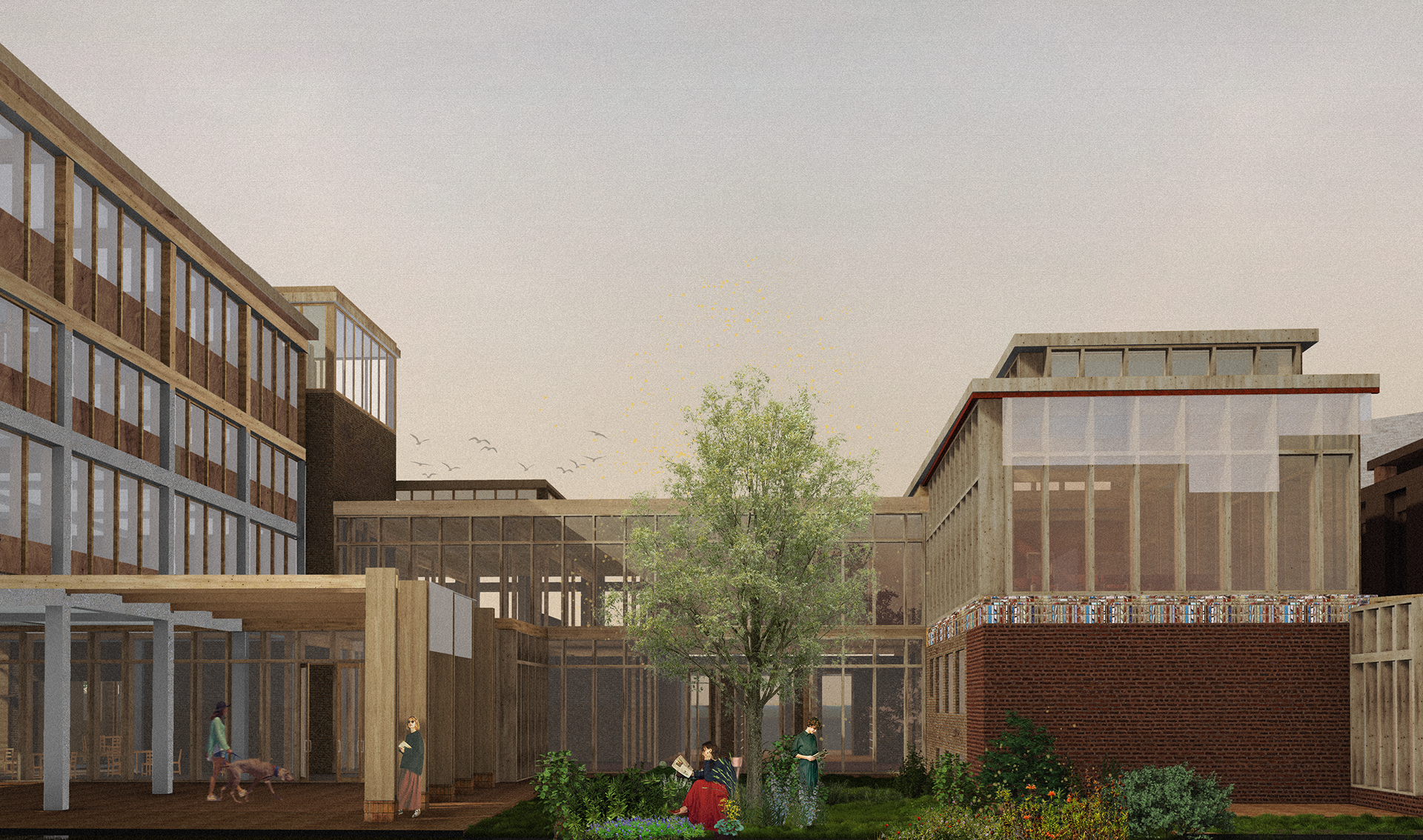
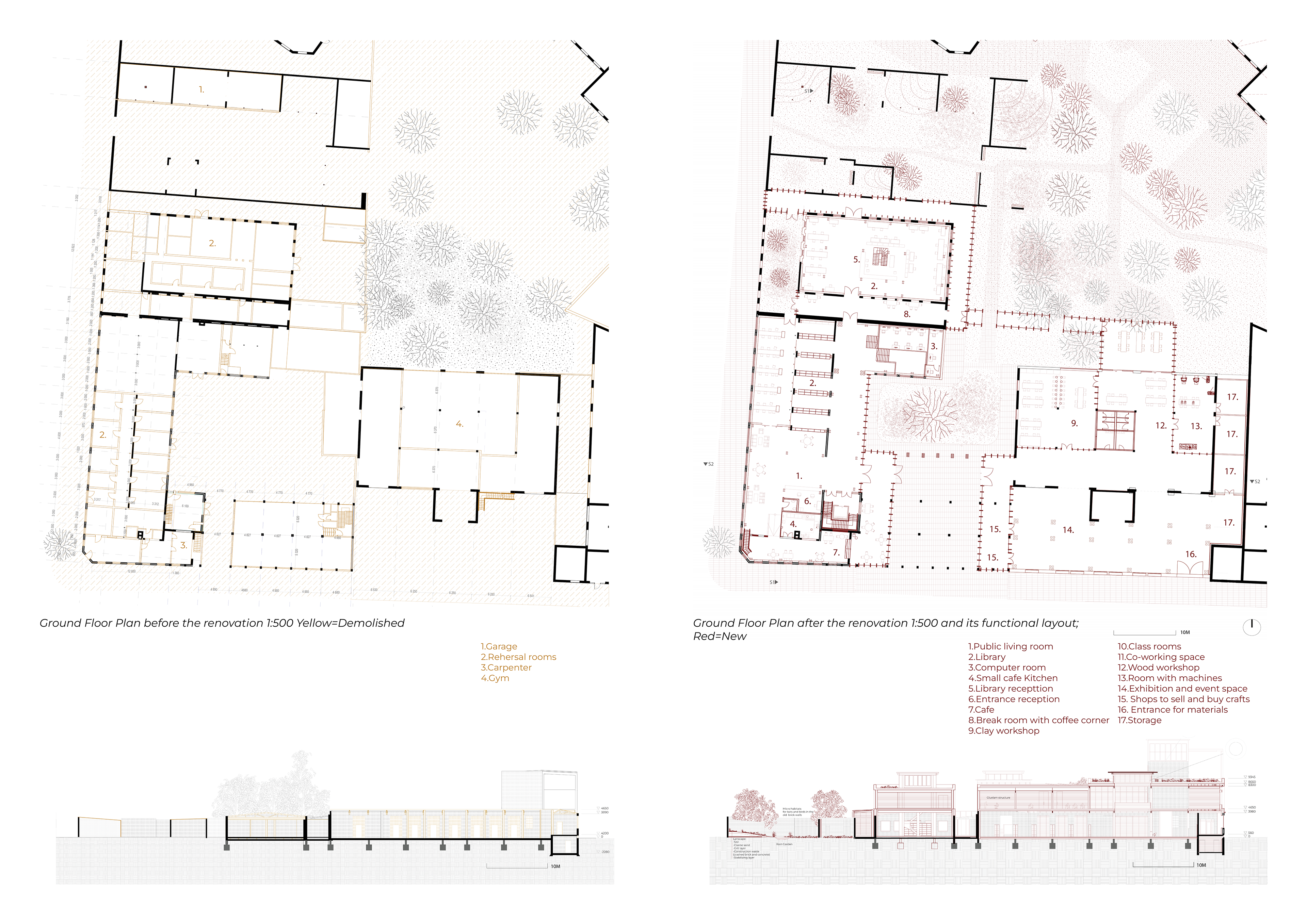
As a result, a mixed-use public building was designed, combining library, ateliers and public workshop, knowledge and craft to strengthen bonds both among residents and with their environment.
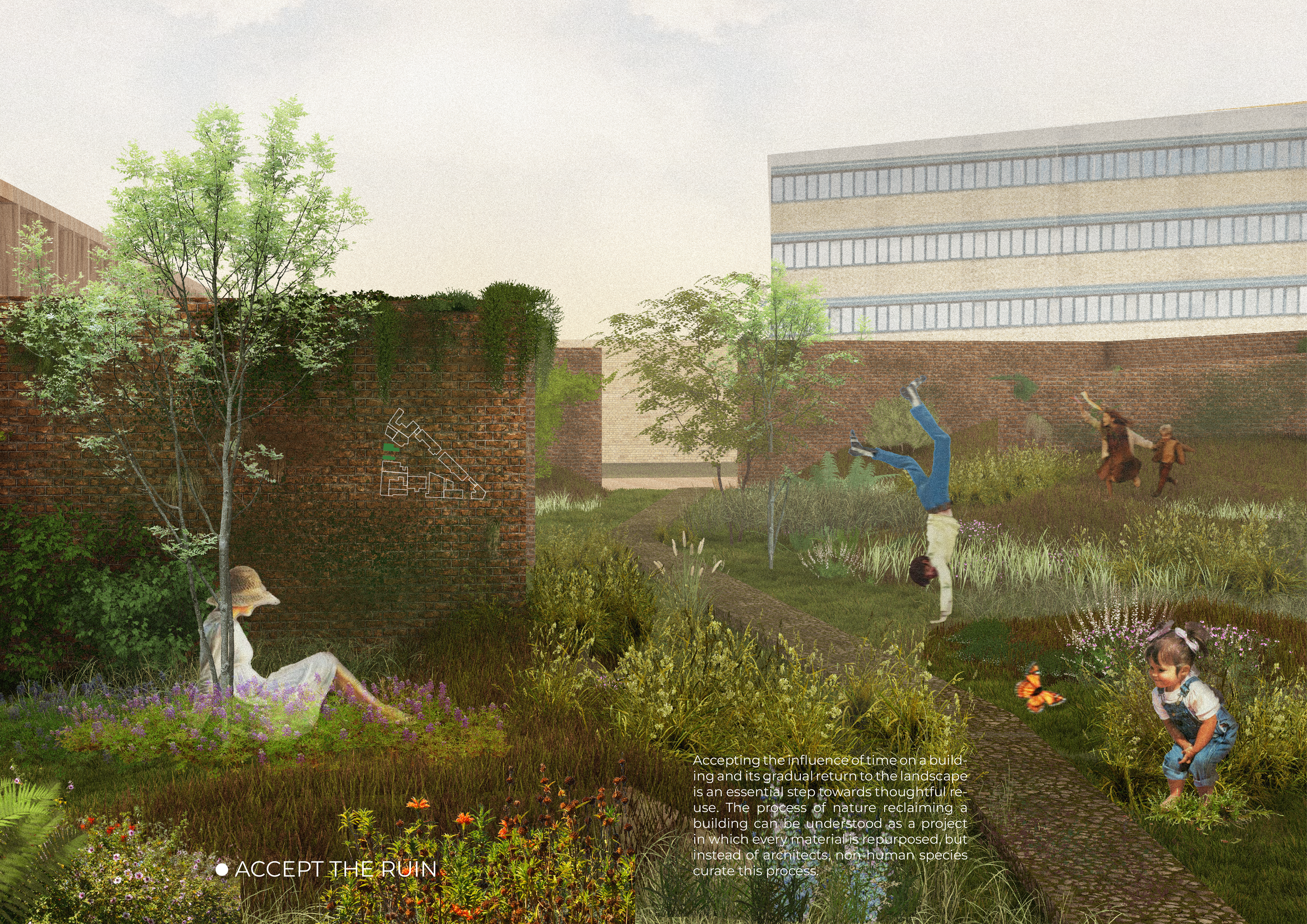
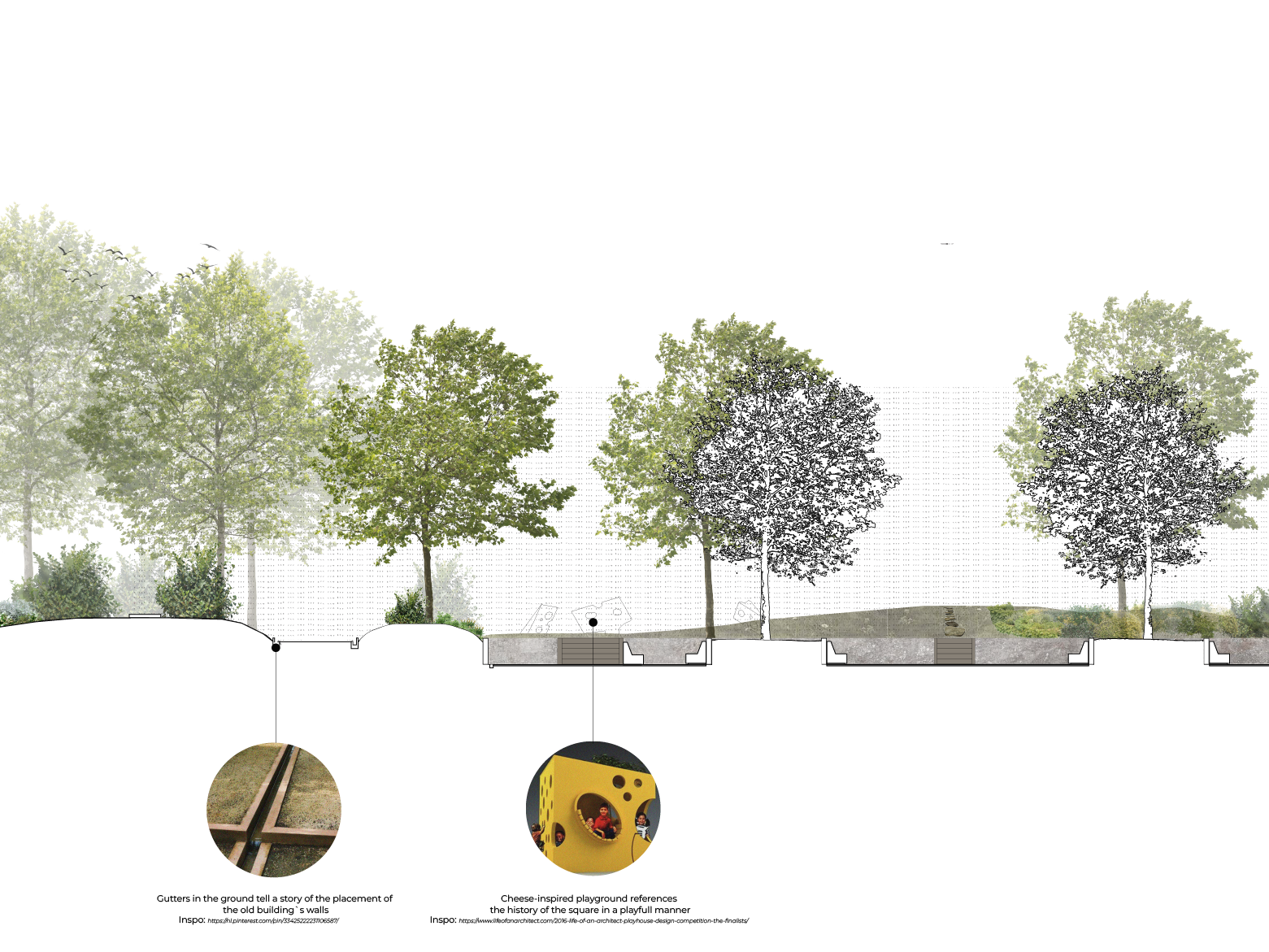
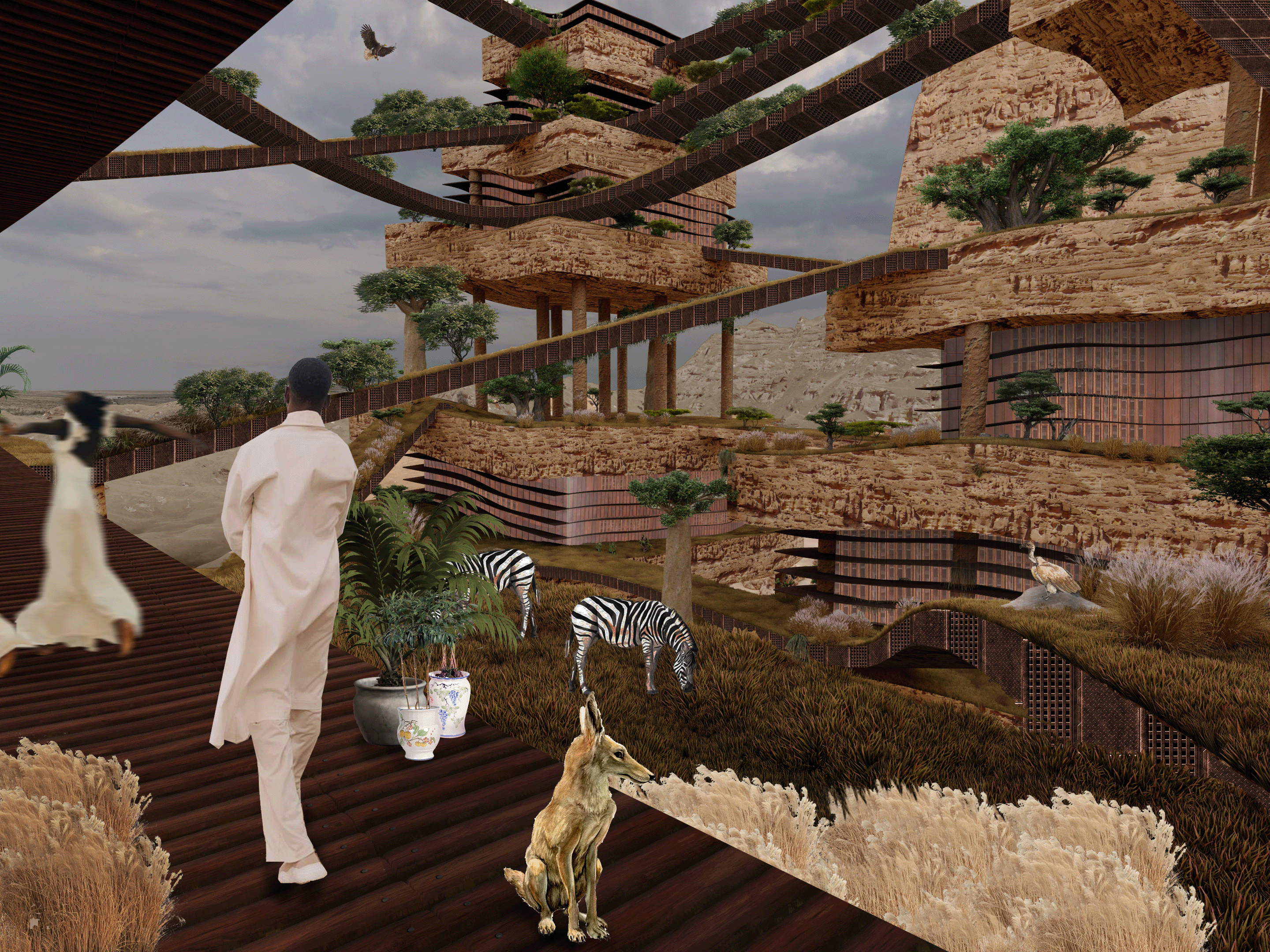
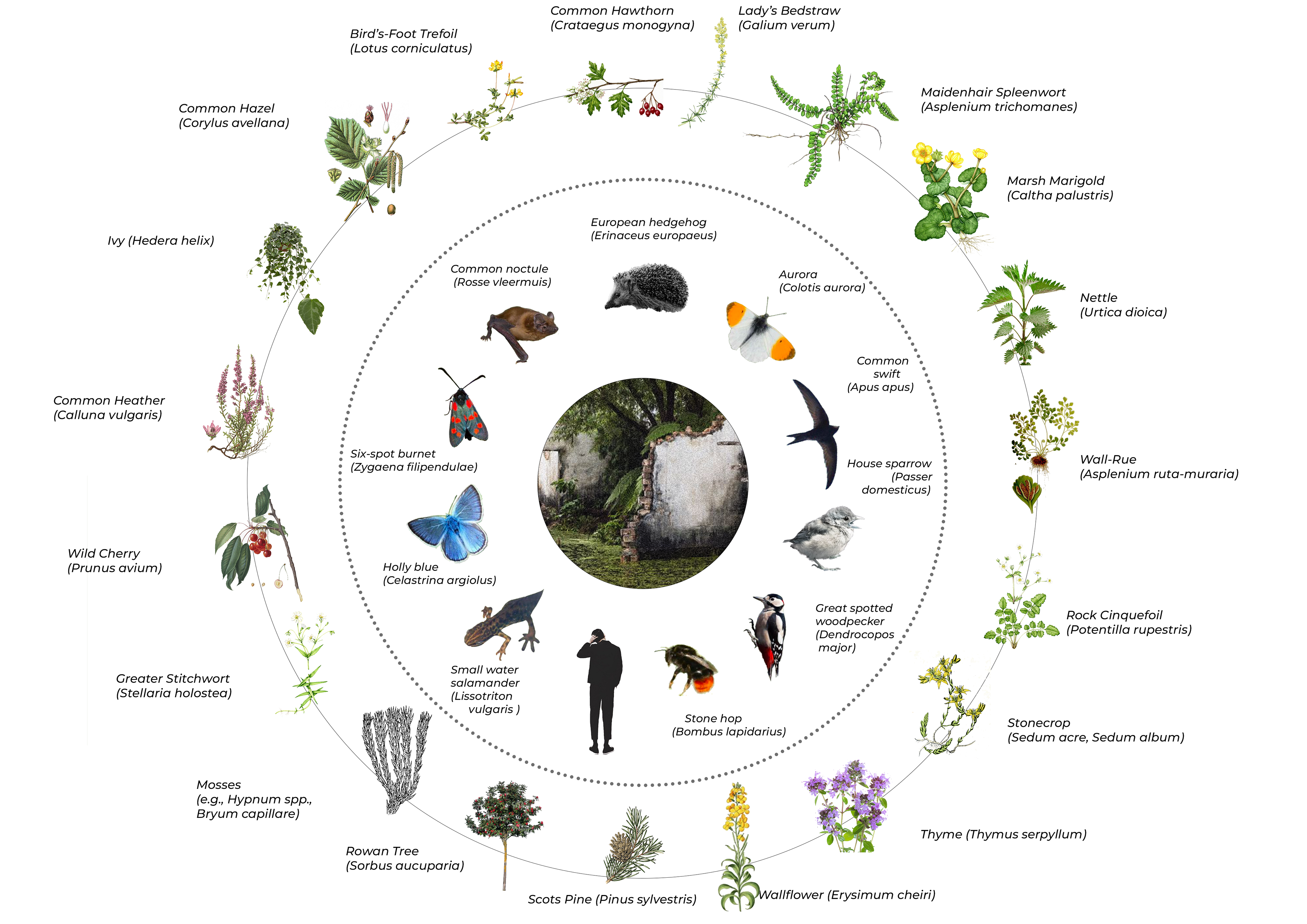
Ruingarden becomes the first building stone in this story of acceptance. It opens the doors for humans and non-humans into the block by allowing nature to take over one of the buildings, the one with the lowest potential for renovation. The selection of non-human species combines animals approved by the municipality for life in the city of Copenhagen with plants that can take root in the old walls and inhabit the Ruin garden.
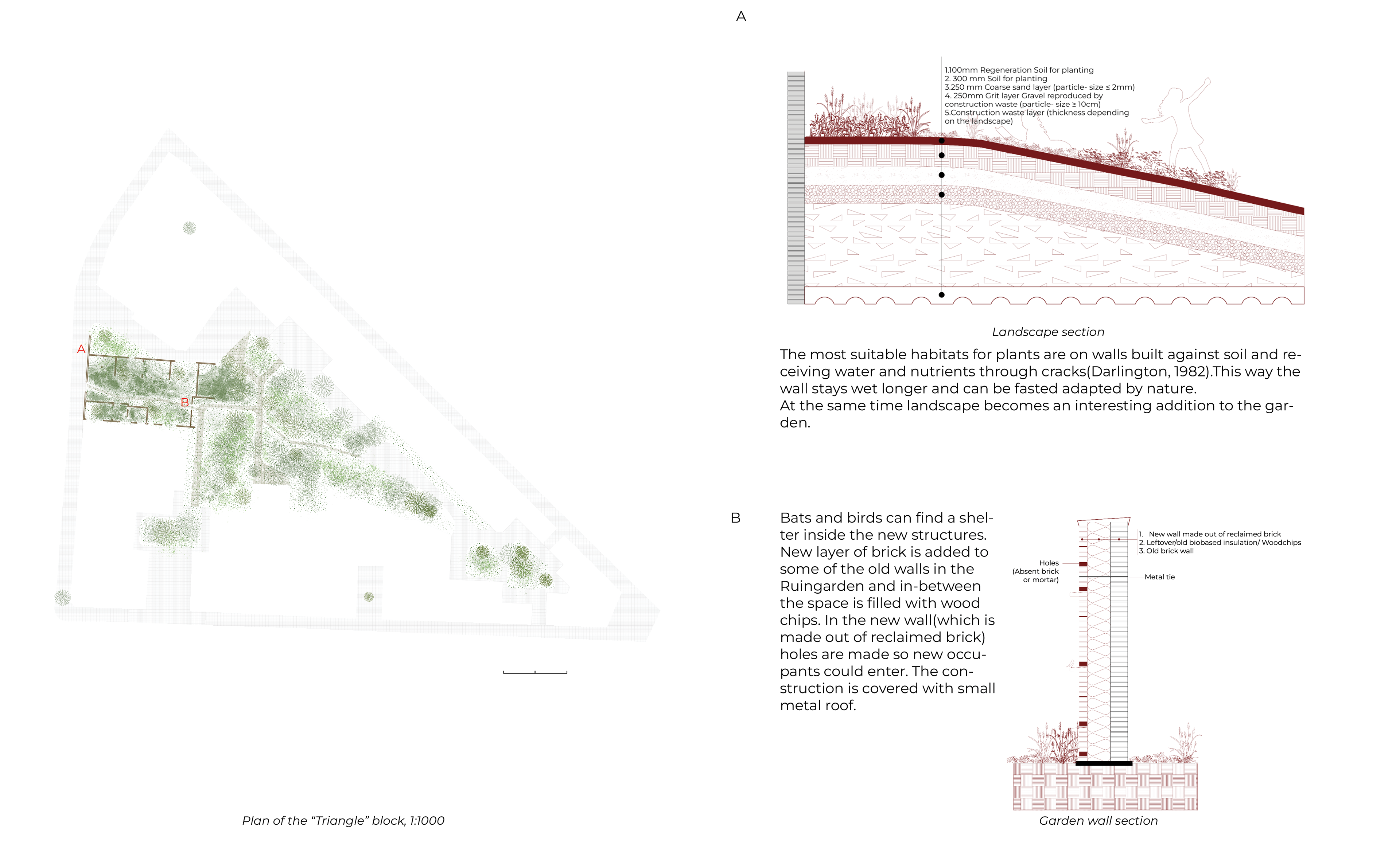
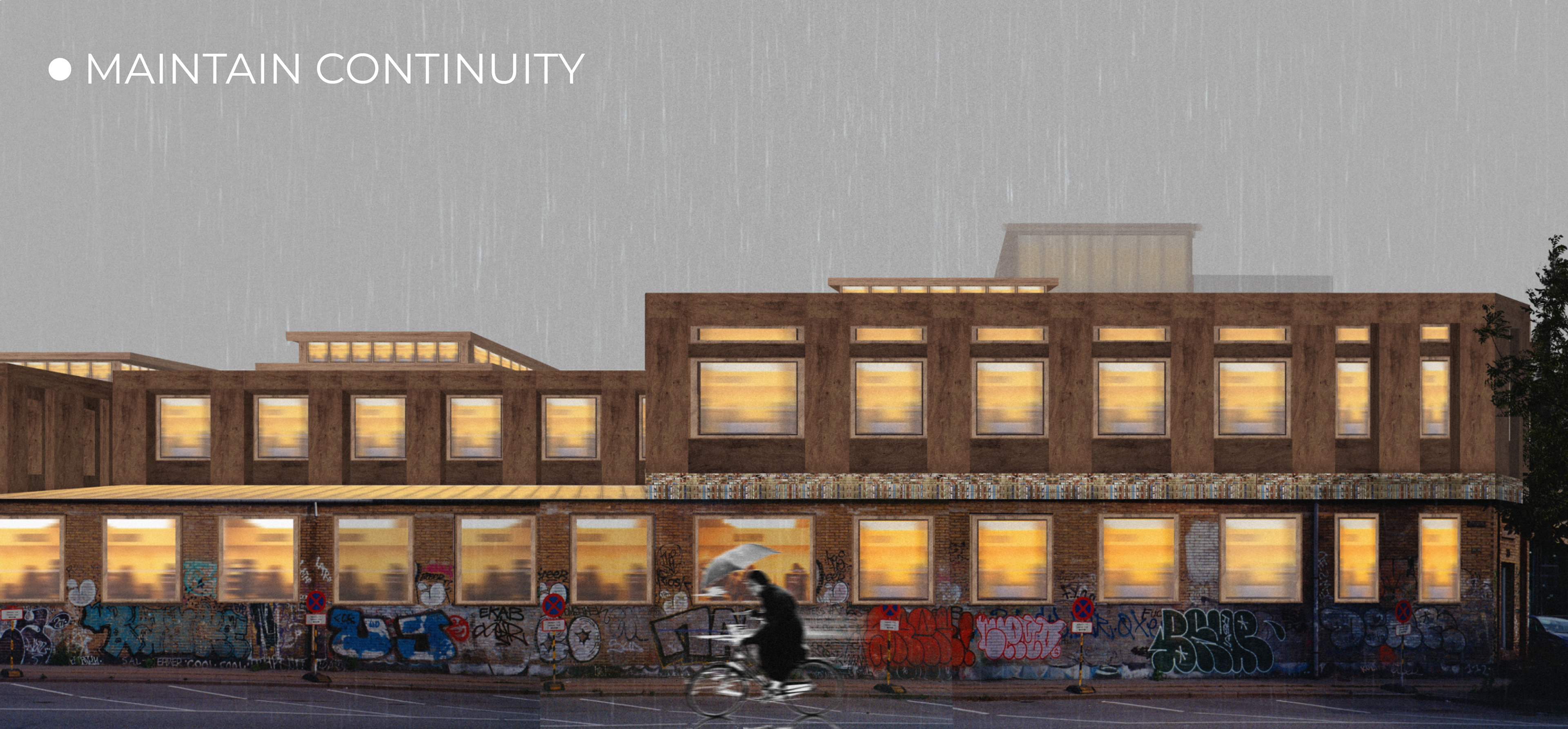
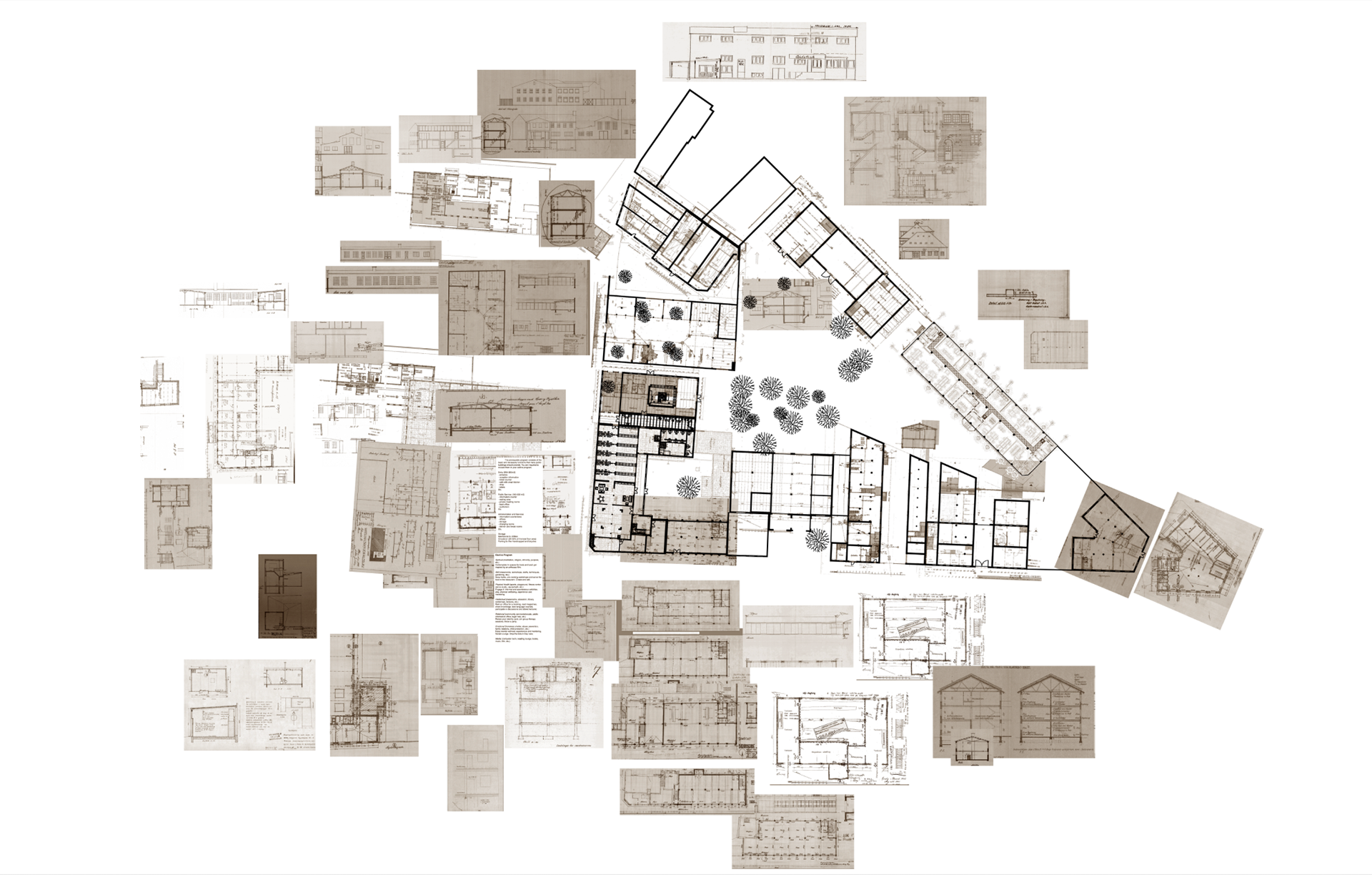
This is not only about accepting decay as an inevitable process, it is also about recognizing the beauty in the way time shapes architecture. Organic development becomes part of the existing fabric, growing from the context and remaining rooted in it. When such continuity is preserved, it enables ongoing transformation that remains attentive to the past.
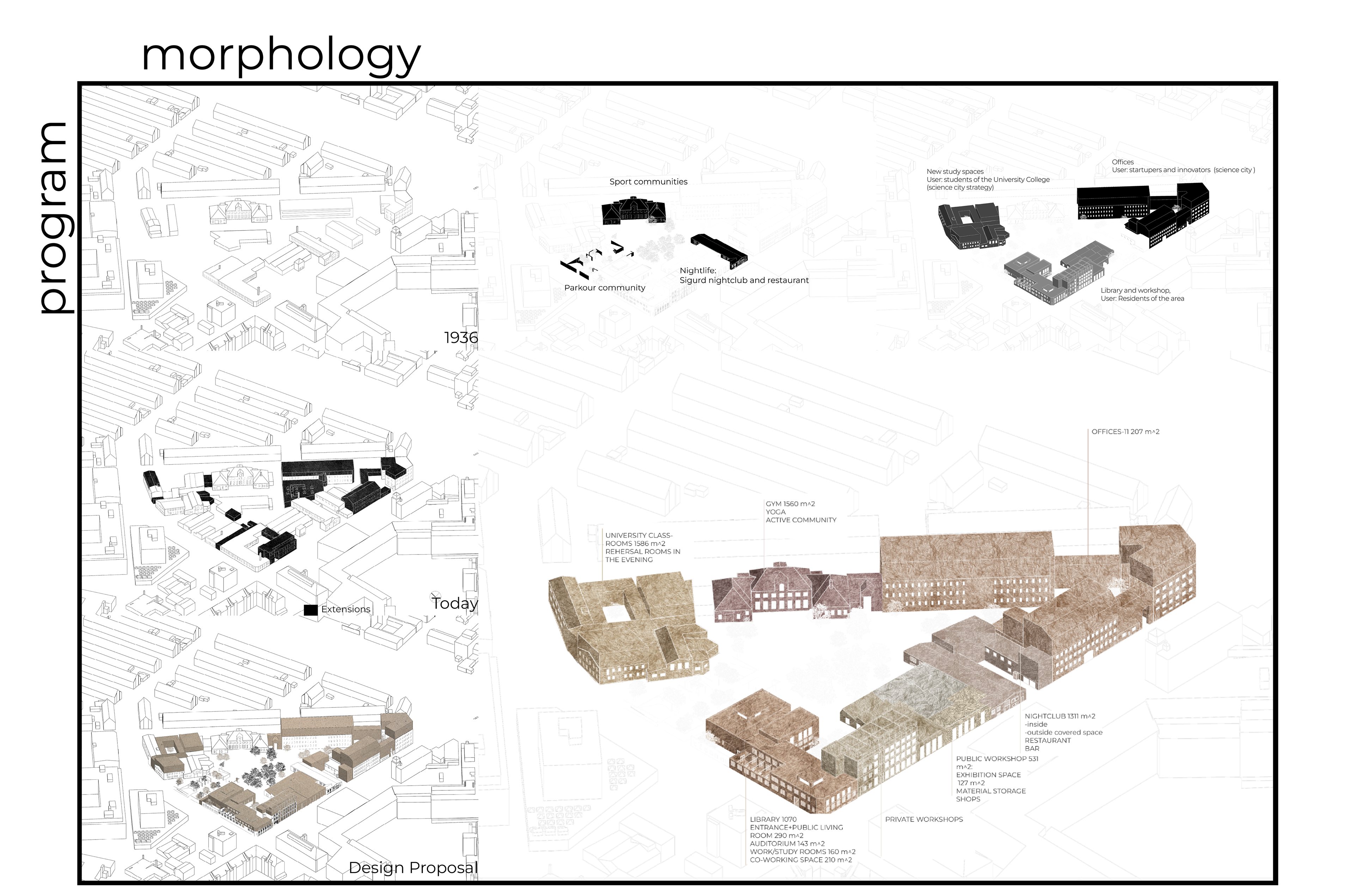
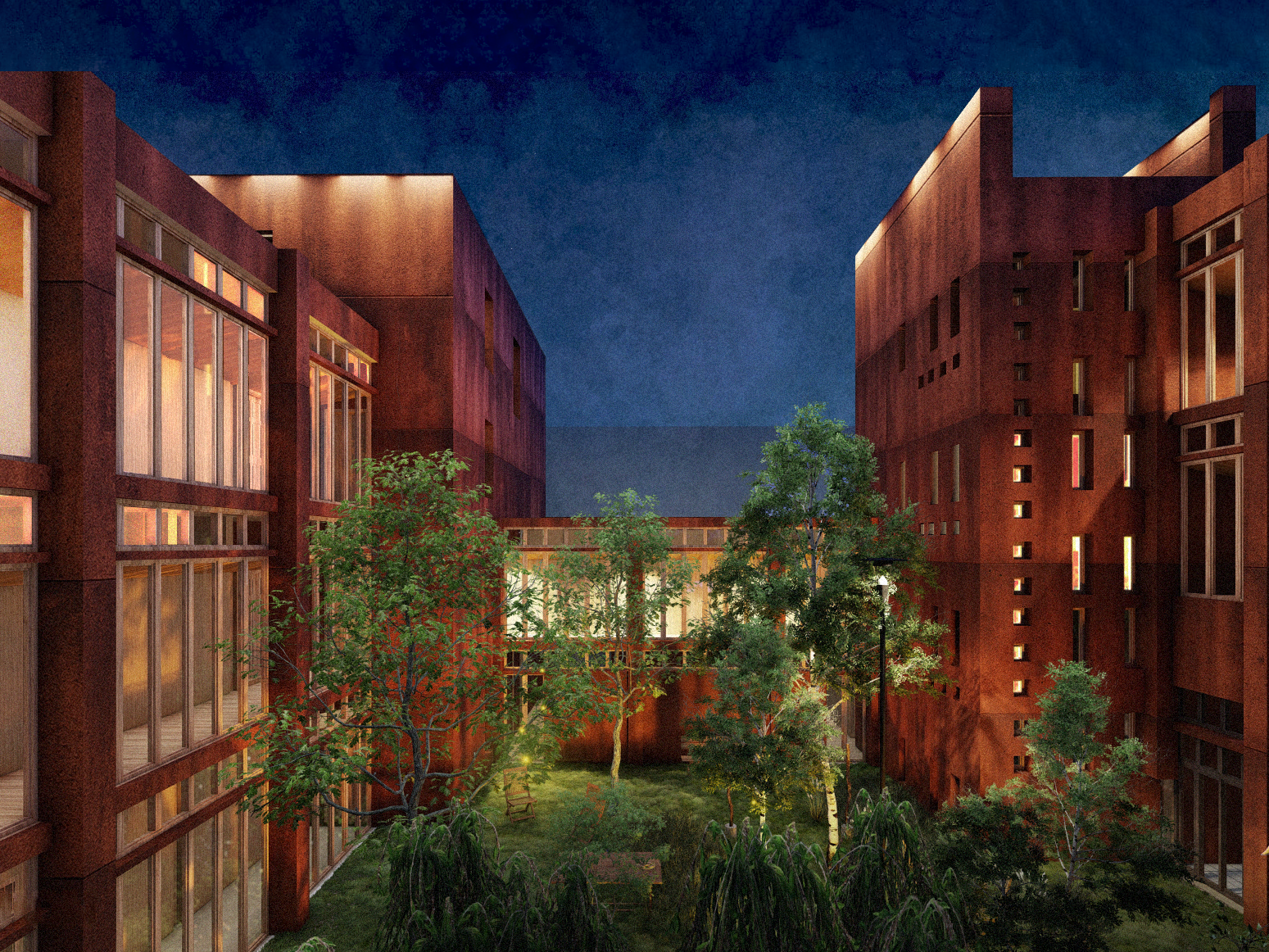
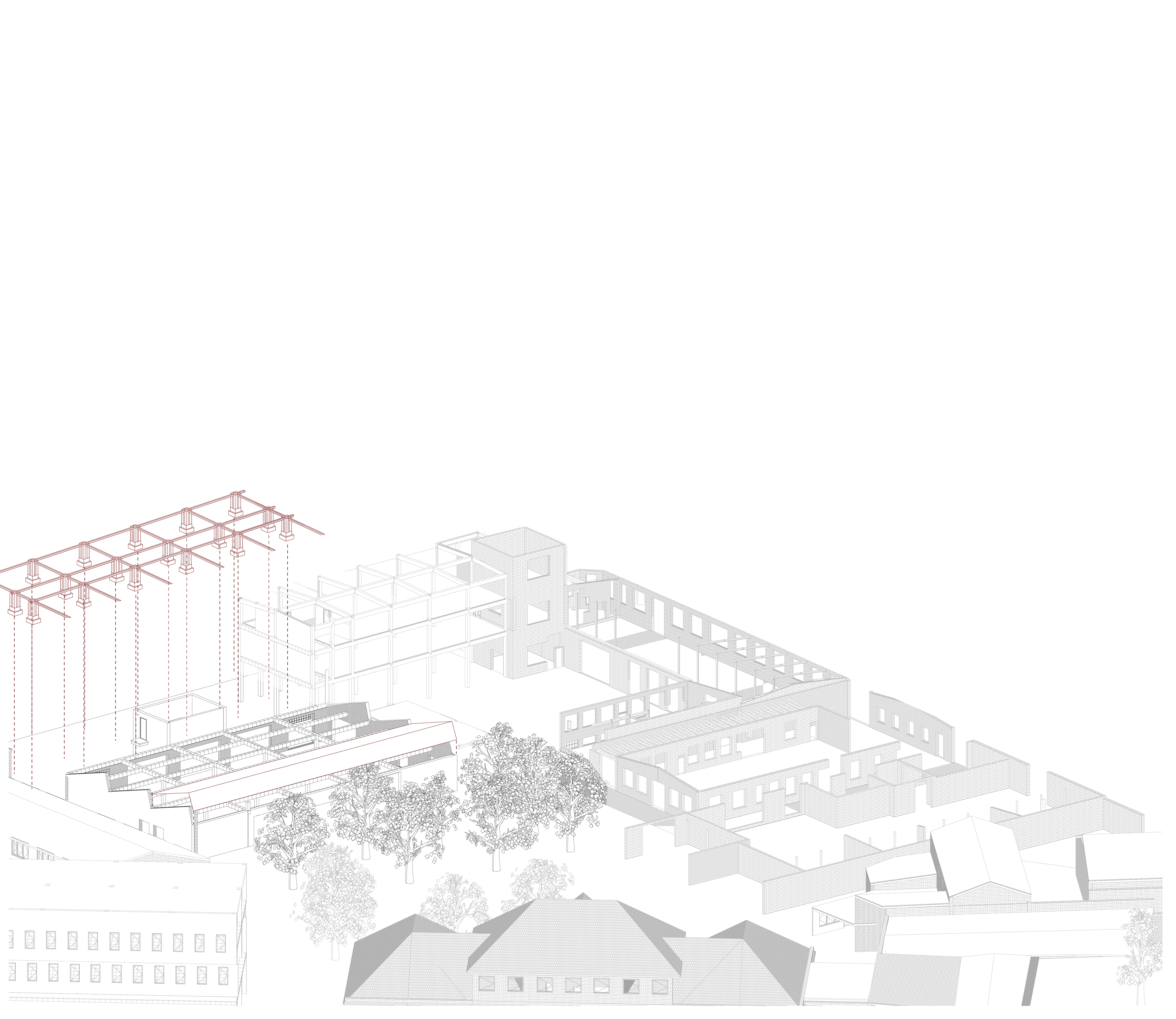
The new follows existing patterns of development by extending the buildings already present on the plot, while adapting them to new functions, as has been done throughout the years.
Existing communities are given space in the new strategy as anchor points, allowing current users to remain in place. New functions are introduced at the corners, combining state ambitions with
public-oriented uses.
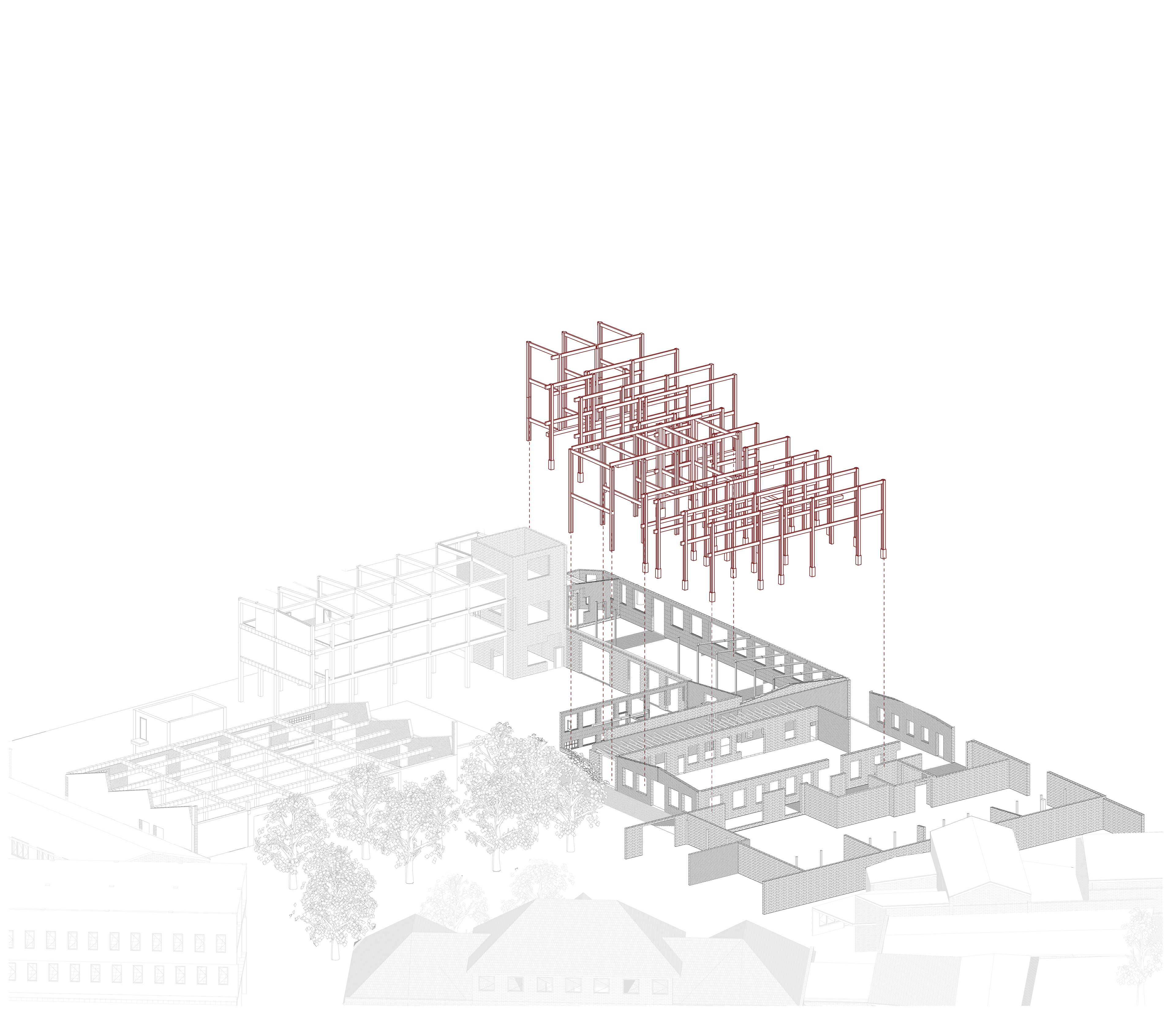
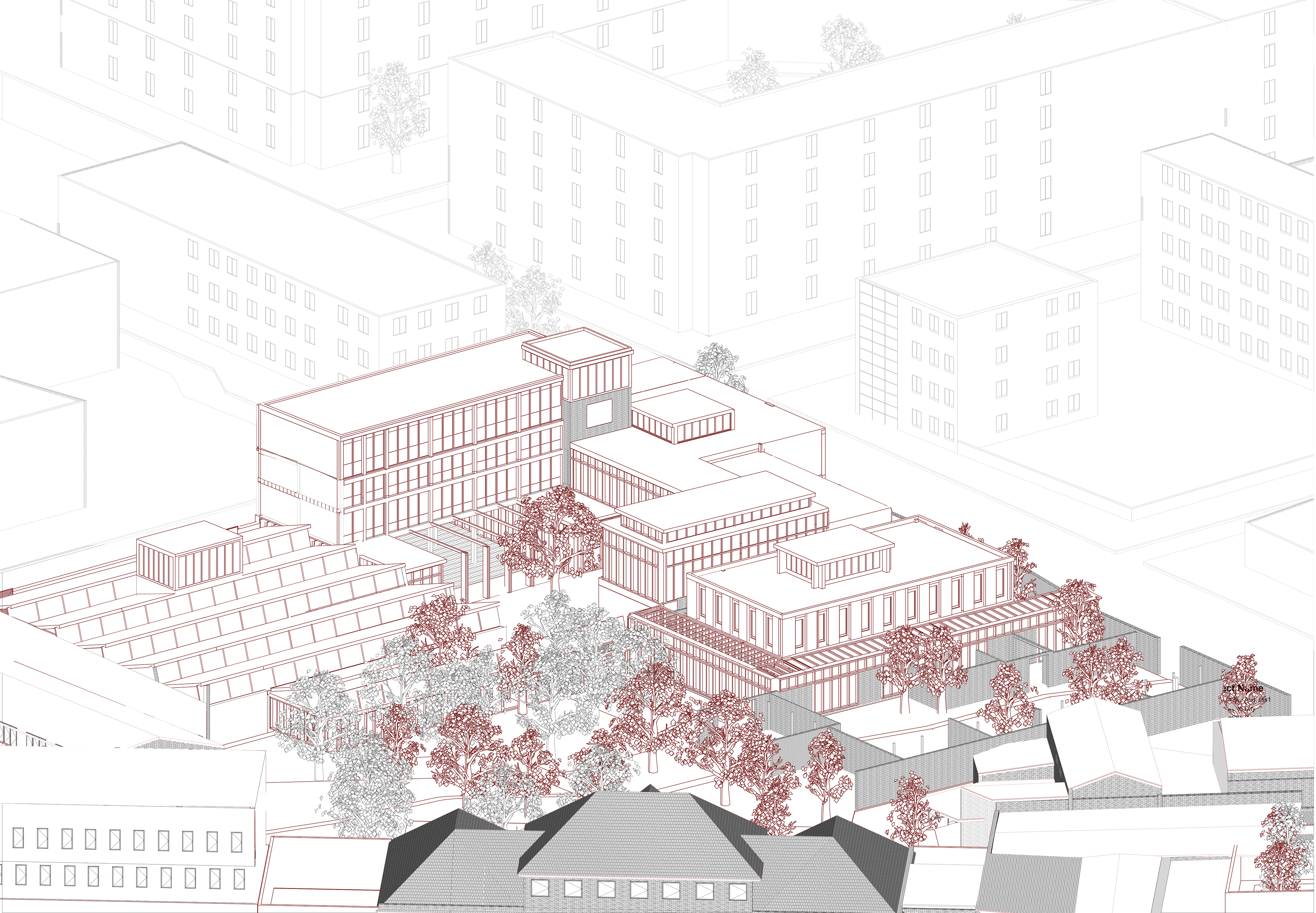
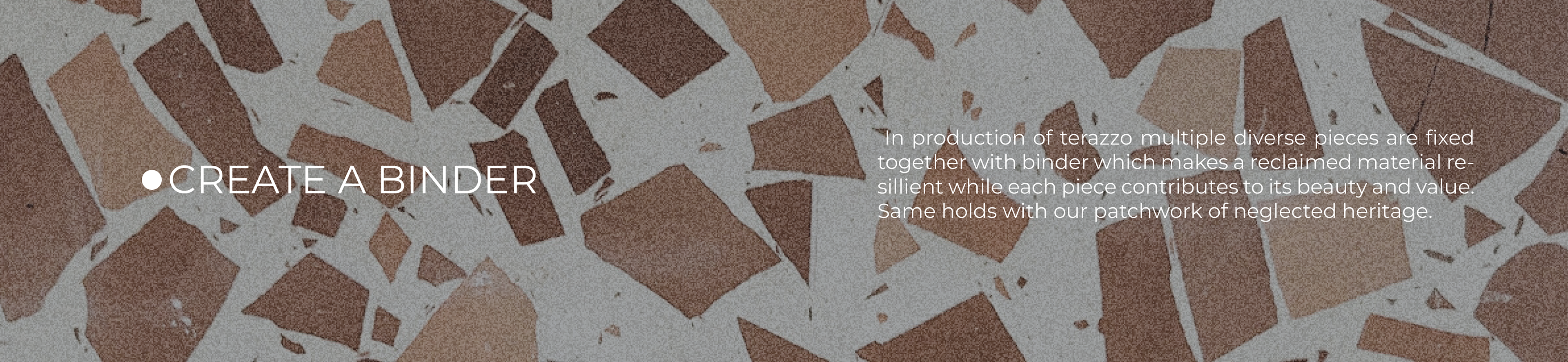
On the scale of the block, such a binder is the garden. It holds a value growing over time and connects all the diverse users as a recreational space.
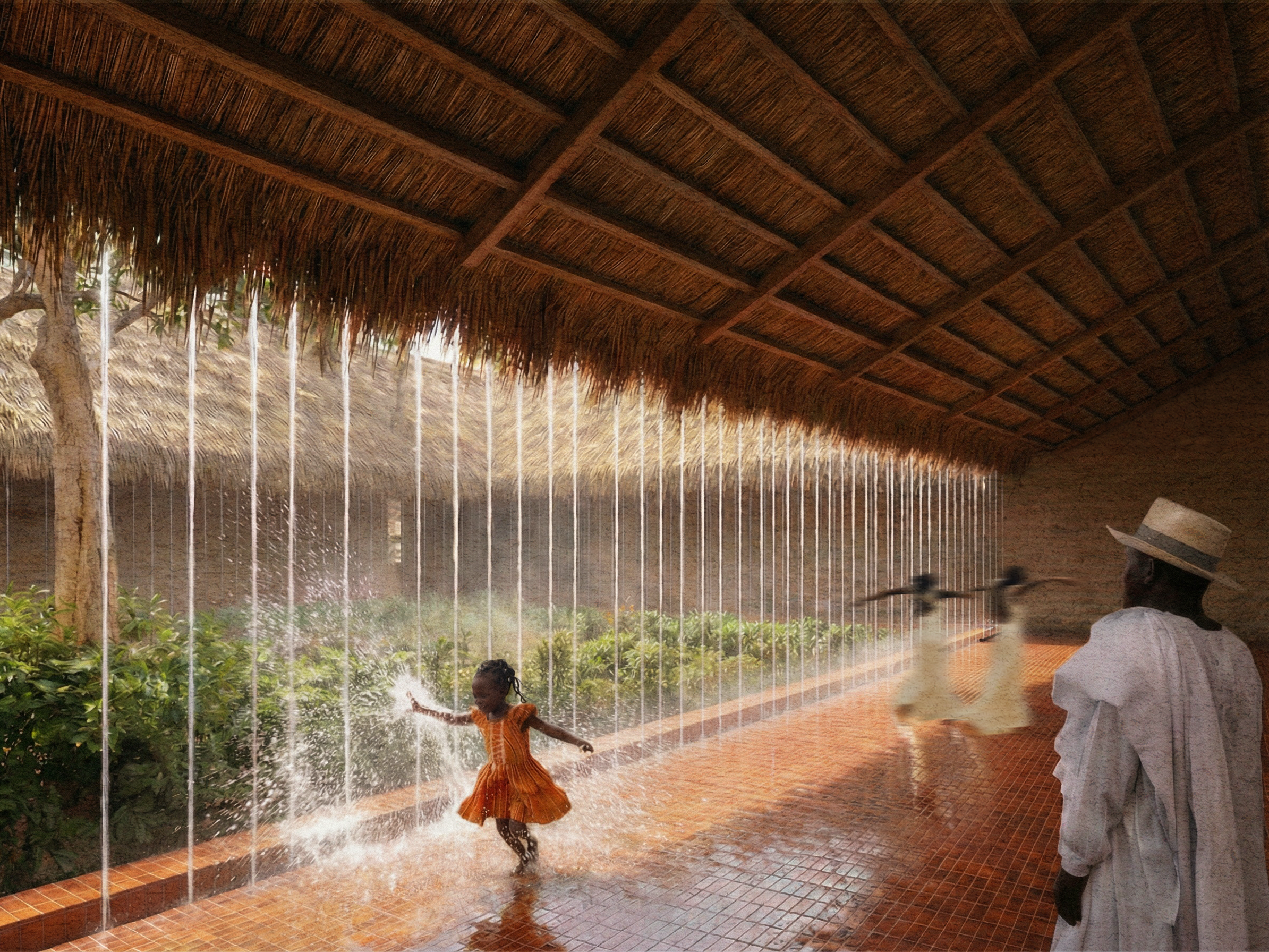
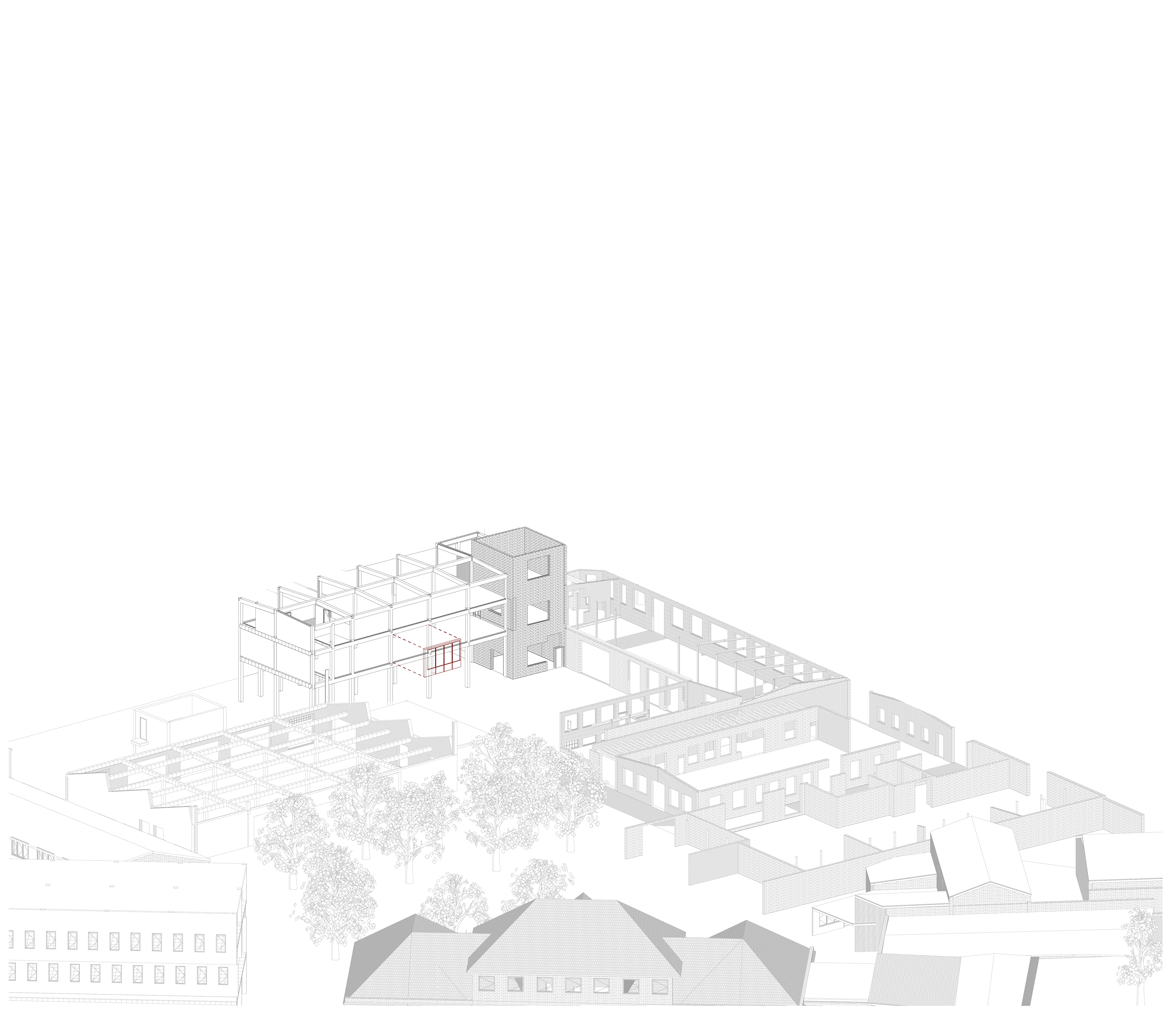
On the scale of the building, circulation spaces are marked with timber curtain walls connecting the fragments together and opening the inner part of the building to the garden. This way, navigation between the parts of the public building becomes clear.