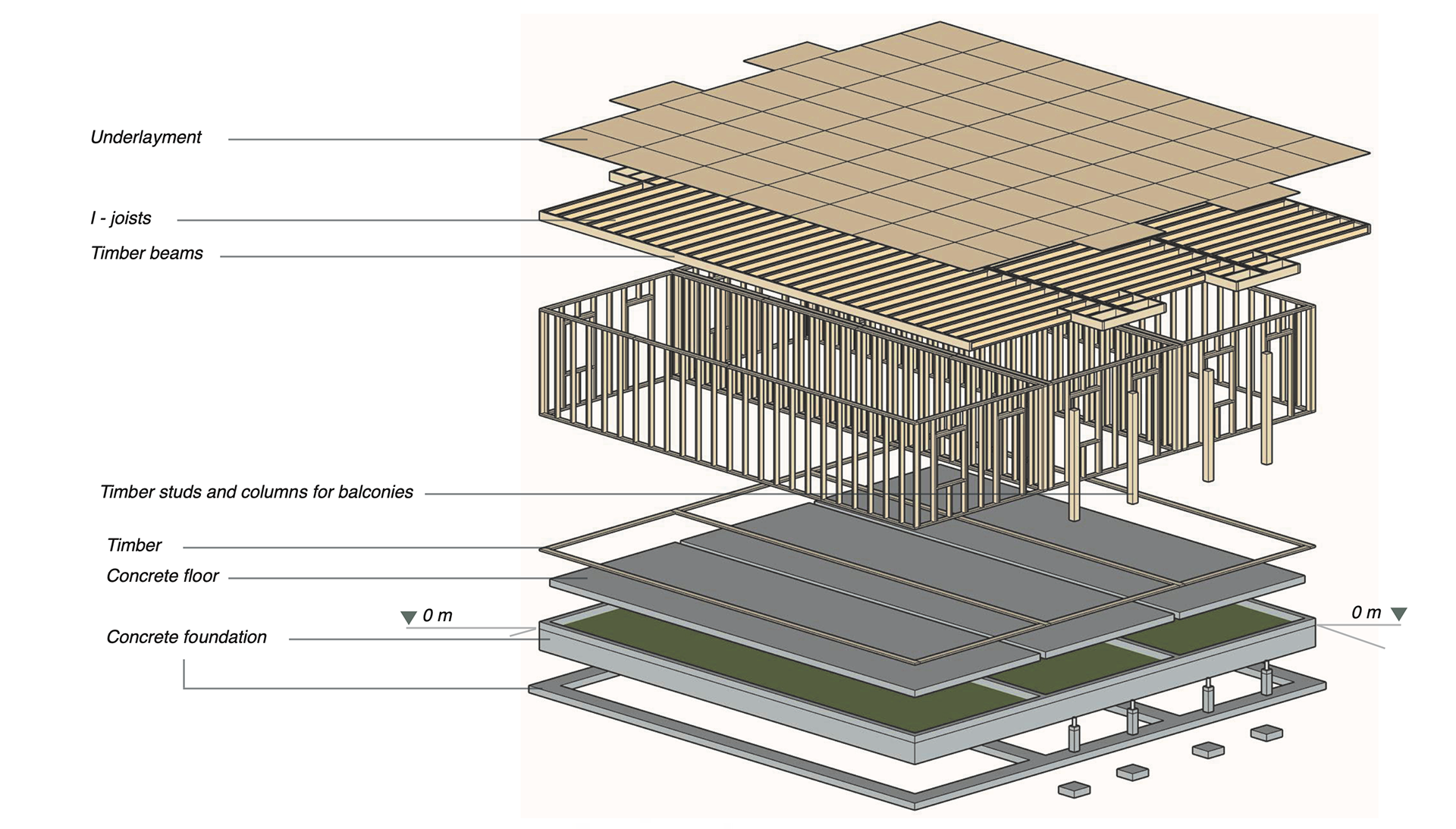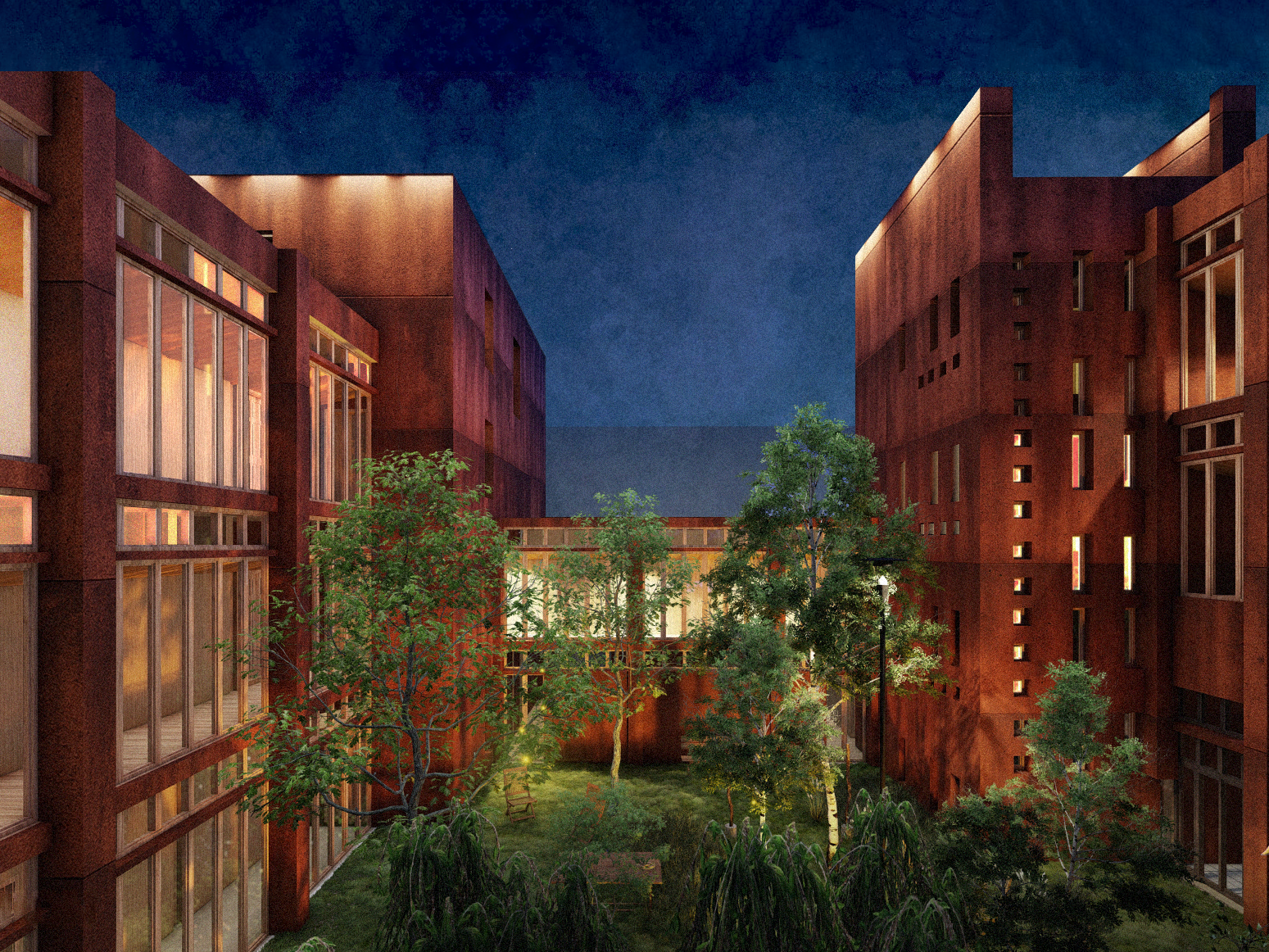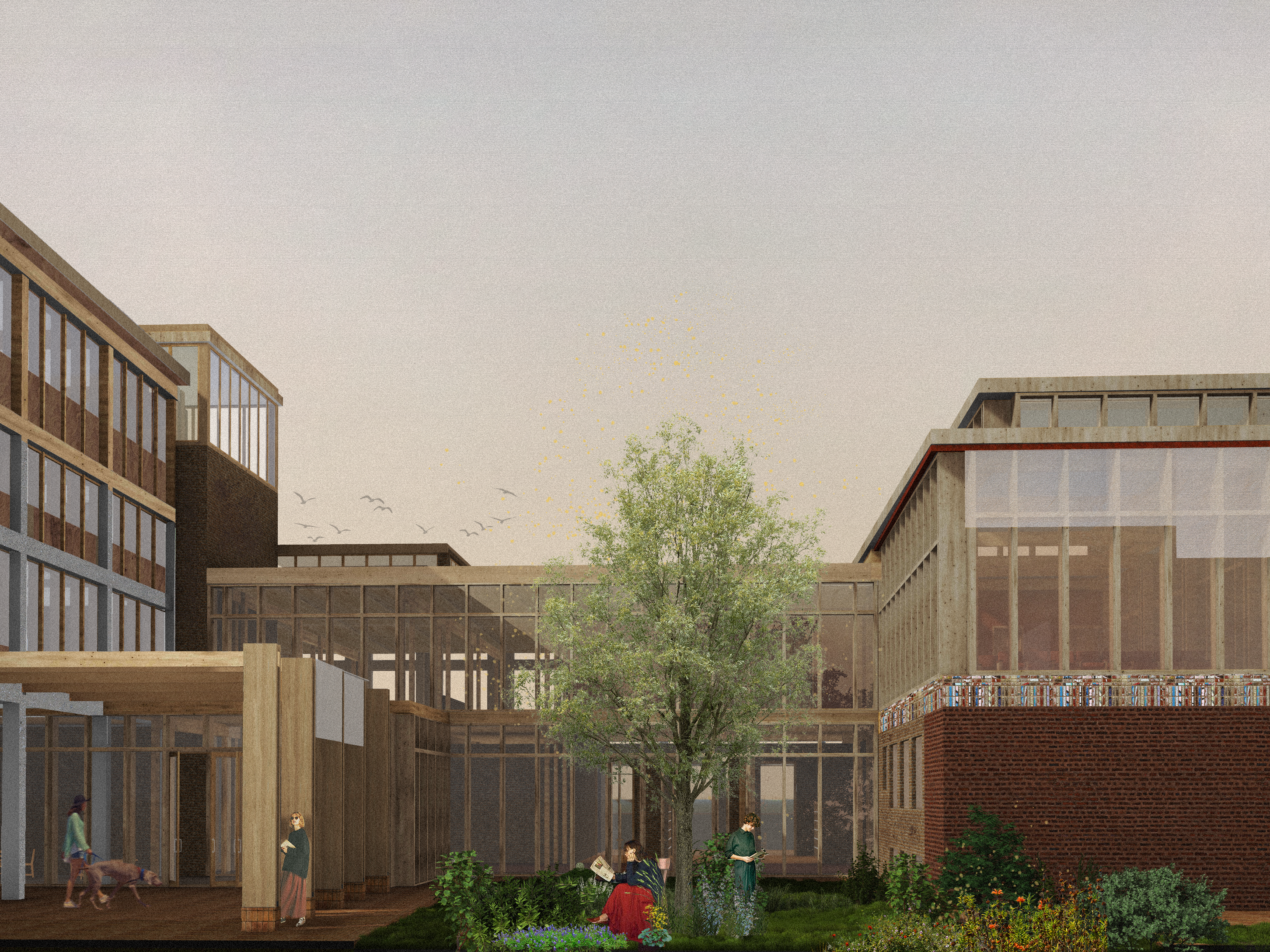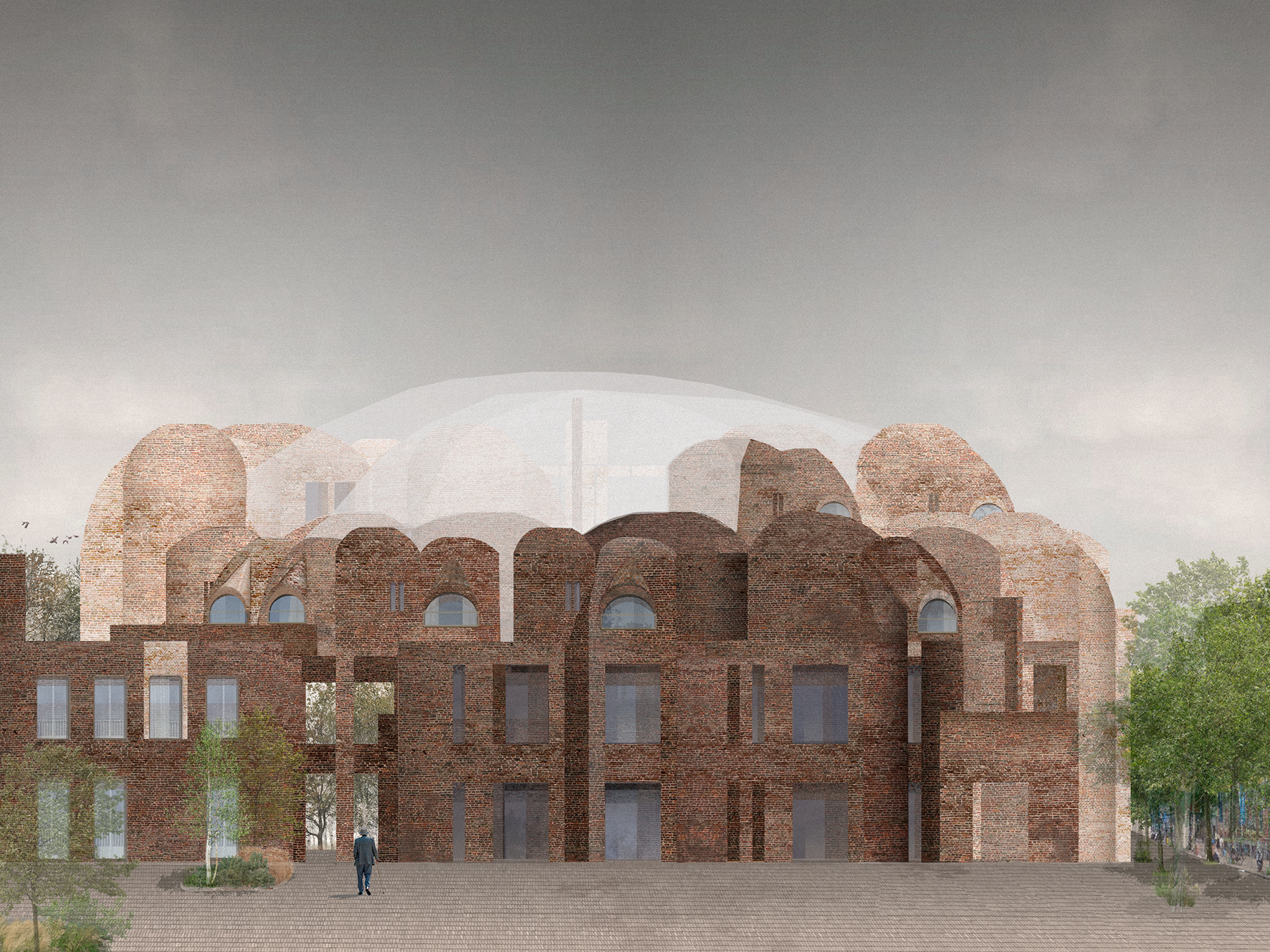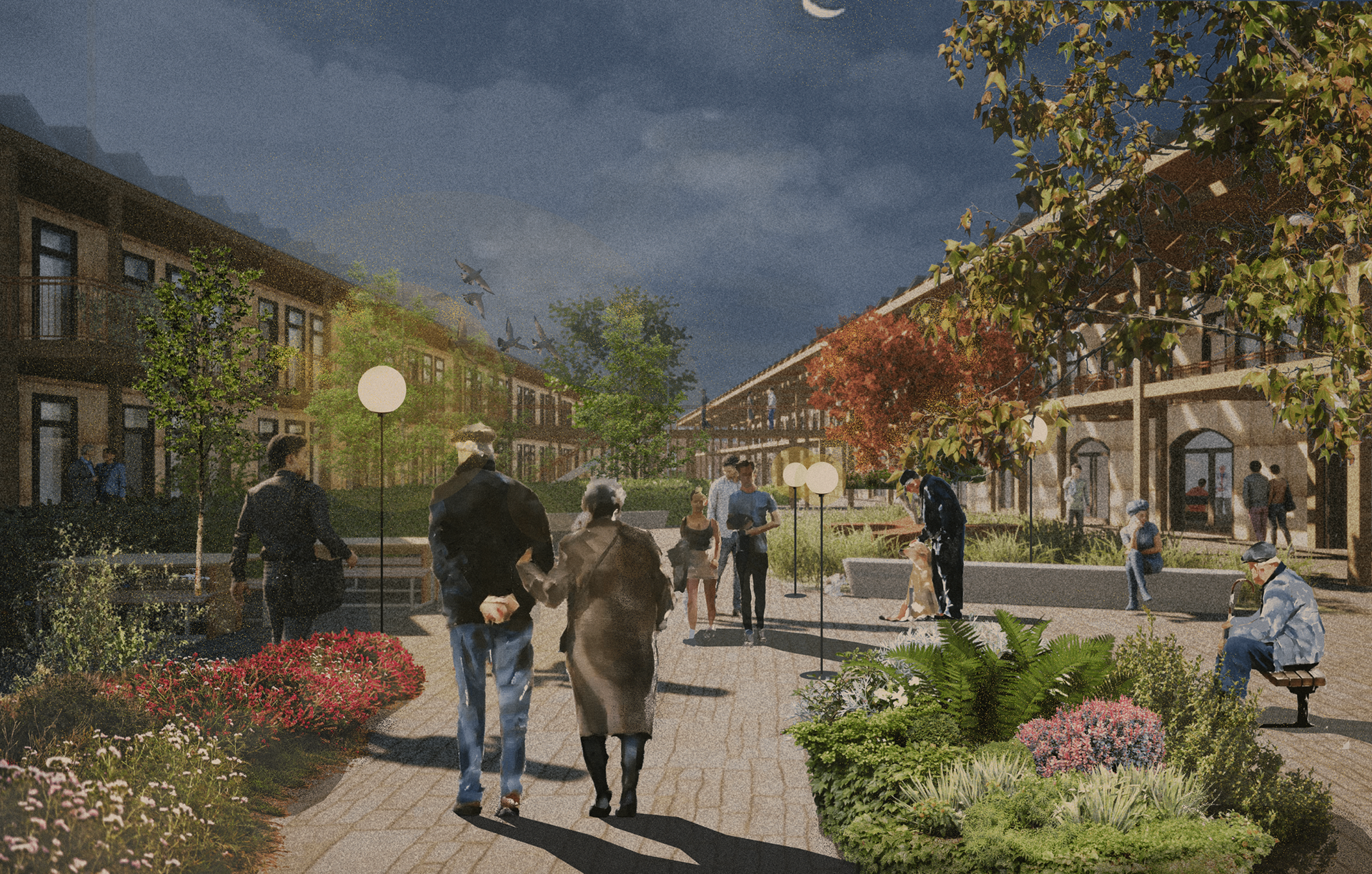
Chasse Boulevard is a collaborative project developed with a multidisciplinary team of six students in real estate, building physics, architecture, and urbanism. The design envisions a climate-friendly and inclusive community for both starters and elderly residents, while also offering an oasis for visitors in the heart of Breda.
A strong focus was placed on climate neutrality by 2030, achieved through sustainable strategies such as hemp façade cladding, solar and geothermal energy usage, and promoting an environmentally conscious lifestyle. The central public space, the boulevard, creates an additional loop within Breda’s shopping district, guiding visitors through a green, pedestrian-friendly path that culminates in a calm café area, offering respite from the city’s bustle.
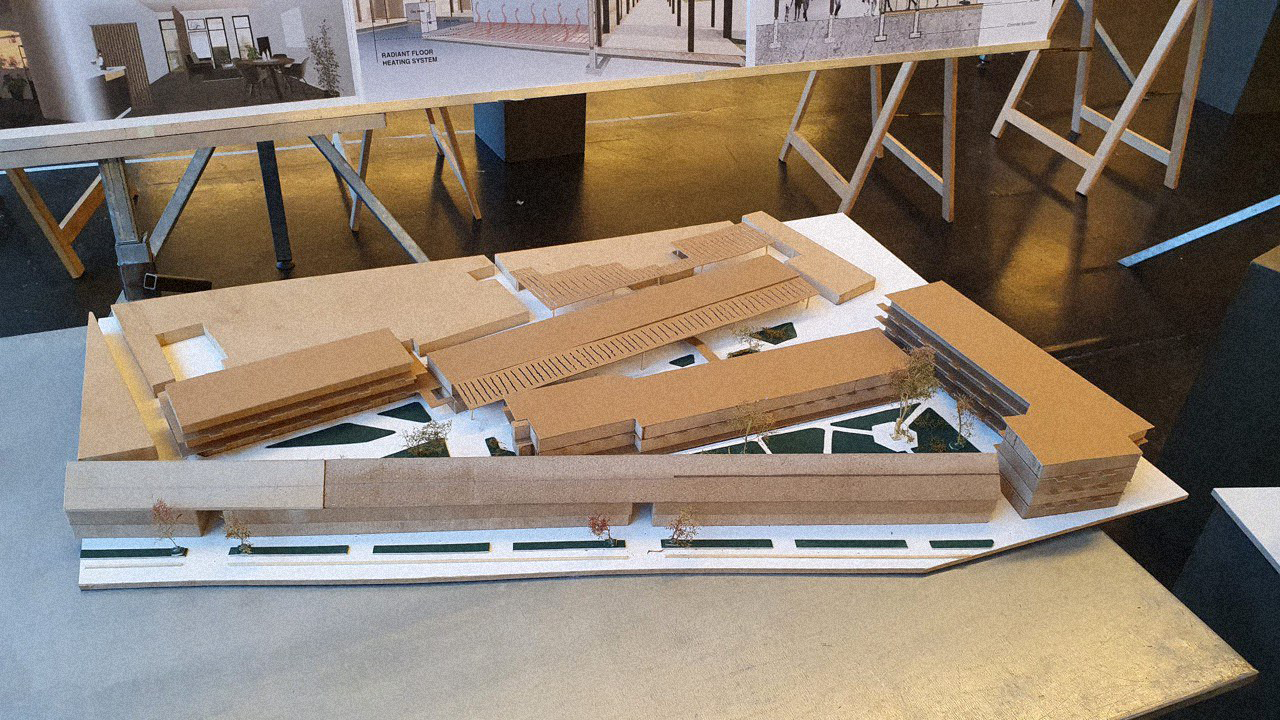
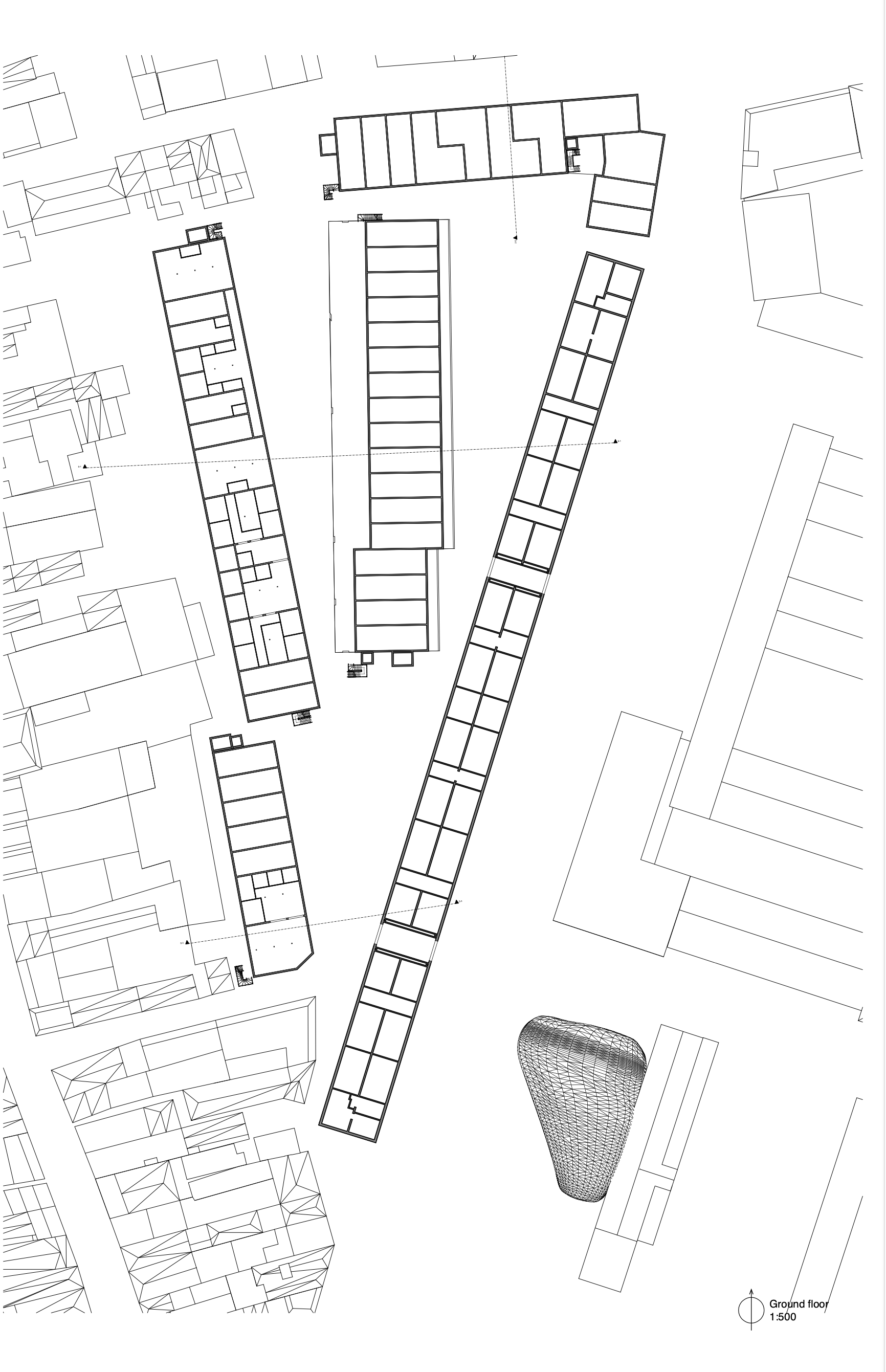
Ground Floor
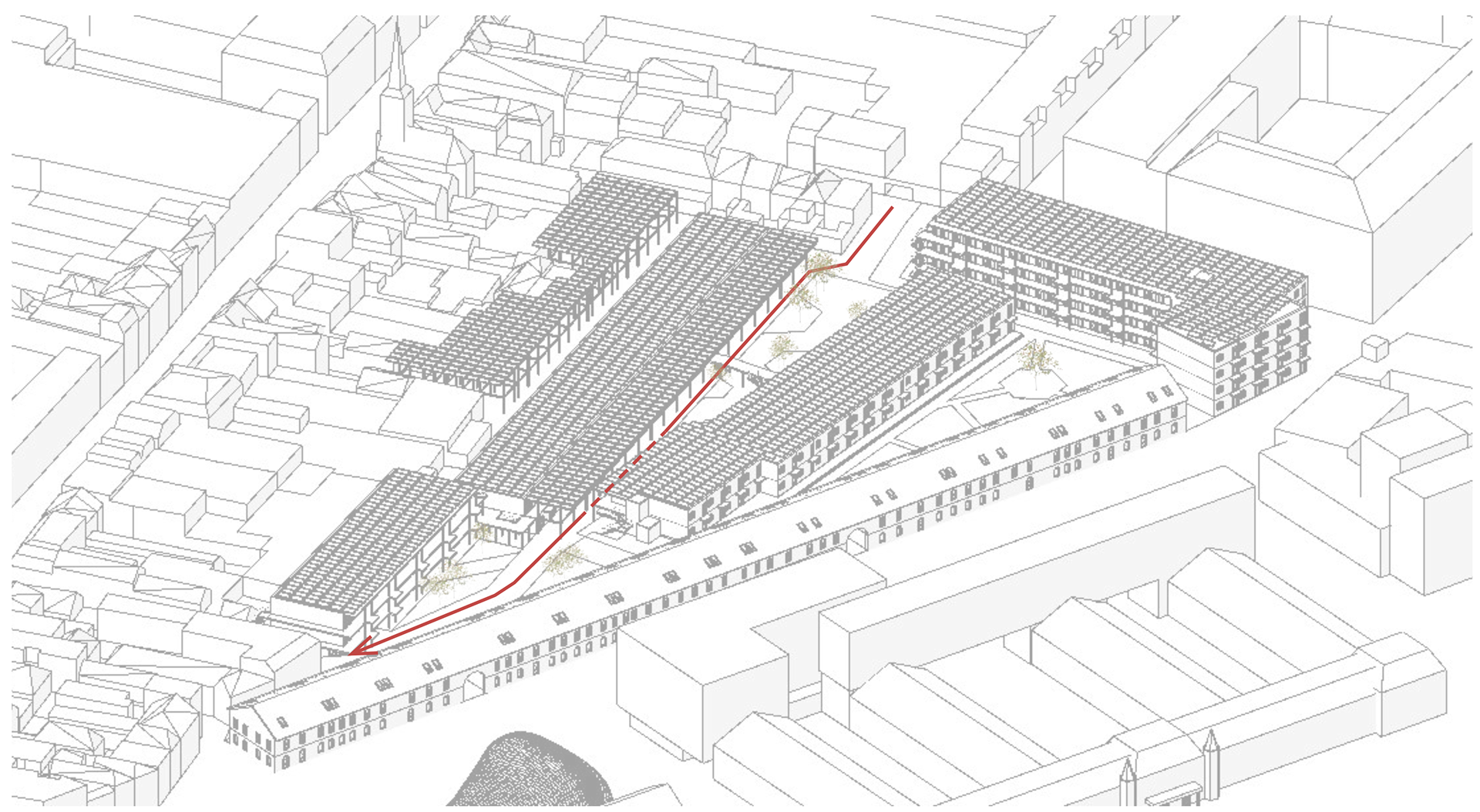
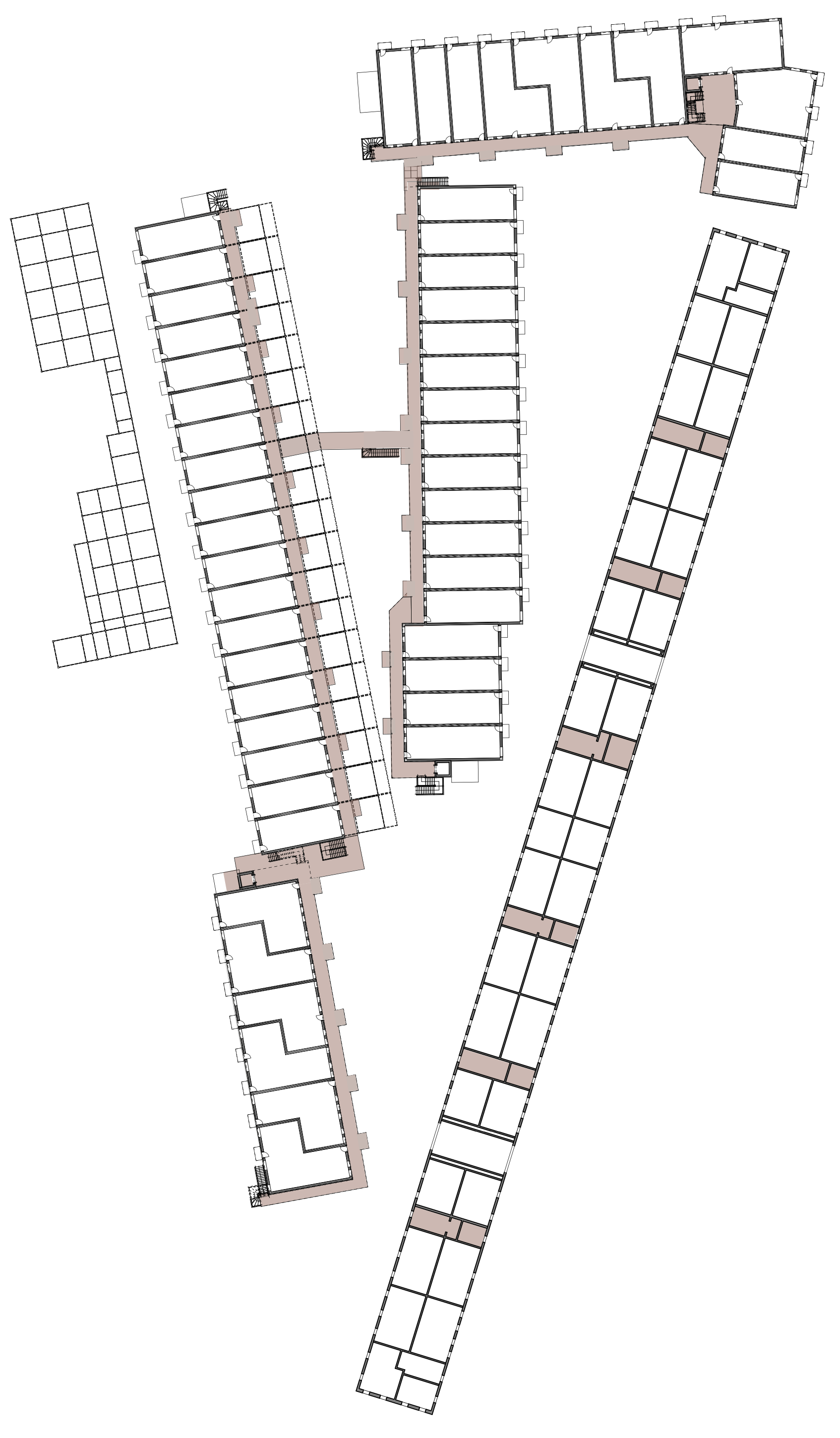
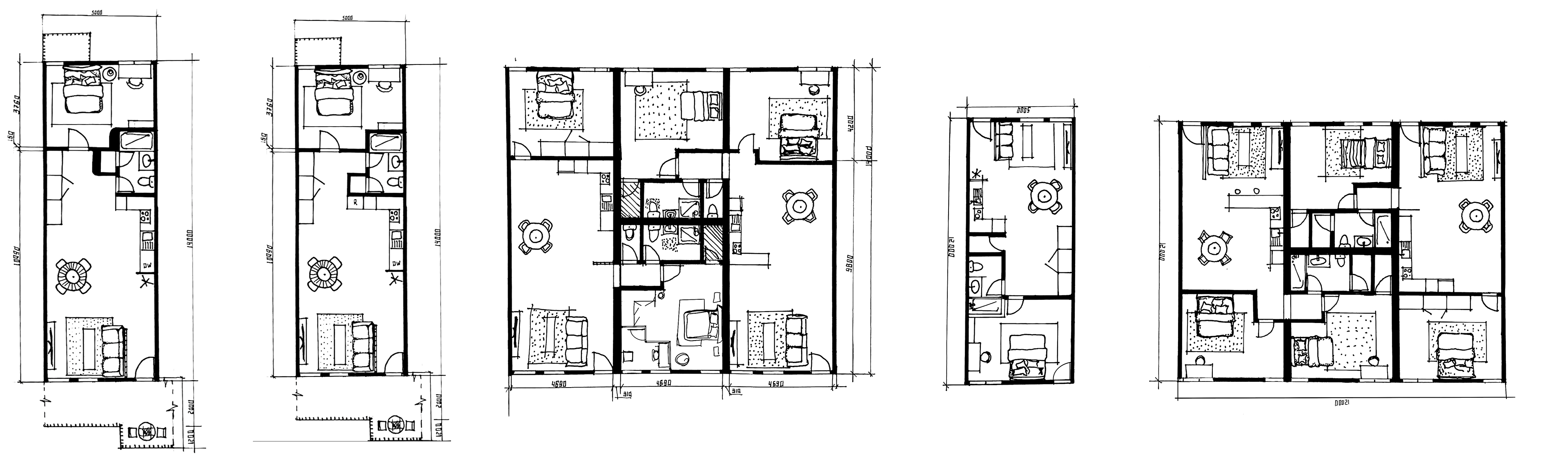
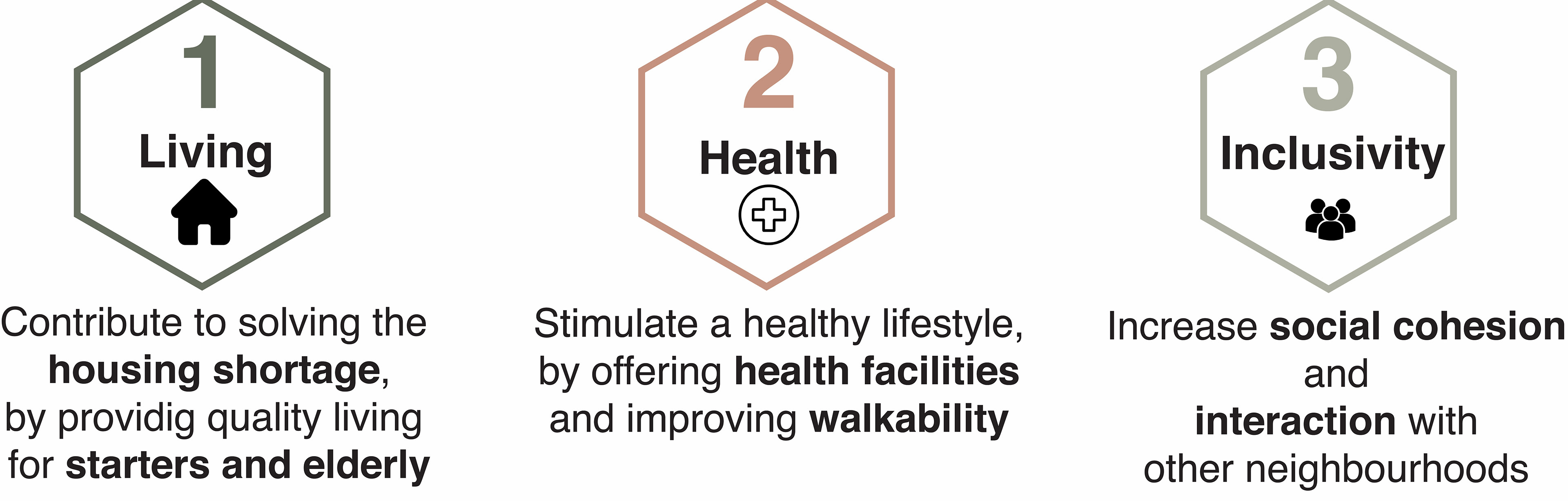
The complex offers a variety of apartments for both elderly residents and young starters, ranging from one- to two-bedroom units. Apartments designed for seniors feature walls with softened edges to ensure greater comfort and safety.
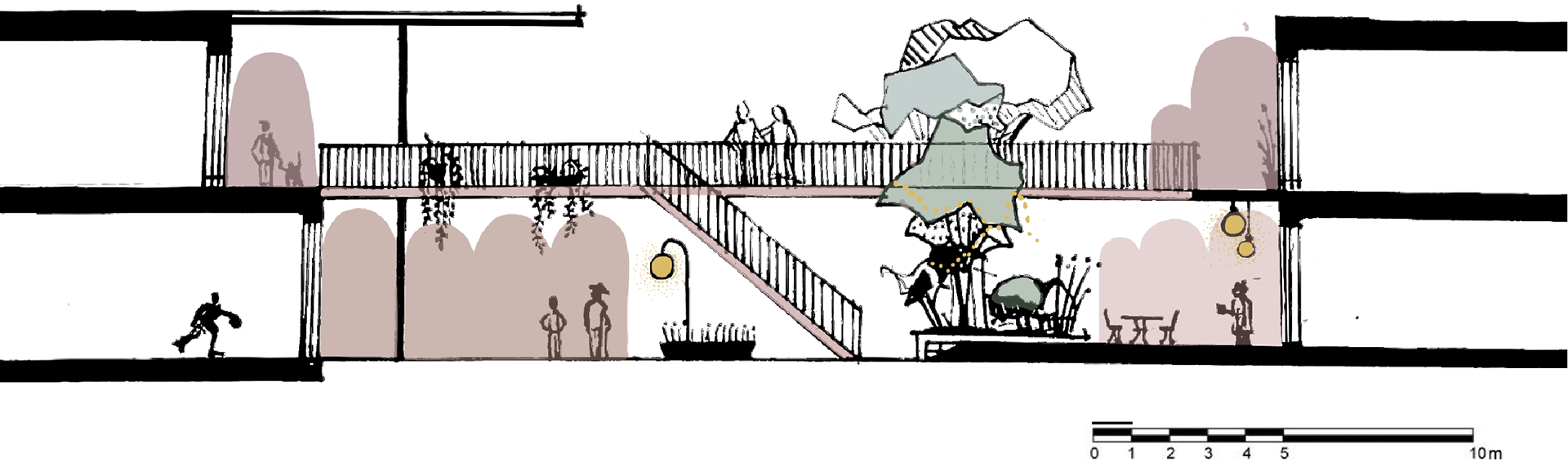
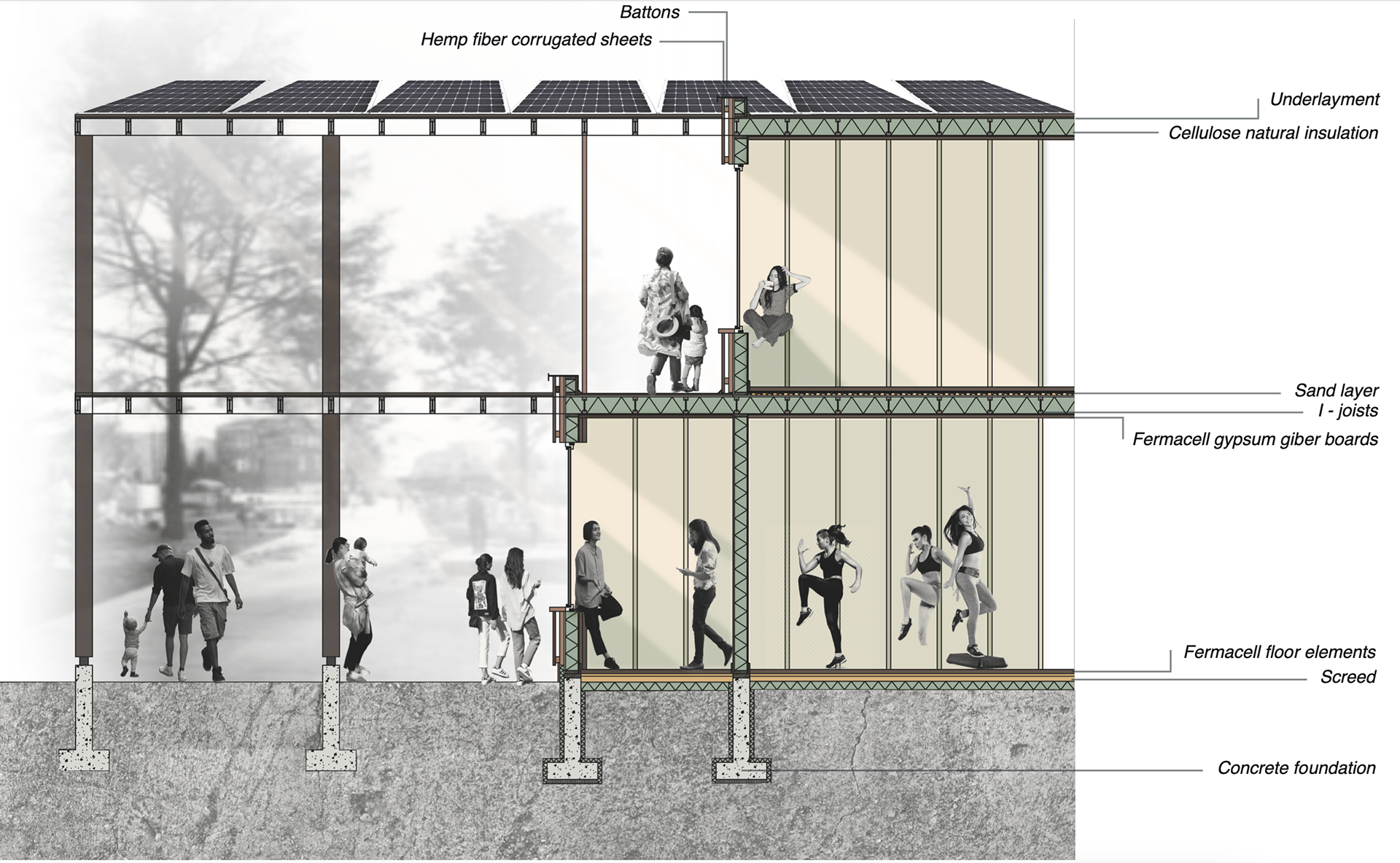
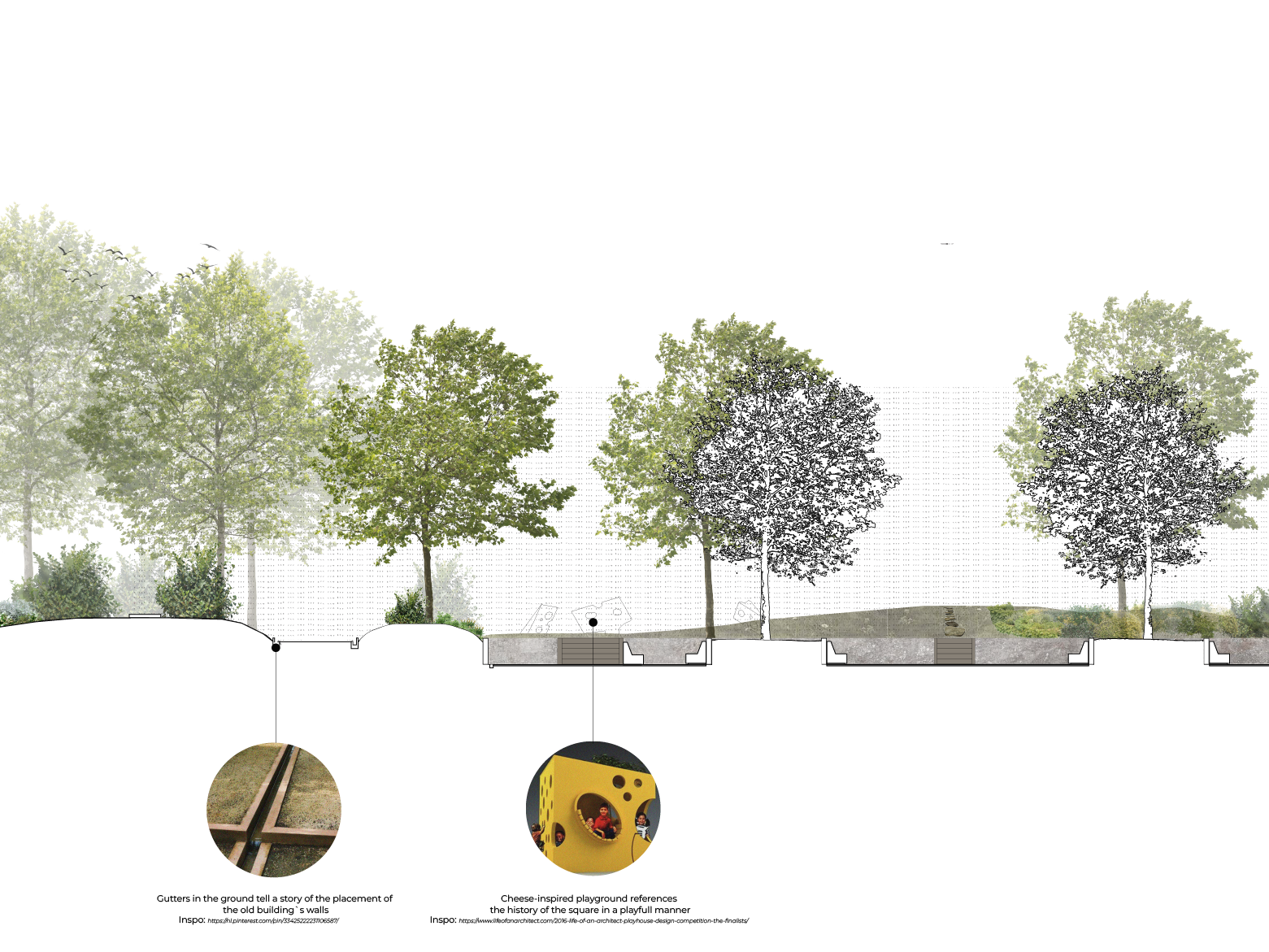
We refer to the boulevard as a public space, yet it is composed of a sequence of spaces with varying degrees of publicity, gradually transitioning into private apartments. The section drawing illustrates how these spaces are organized and how their level of accessibility changes.
Particular attention is given to the semi-public areas located on the first floor of the buildings. These galleries serve both as circulation corridors for residents and as flexible spaces for other activities. By linking the buildings together, the galleries create a continuous network enriched with small shared balconies that extend outward. These balconies are intended as communal spaces, fostering interaction among neighbors and encouraging a sense of community.
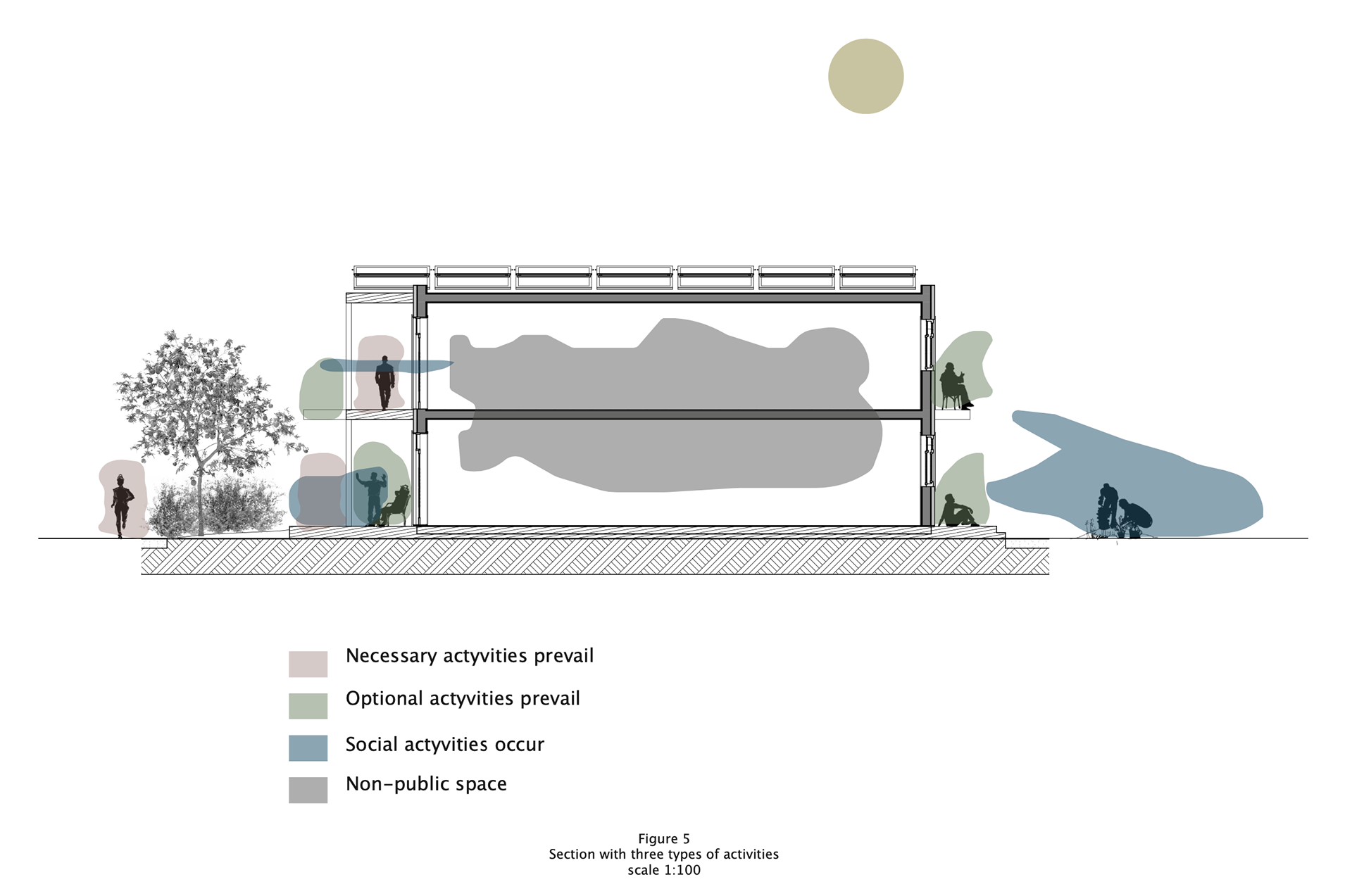
In Life Between Buildings, Jan Gehl distinguishes three types of activities: necessary, optional, and social. Necessary activities, such as commuting or shopping, occur regardless of the environment. Optional activities,like sunbathing or having coffee outdoors, depend on pleasant surroundings. Social activities arise from encounters between people, often as a result of the first two categories.
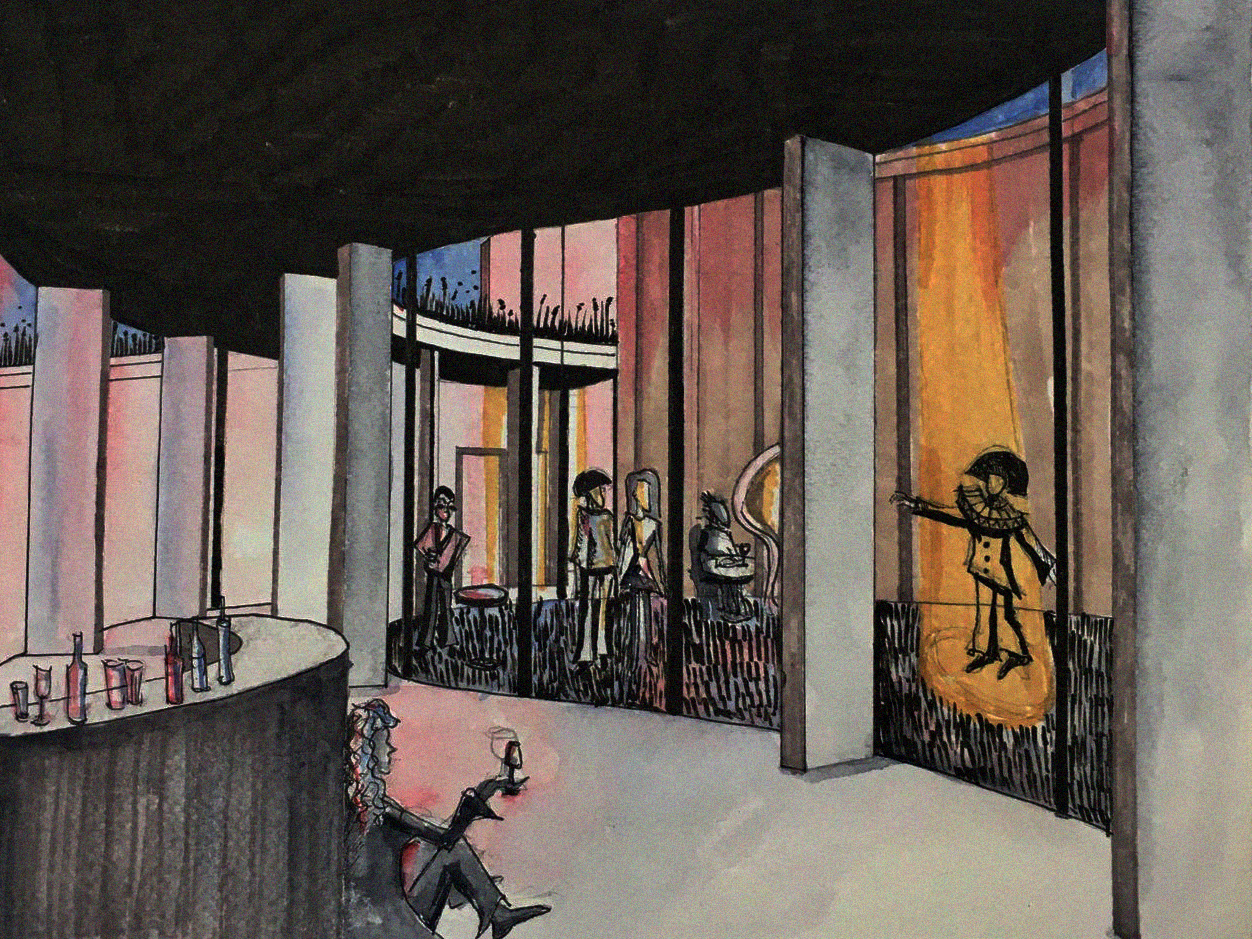
Every space therefore becomes a stage for different interactions. In the boulevard section, activities are highlighted with different colors to show how they overlap. Gehl’s research demonstrates that in poor-quality environments only necessary activities occur, whereas improving spatial quality greatly increases optional and, consequently, social activities.
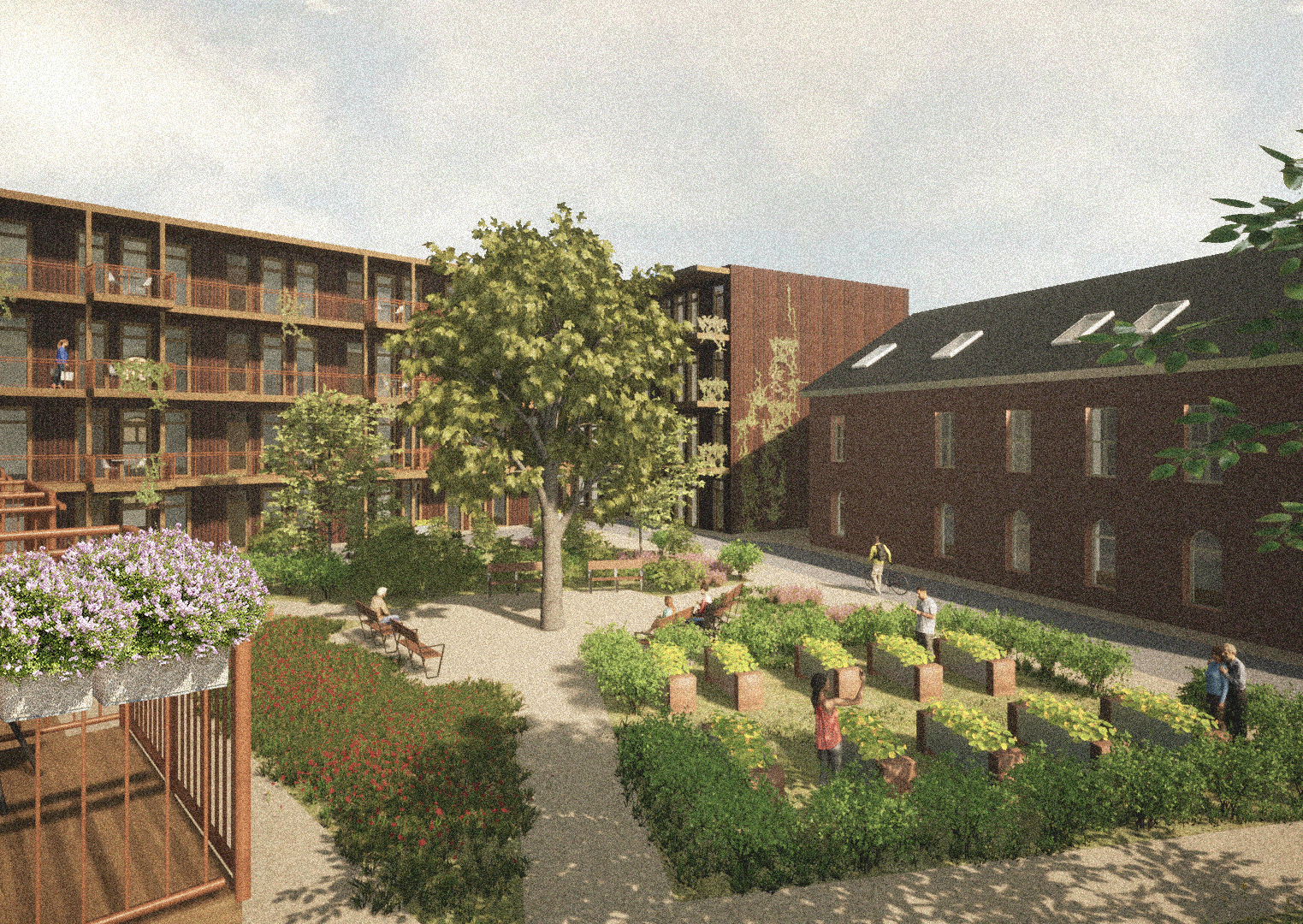
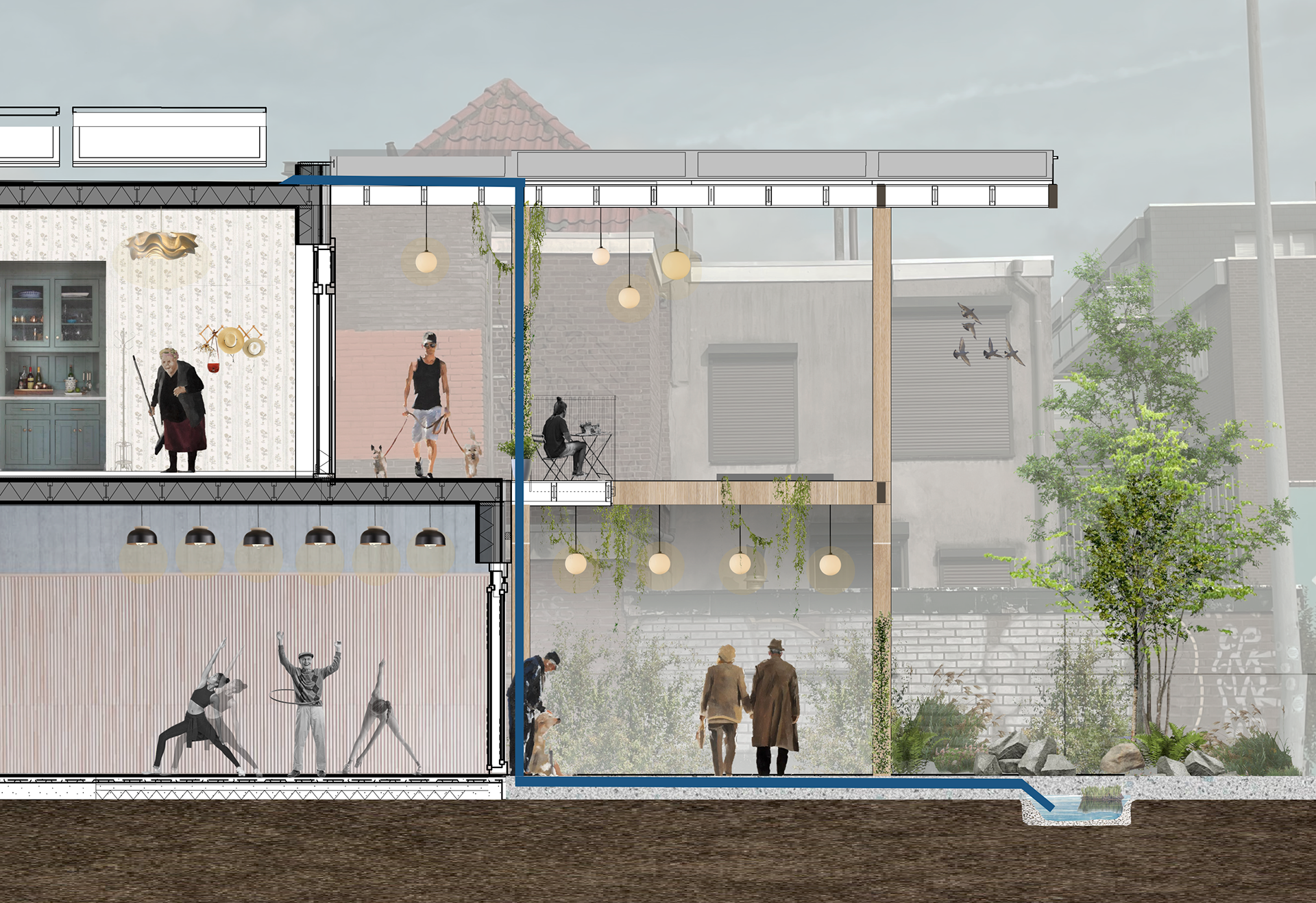
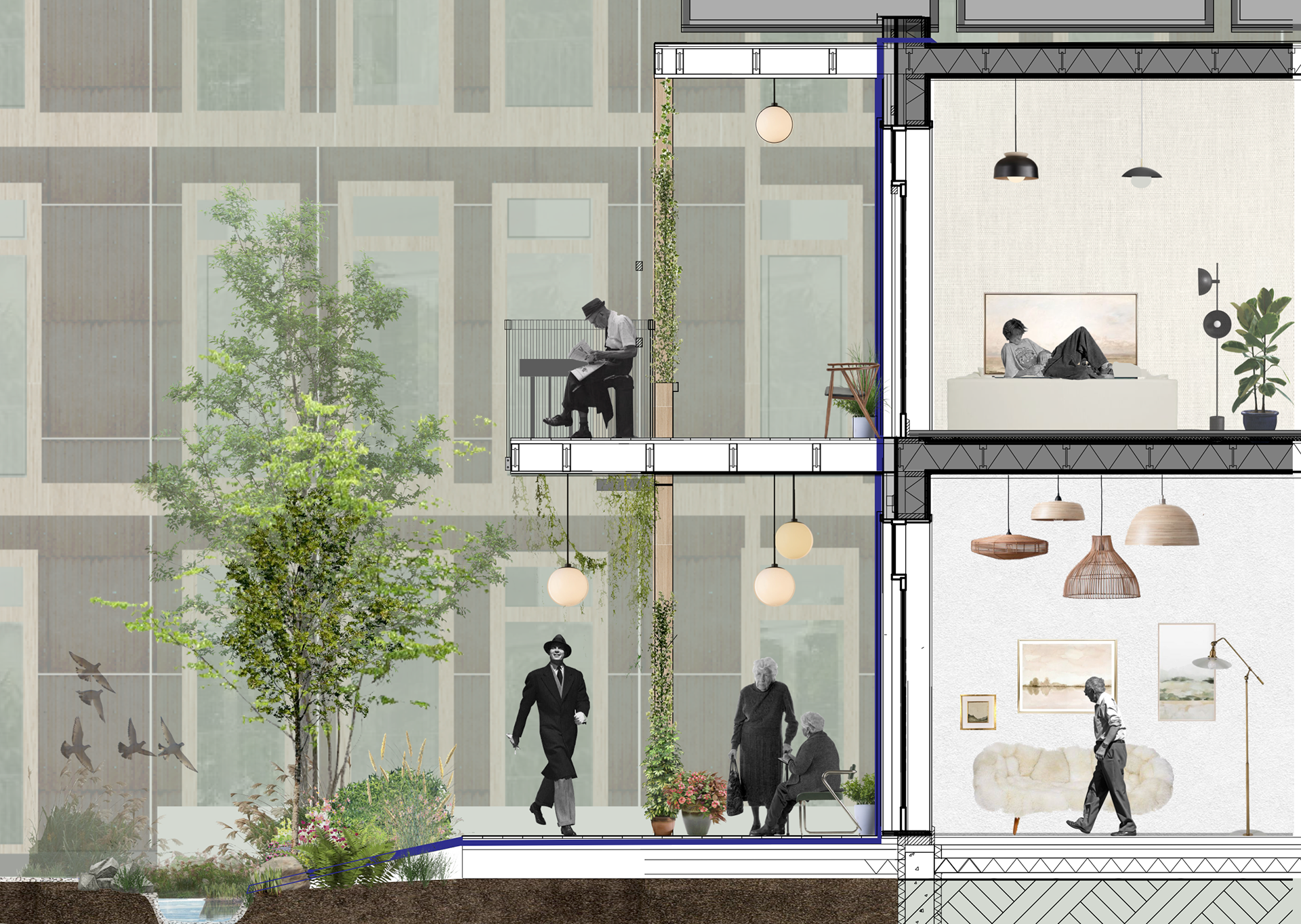
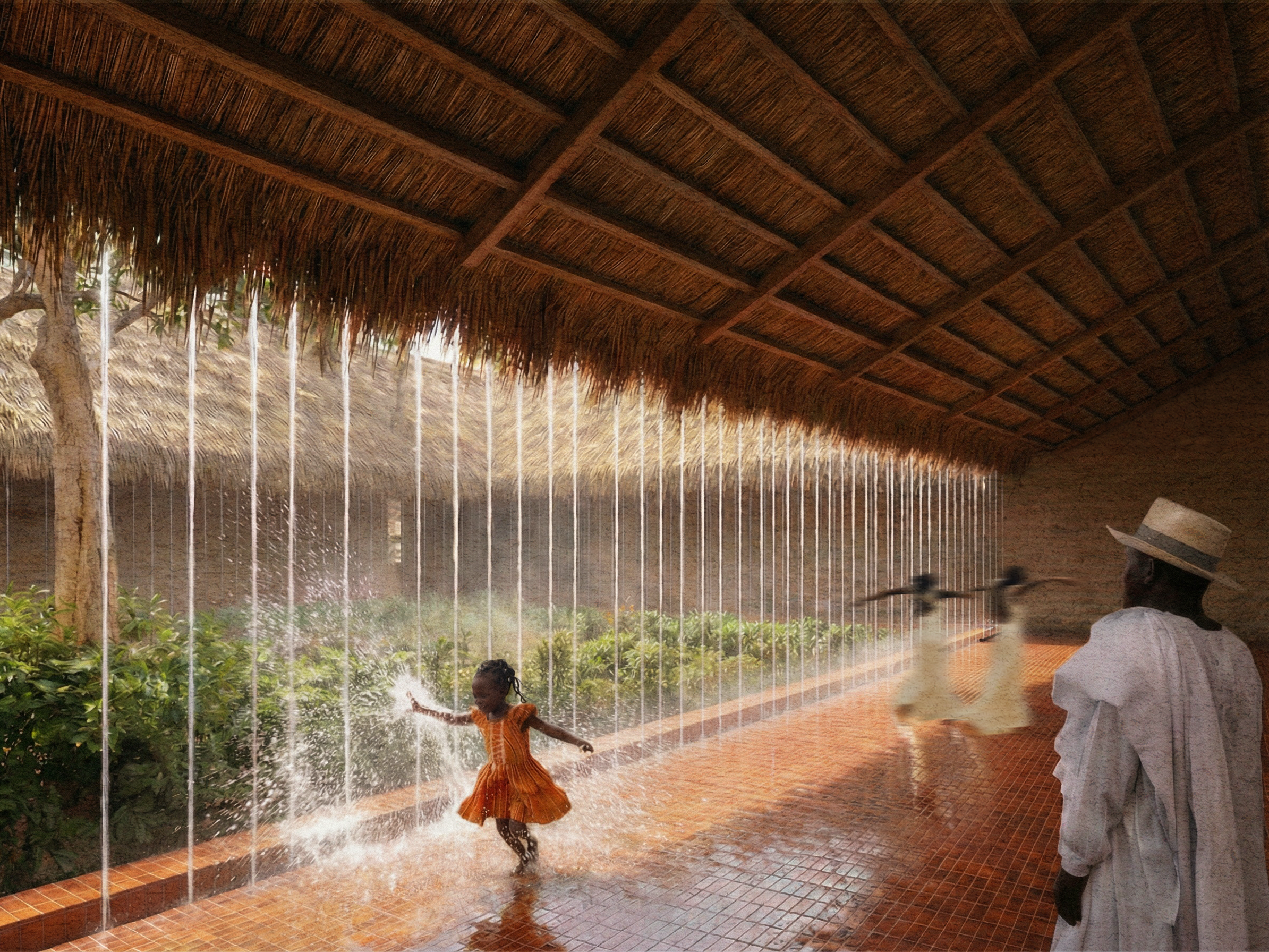
Rain gardens are a key tool in urban greening. They conserve water, reduce flooding, filter dust and mold, and enhance air quality (Steiner & Domm, 2012). Beyond their ecological benefits, they sustain vegetation, define urban edges, and enrich the landscape. Water itself also has restorative qualities—its presence lowers stress and promotes relaxation, benefiting both younger residents and the elderly (Coss, 2022).