A Vision for the Kaasmarkt and Hooglandse Kerk
LEIDEN through history: A NEW LAYER OF MODERNITY
This project was developed during an urbanism workshop in a multidisciplinary team of five, consisting of two urbanism students, two history students, and myself as the architecture student. We worked under the guidance of experts from the municipality of Leiden, focusing on an area in the historic city center. The assignment aimed to reimagine two urban spaces with rich historical backgrounds, exploring strategies to introduce greenery into the city center while respecting its heritage.
Our approach included bringing to the surface layers of history of each space, showing value and background by telling a story with design while adding a new layer of modernity, current values, and goals such as reducing urban heat, making the city greener, increasing biodiversity, and encouraging interaction between the residents. At the same time, we are bringing back details from the past that are used to increase the quality of these spaces.
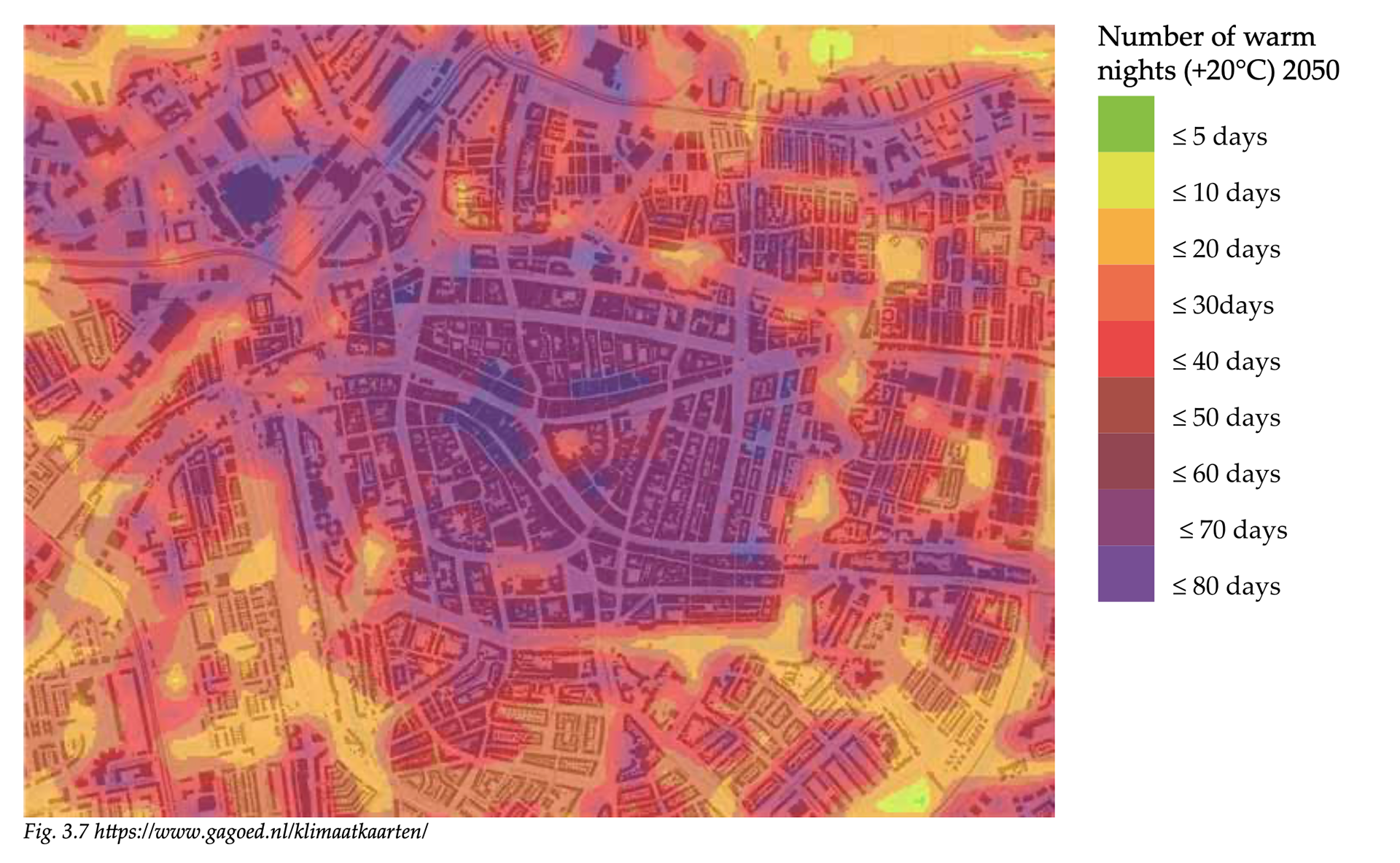
KAASMARKT
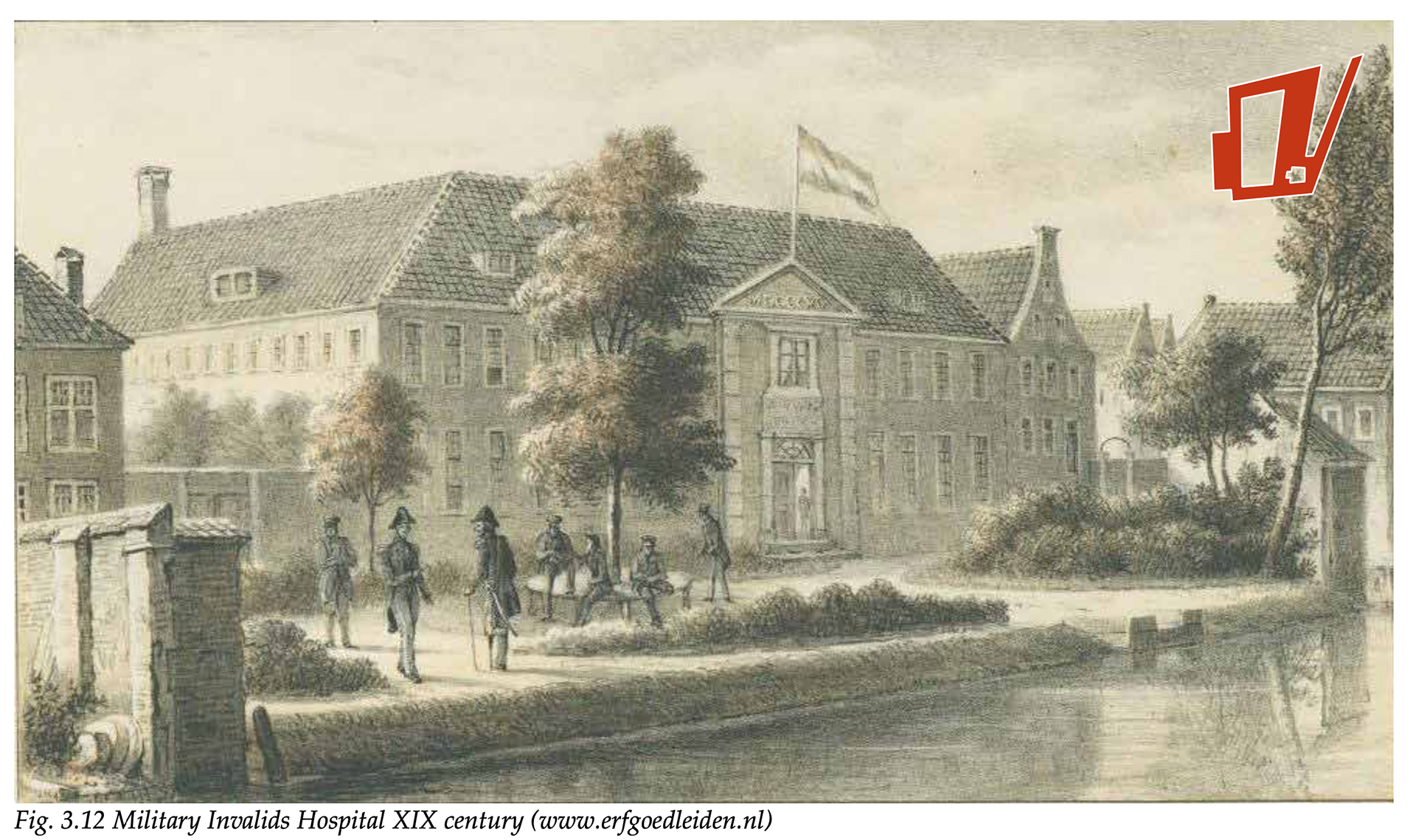
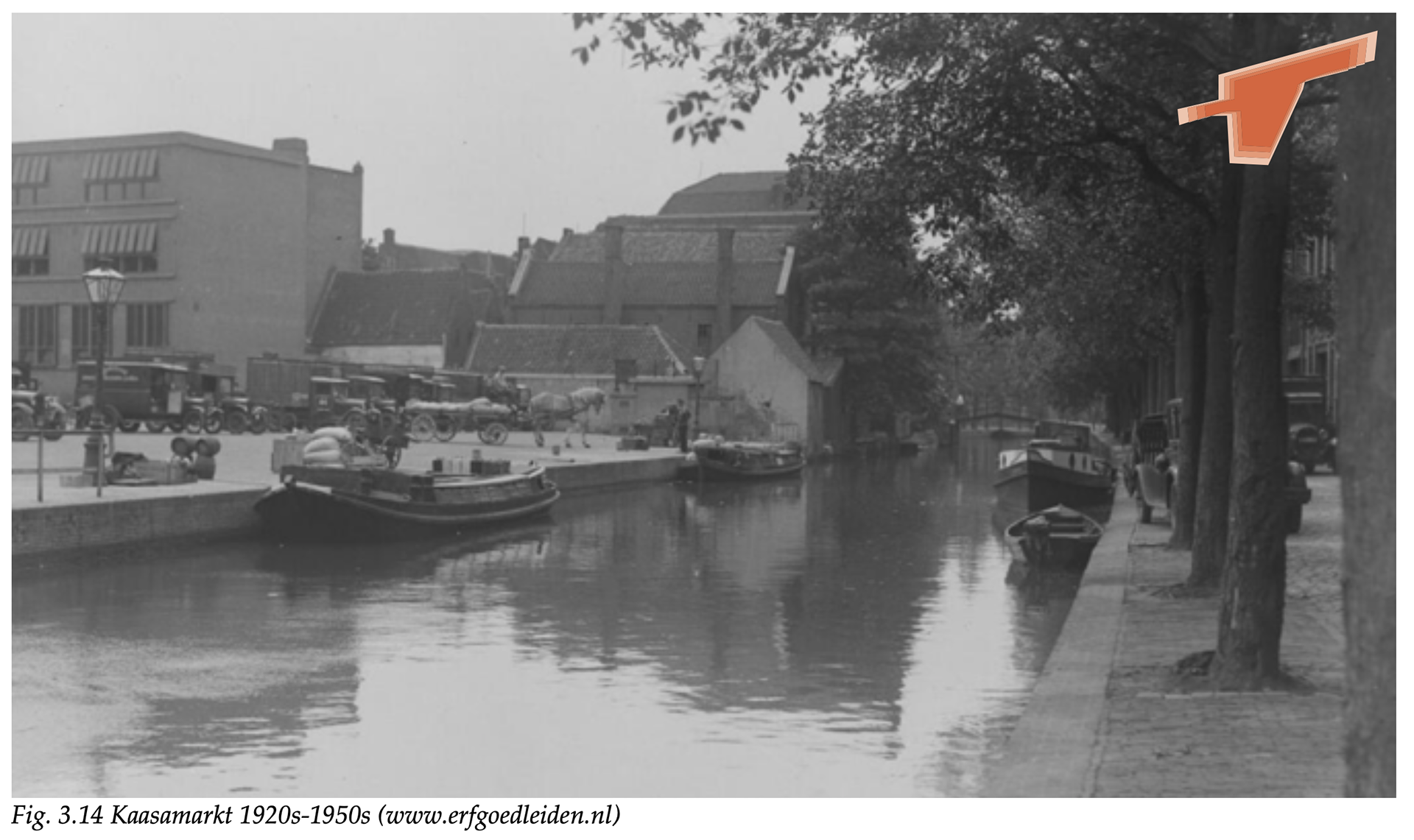
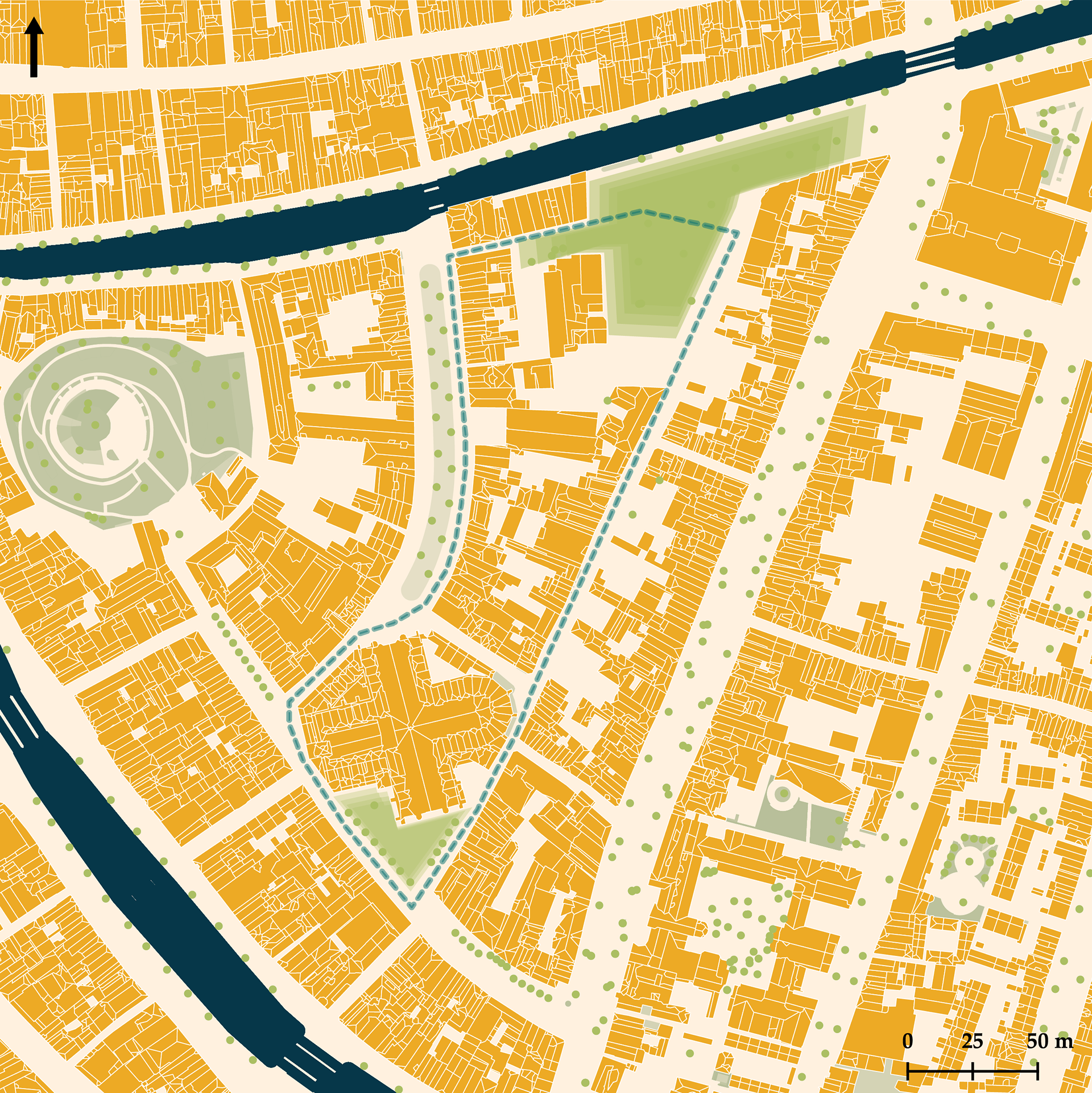
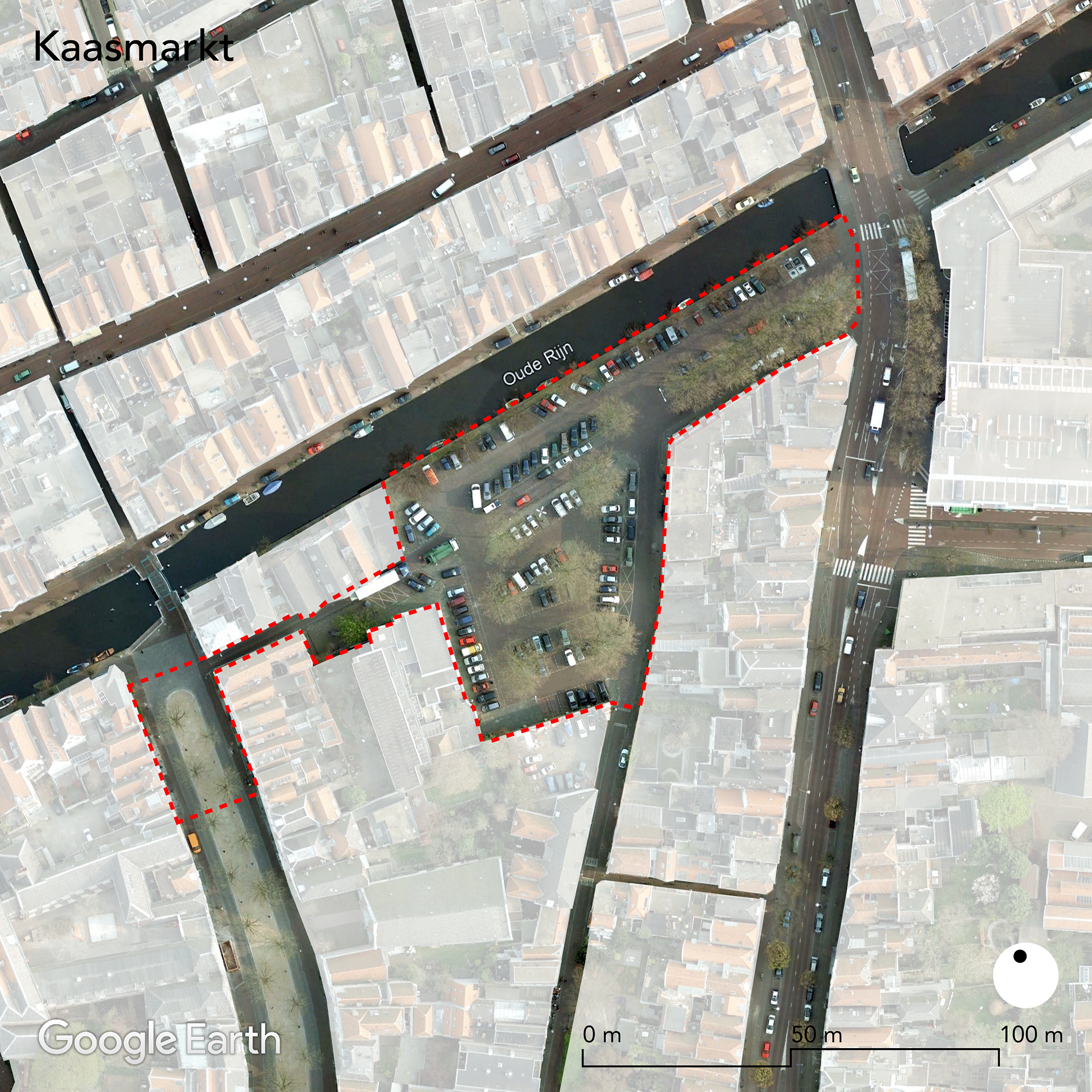
During the beginning of the 20th century, the now-called Kaasmarkt square used to be occupied with a building that started as an orphanage, and later served as a home for disabled soldiers until its relocation. In 1927, the building was demolished, leaving a free space for a new function: the cheese market. The redevelopment of the Cheese Market and the surrounding buildings took place in the first half of the 20th century to make the market more accessible to traders. The cheese was transported through water and distributed on the square. Trade lasted until 1961 when eventually the square was turned into a parking space.
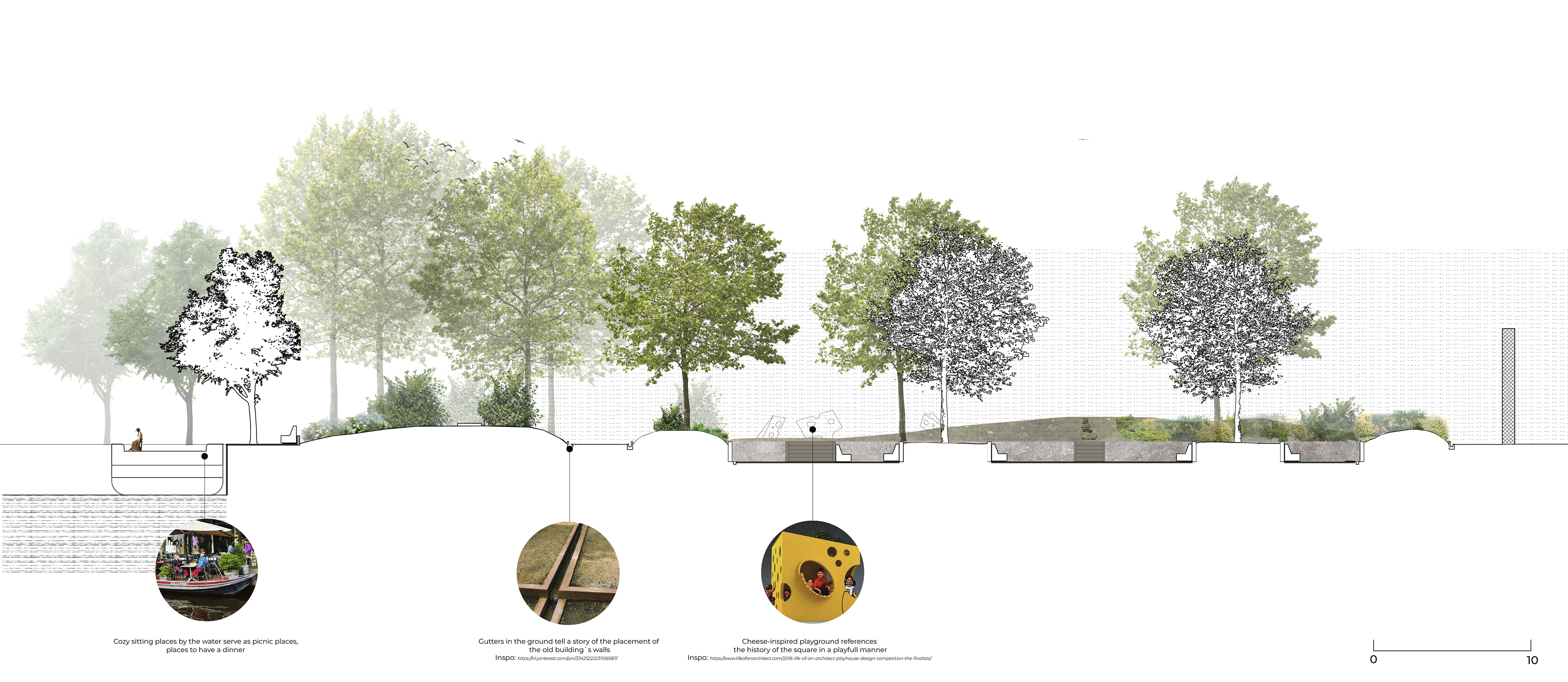
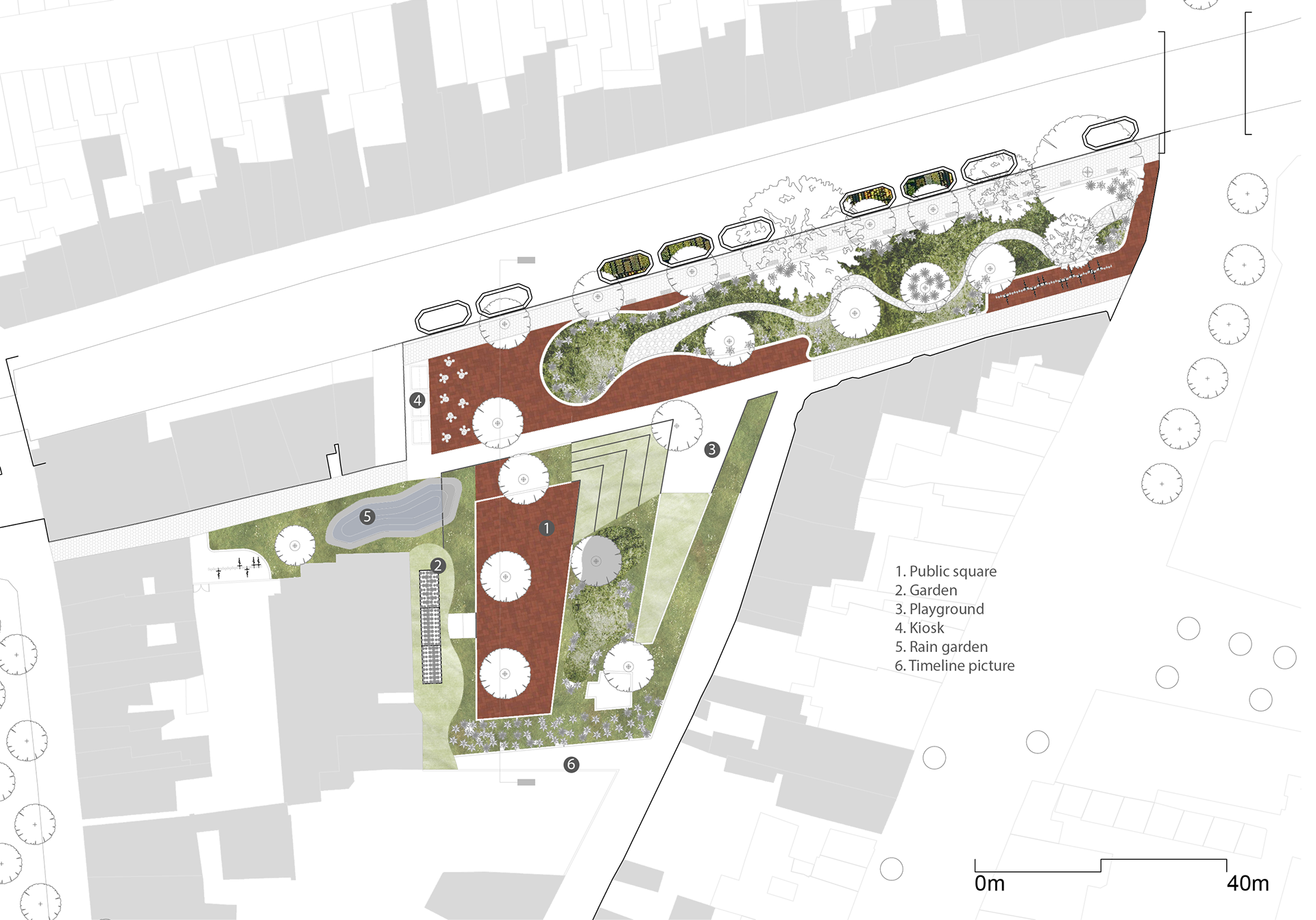
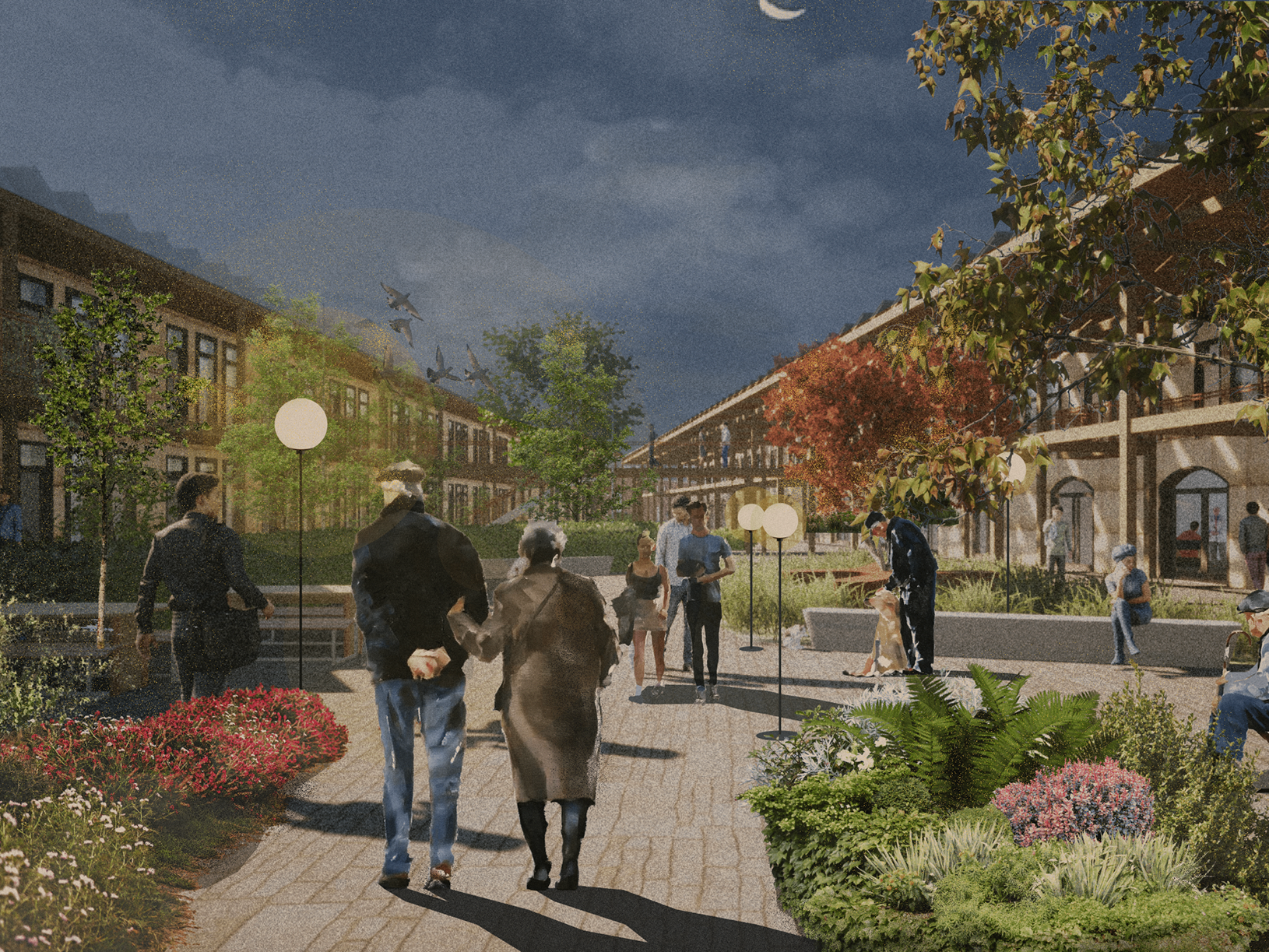
Layers of history are embedded in the design of the square. Its layout echoes the floor plan of the former military hospital, with subtle gutters inscribed in the ground, replicating the wall layout. The site’s historic connection to water, characteristic of the cheese market, is reinterpreted through floating platforms. A playful reference to the era of cheese trade appears in a children’s playground designed as oversized pieces of cheese. At the back of the square, a timeline mural narrates the story of the place, making these references clear and accessible to visitors.
In addition, the new design introduces diverse greenery and opportunities for urban gardening, while transforming the square into a welcoming and multifunctional public space, a little part at the heart of the city.
HOOGLANDSE KERK
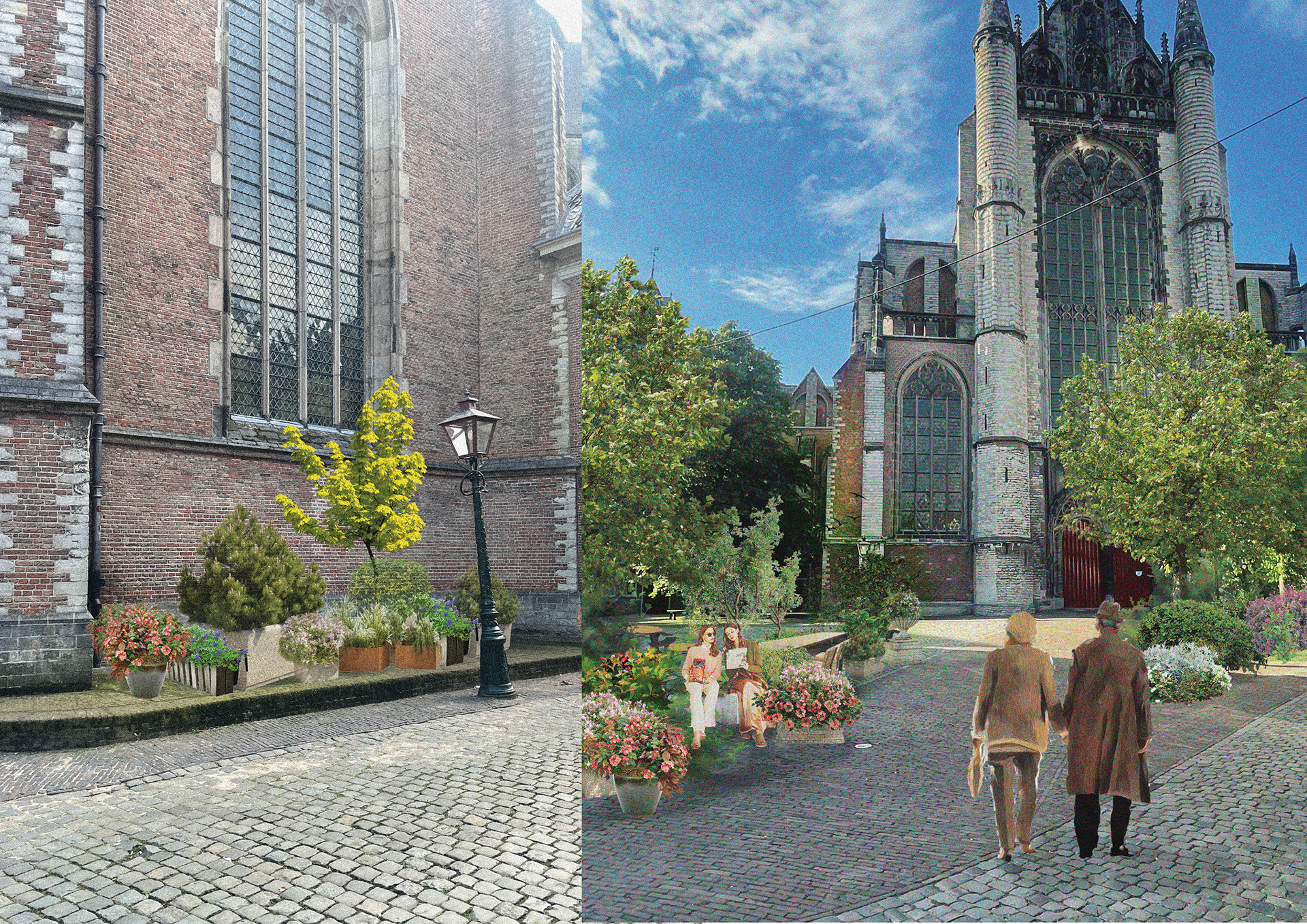
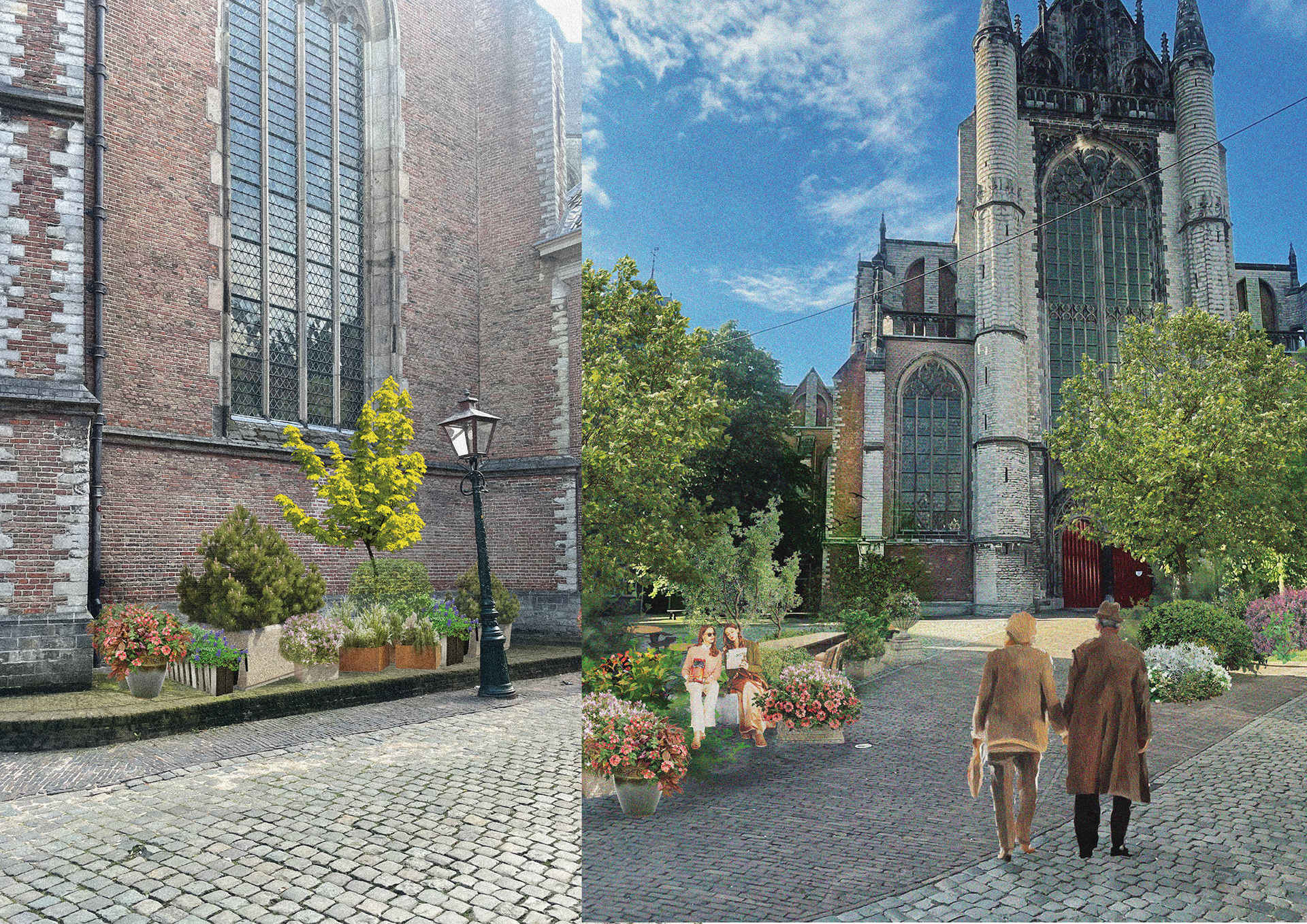
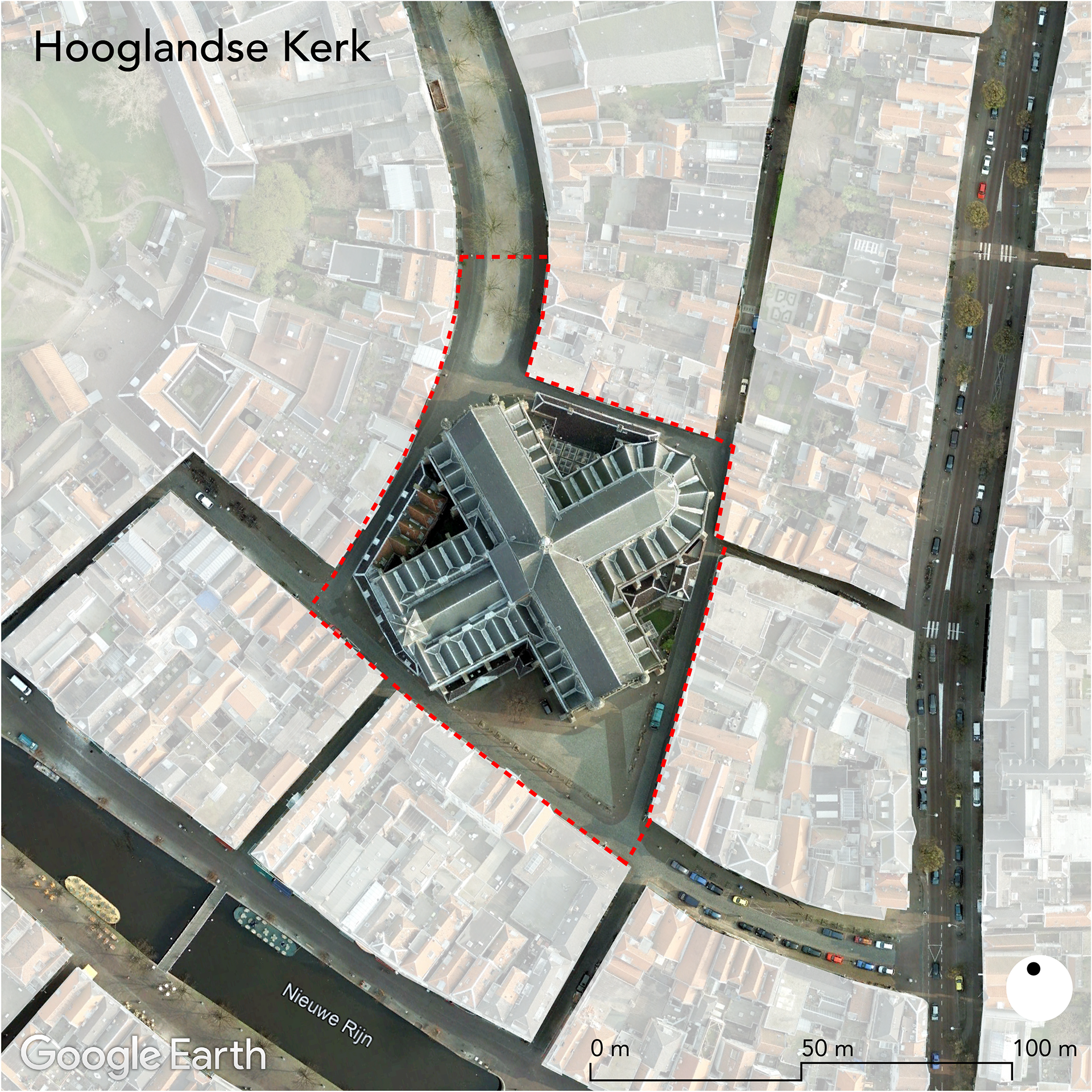
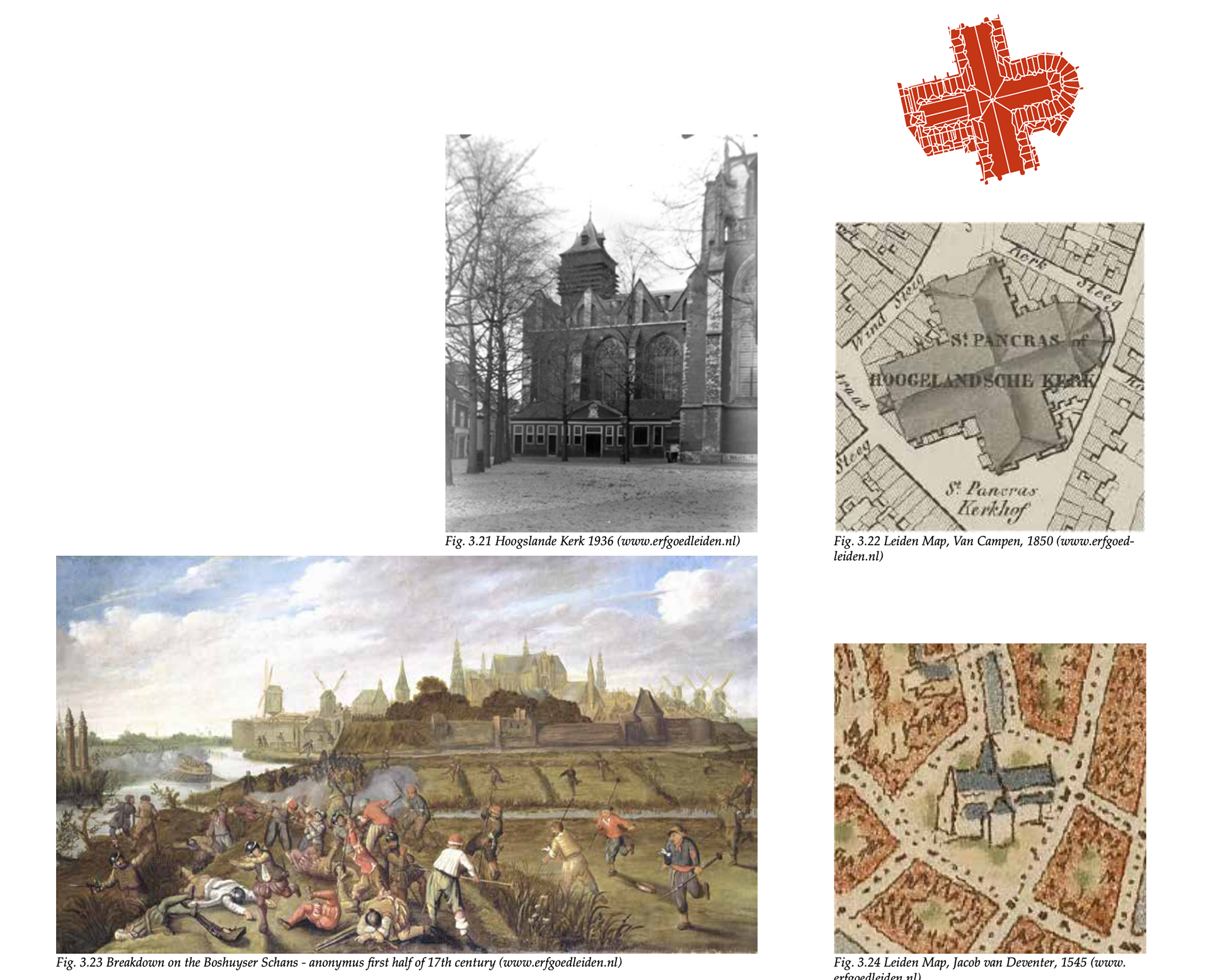
The second redeveloped location is a square in front of the Hooglandse Church and the area surrounding it. The Hooglandse Kerk and its square in the past have been used for trade, served as a grain storage during the siege of Leiden, and worked as a public space, but nowadays it is mostly unused or used by the surrounding bars and restaurants. In historical illustrations, the church is surrounded by greenery, but nowadays the area is fully paved and exposed to the sun.
The cafes located around the square are trying to claim it, and the existing trees don’t provide enough shade.
Therefore, it was decided to define the square as a public space and add urban furniture such as tables and chairs, which can be used by the residents of surrounding buildings as well as by other people. This way, everyone could enjoy the space without paying for food and drinks.
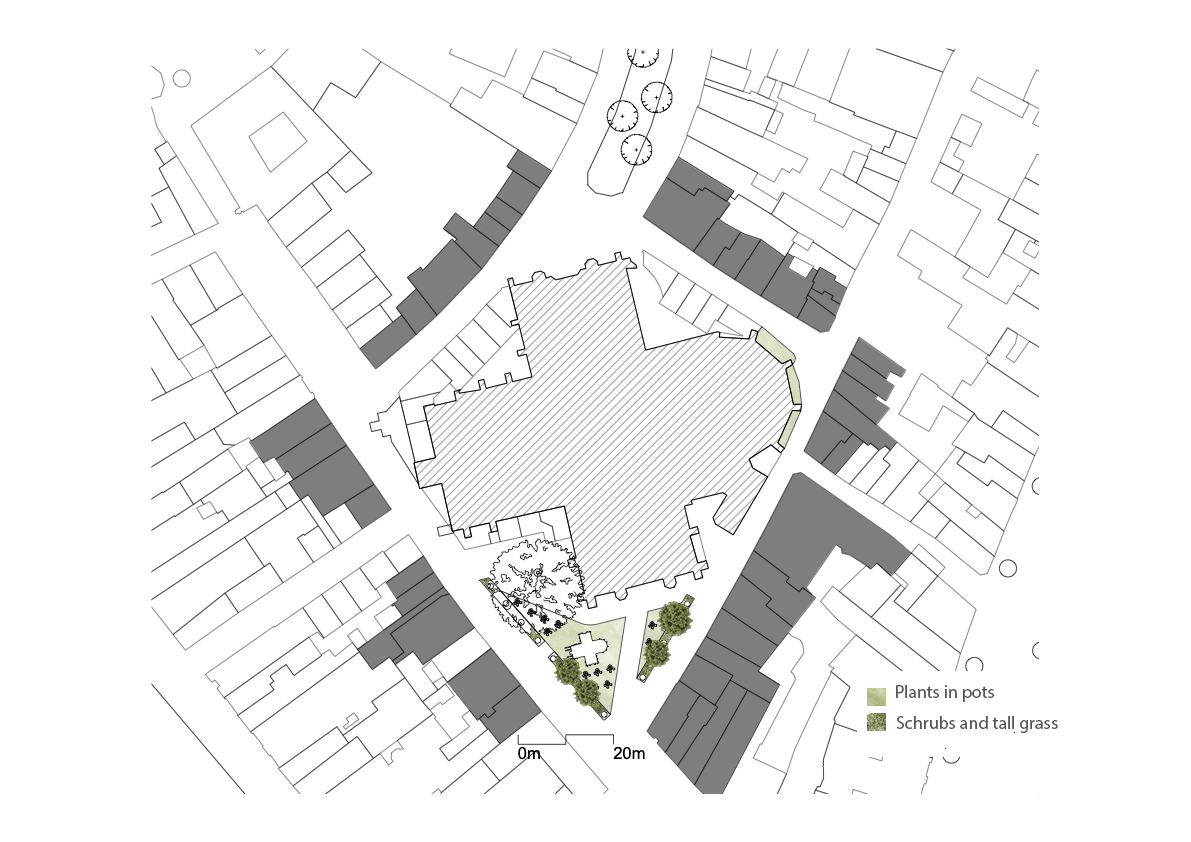
The square was enclosed by green bushes and tall grass, and some of the trees were replaced with other species to provide shade and increase biodiversity.
Plants in pots were added both to the square and around the church.
The floor plan of the church was shown on the surface of the square, depicting the structure and shape of the building, and opening a new perspective to the public.
The floor plan of the church was shown on the surface of the square, depicting the structure and shape of the building, and opening a new perspective to the public.
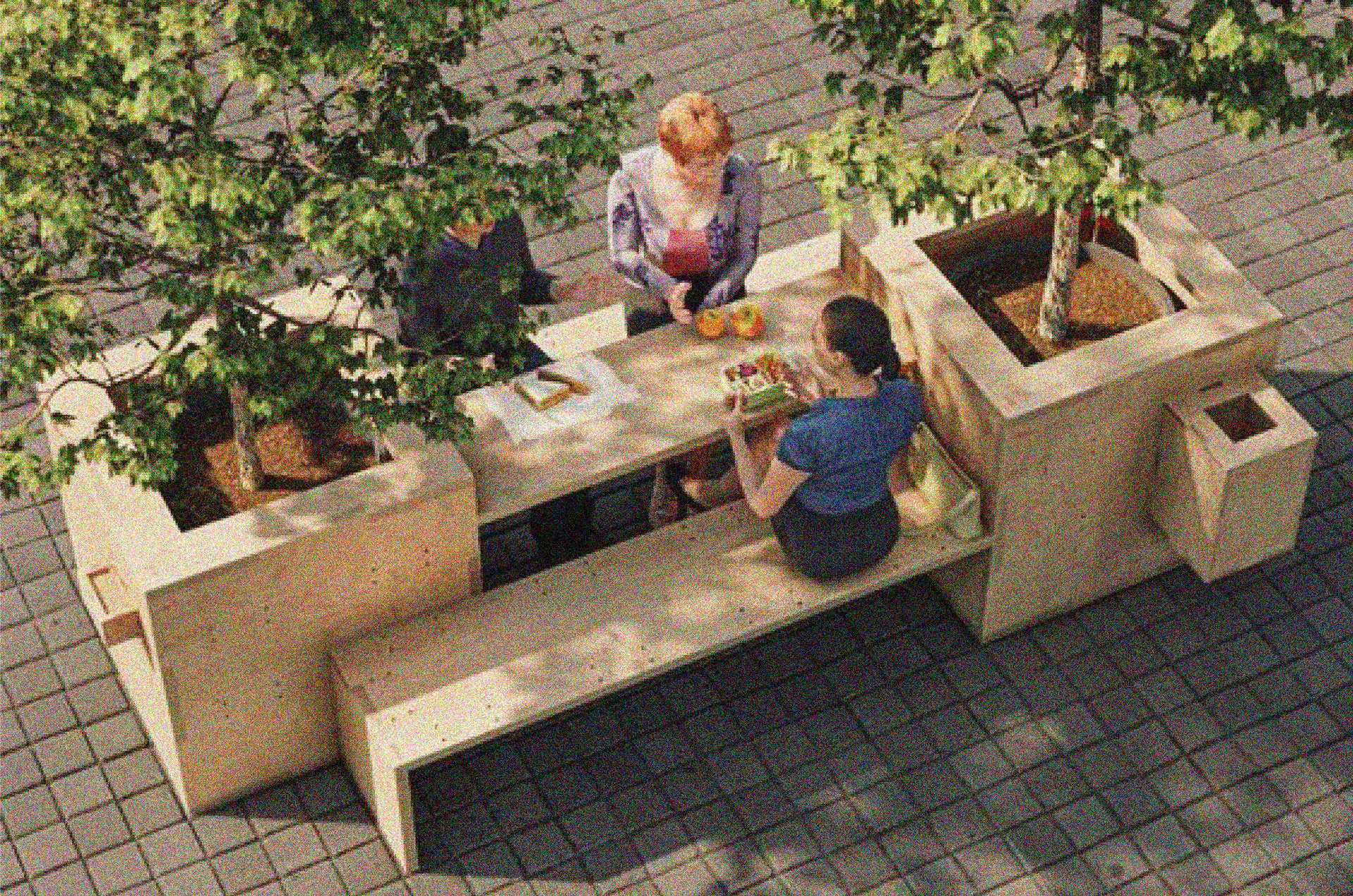
Bench inspo: https://www.livelicity.com/ projects/urbangatherings